
The Legal Shield of the Fashion World: A Global Perspective on Trademark Protection in the Clothing Industry
Time:2025-09-25
Publication Date:2025-09-25
In the clothing industry, trademarks are not only crucial for brand recognition but also form a significant part of a company's intellectual property. This article analyzes the trends in trademark applications over the past decade in Class 25 (clothing, footwear, headgear) across China, the United States, the European Union, Japan, South Korea, and WIPO. It also examines how brands have structured their trademark portfolios in these countries, aiming to provide references and insights for trademark protection in the clothing sector. (All data screenshots are sourced from the Kangxin IP platform at eservice.kangxin.com.)
Trends in Trademark Application Volumes
Let's examine the growth trends in global trademark application volumes in the clothing sector over the past ten years.
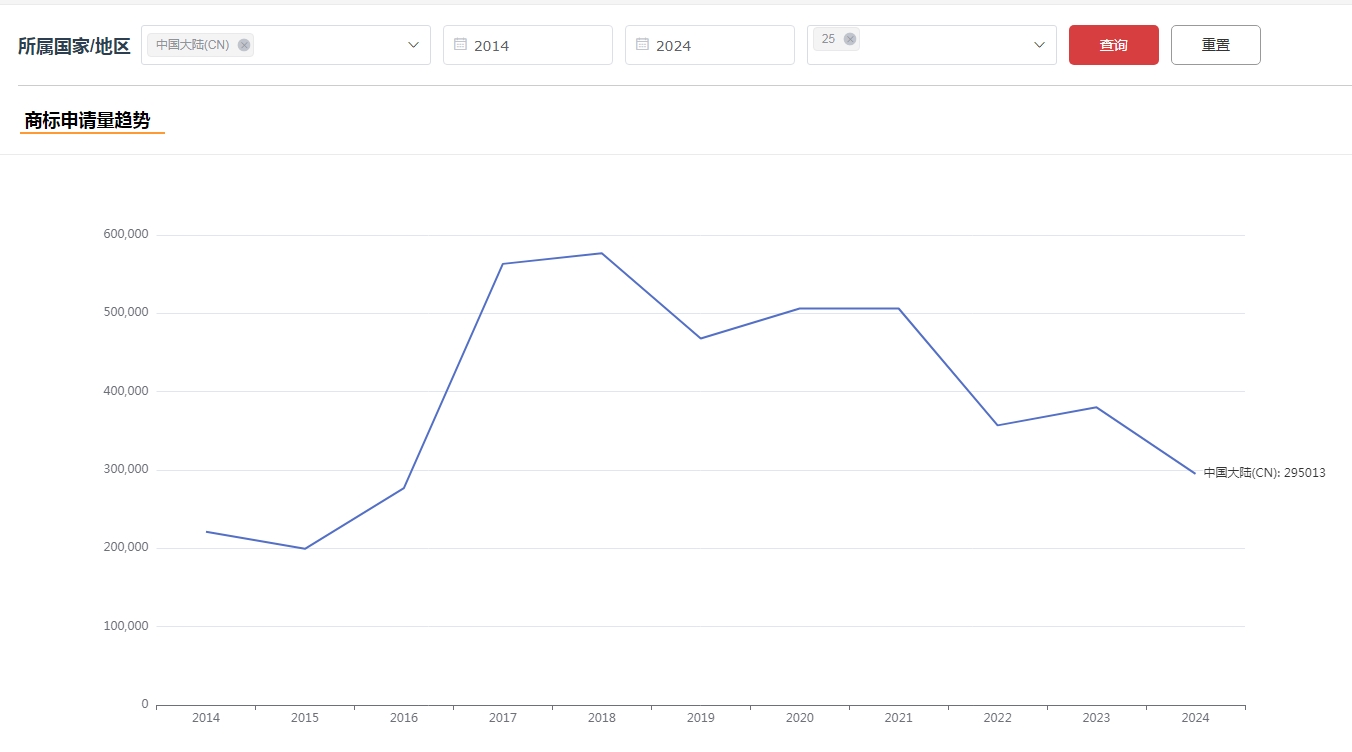
Trend of Class 25 Trademark Applications in China Over the Past Decade
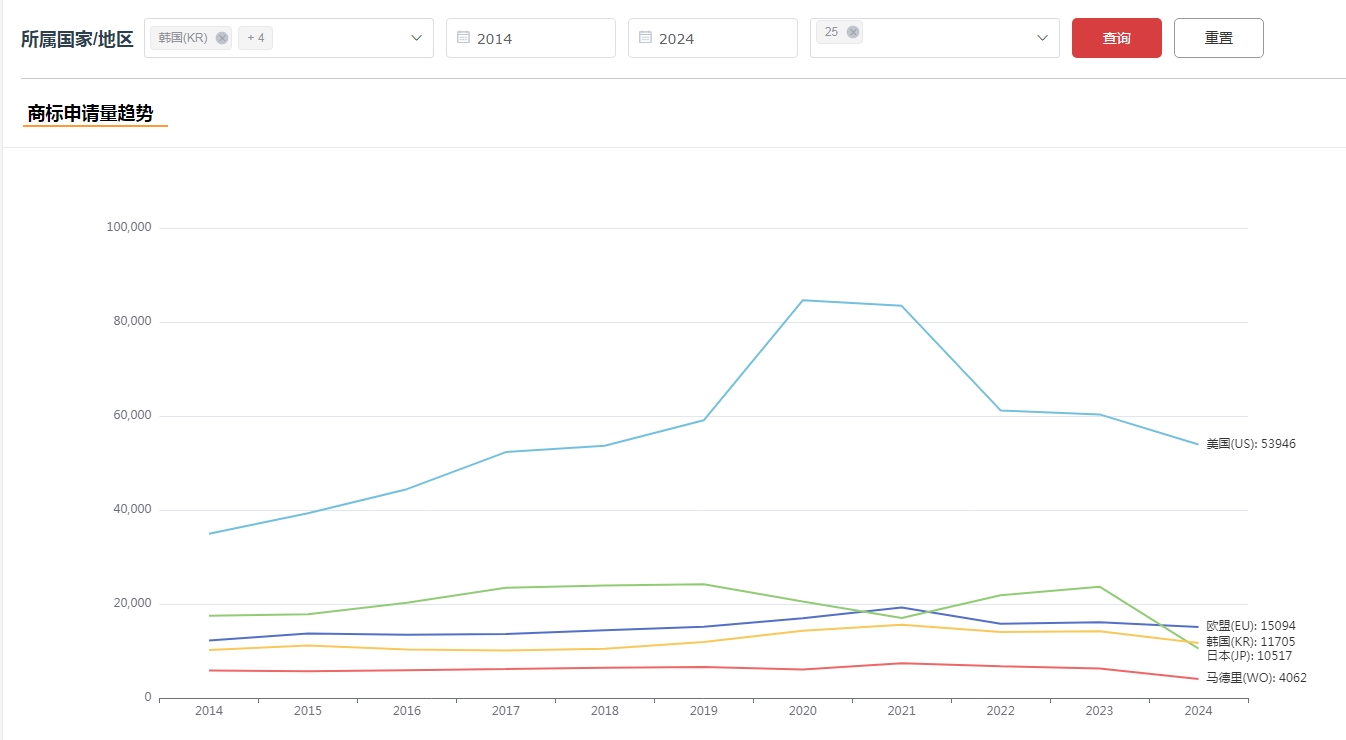
Trend of Class 25 Trademark Applications in the EU, US, Japan, South Korea, and WIPO Over the Past Decade
From the data charts, it is evident that, particularly in China and the United States, the number of trademark applications has remained consistently high due to their vast markets and strong economic prowess.
Rankings of Class 25 Trademark Holdings by Country
Using big data from the Kangxin IP platform, let's look at the rankings of Class 25 trademark holdings in the trademark offices of various countries.
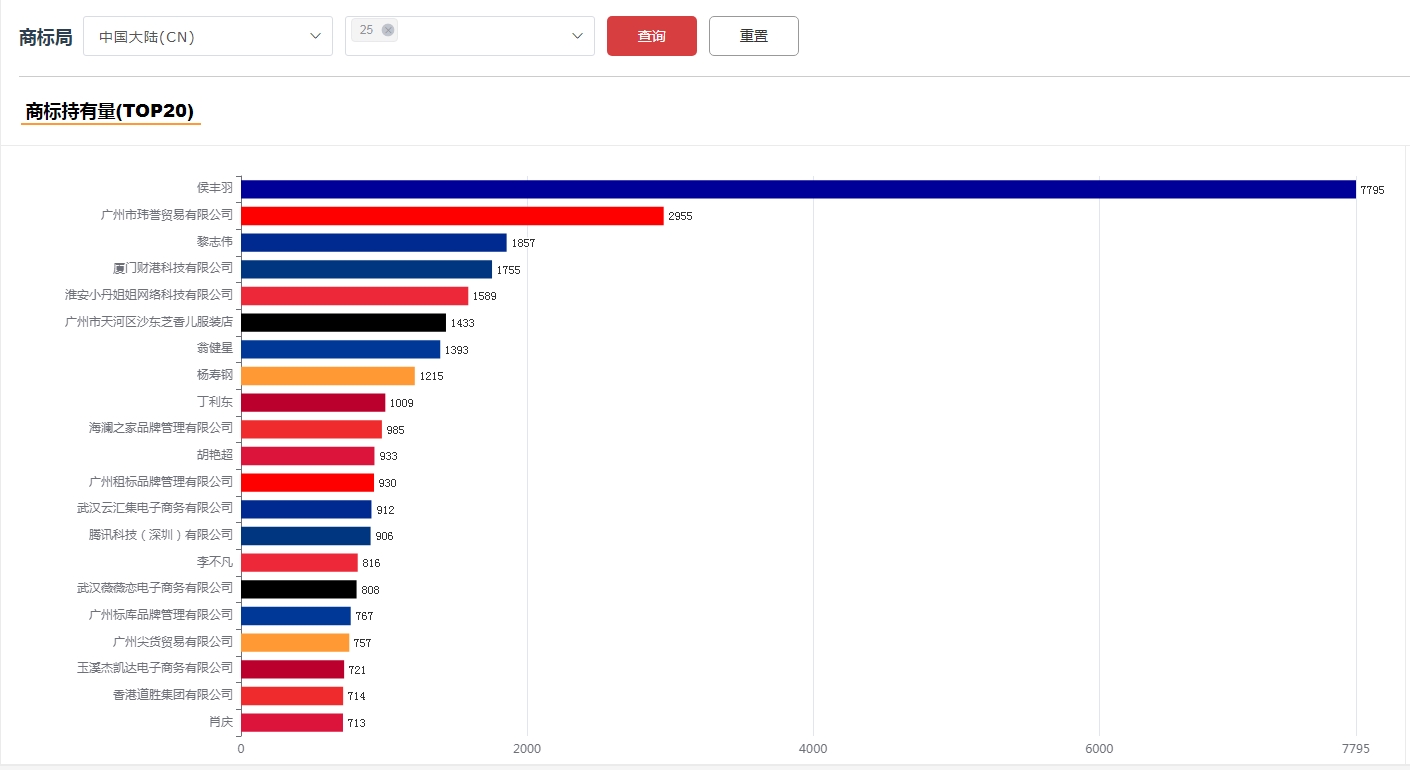
Rankings of Class 25 Trademark Holdings in China's Trademark Office
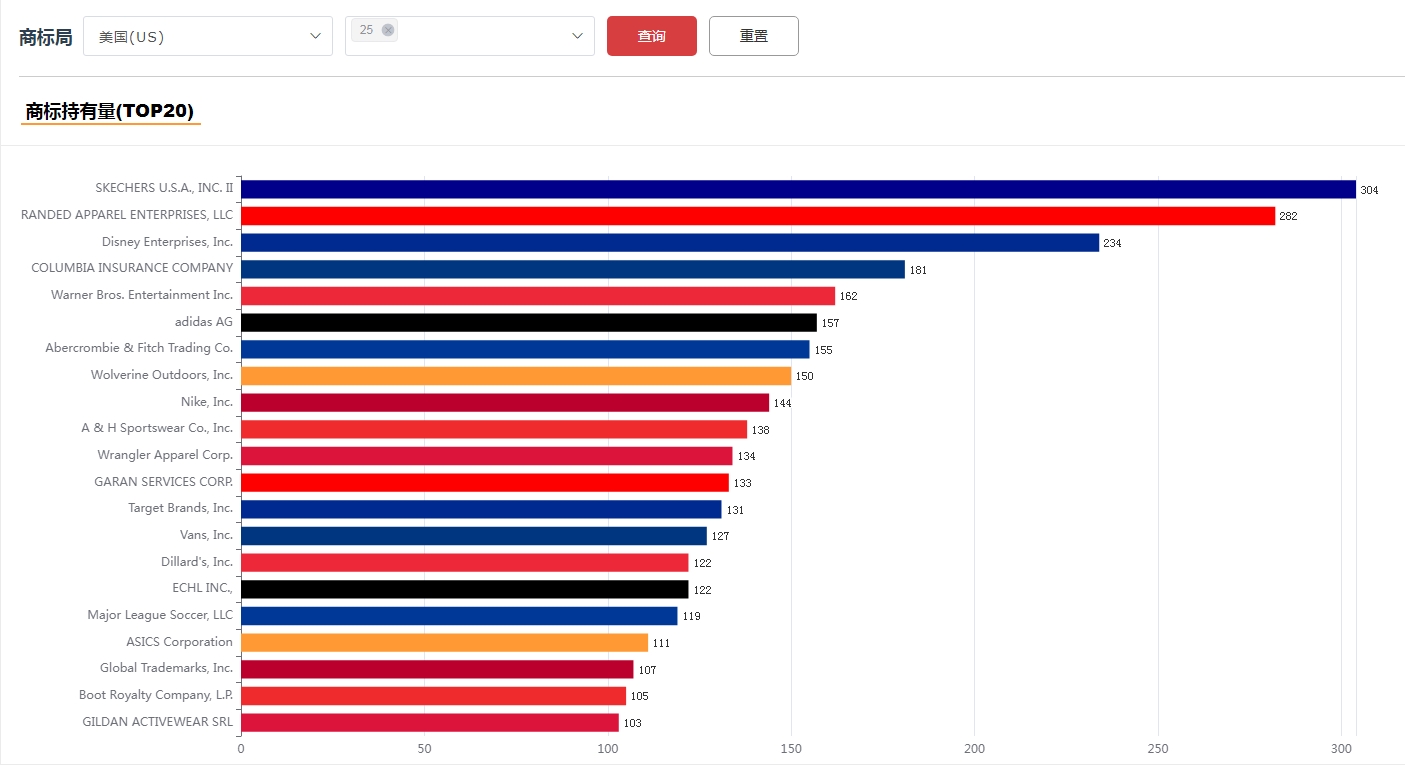
Rankings of Class 25 Trademark Holdings in the United States Patent and Trademark Office
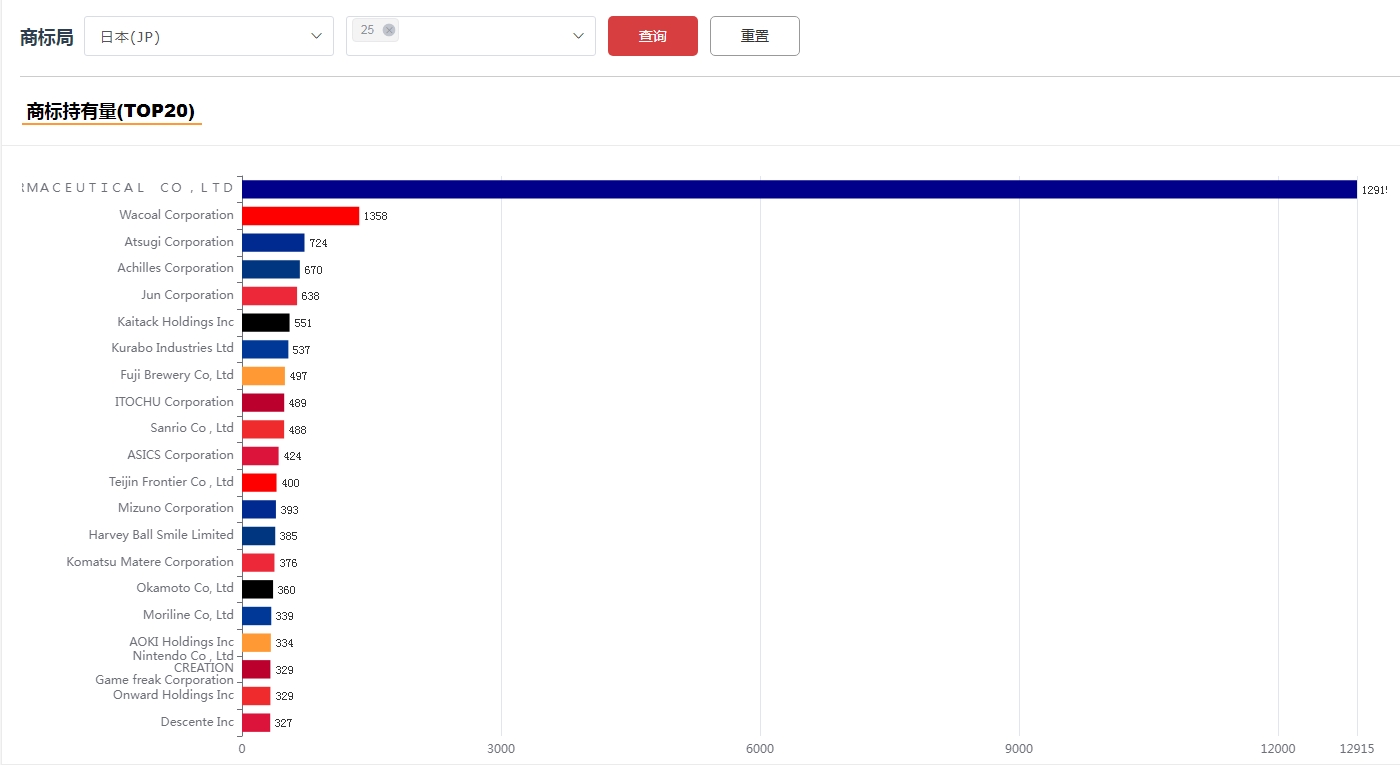
Rankings of Class 25 Trademark Holdings in the Japan Patent Office
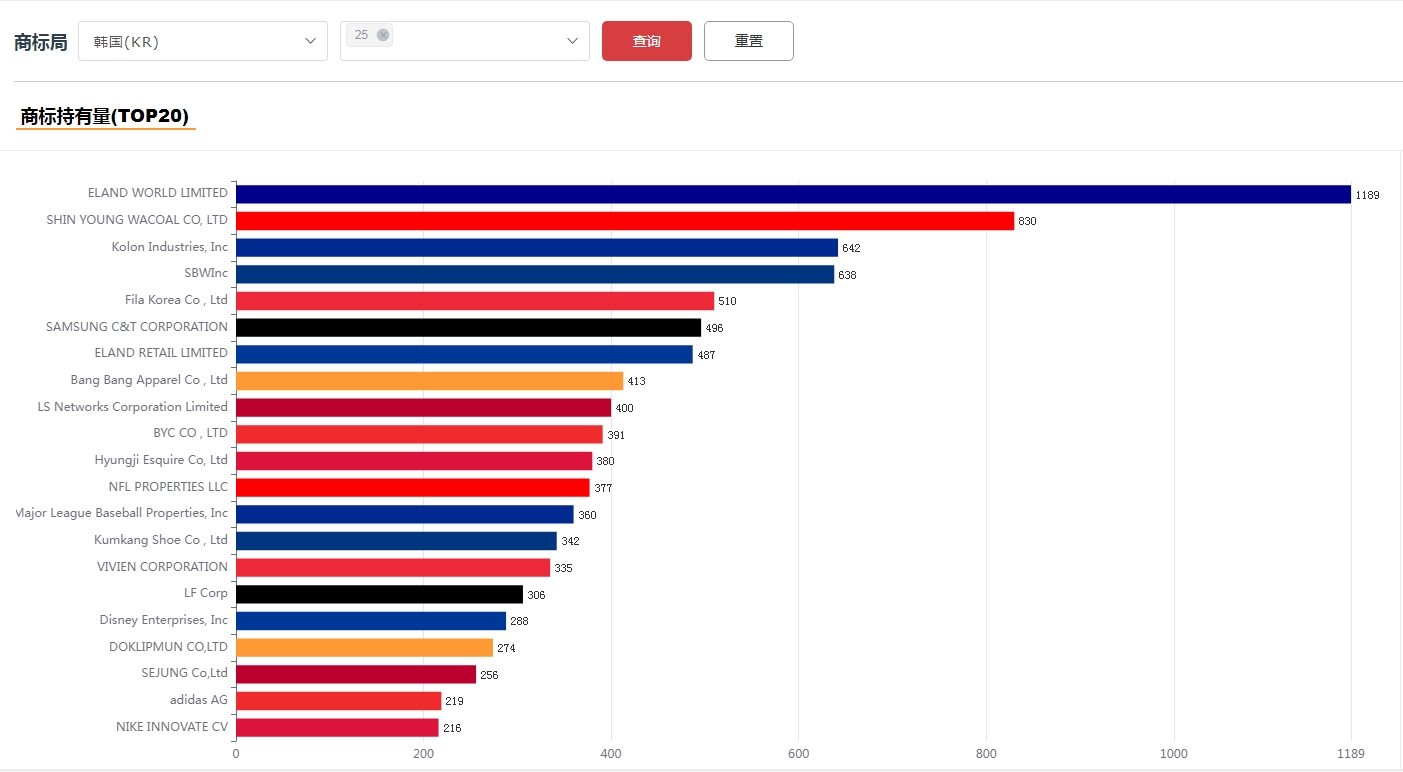
Rankings of Class 25 Trademark Holdings in the Korean Intellectual Property Office
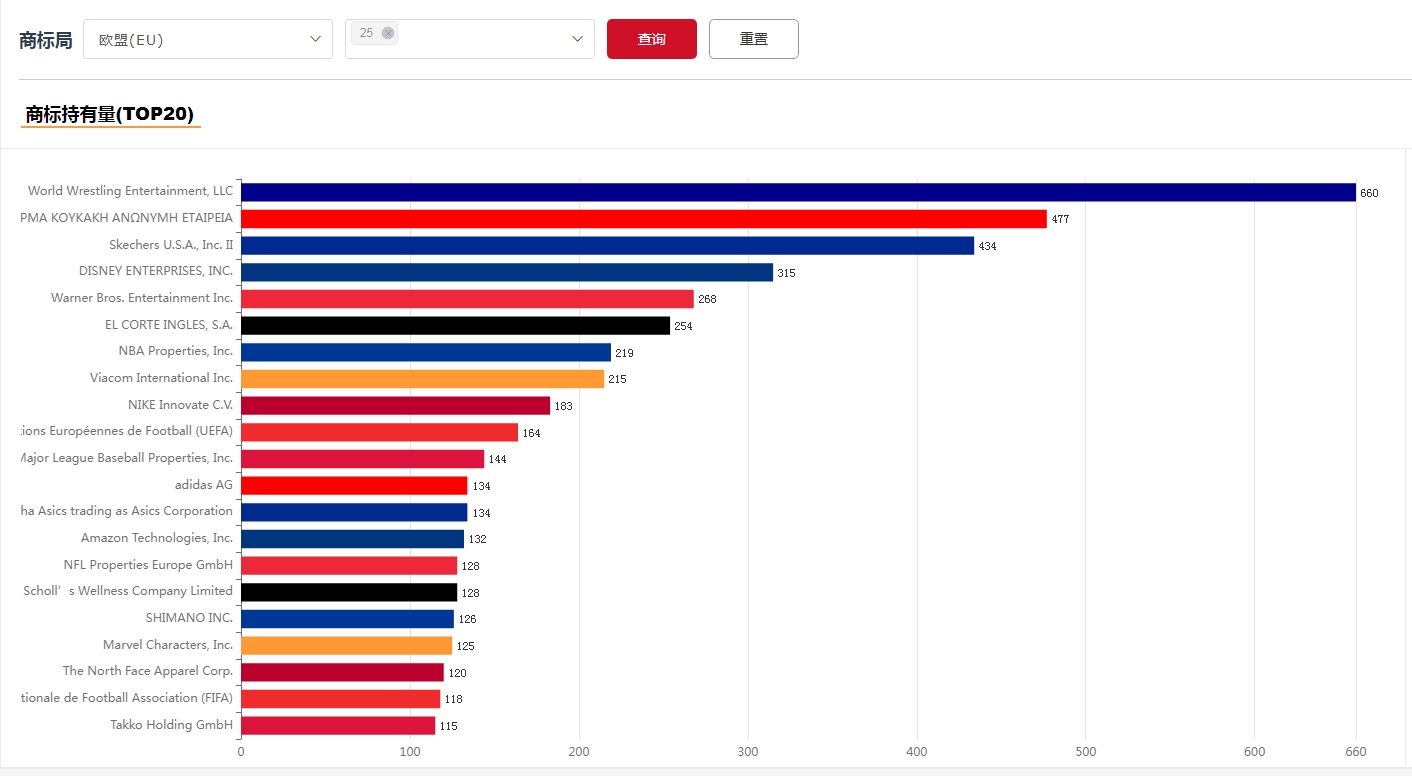
Rankings of Class 25 Trademark Holdings in the European Union Intellectual Property Office
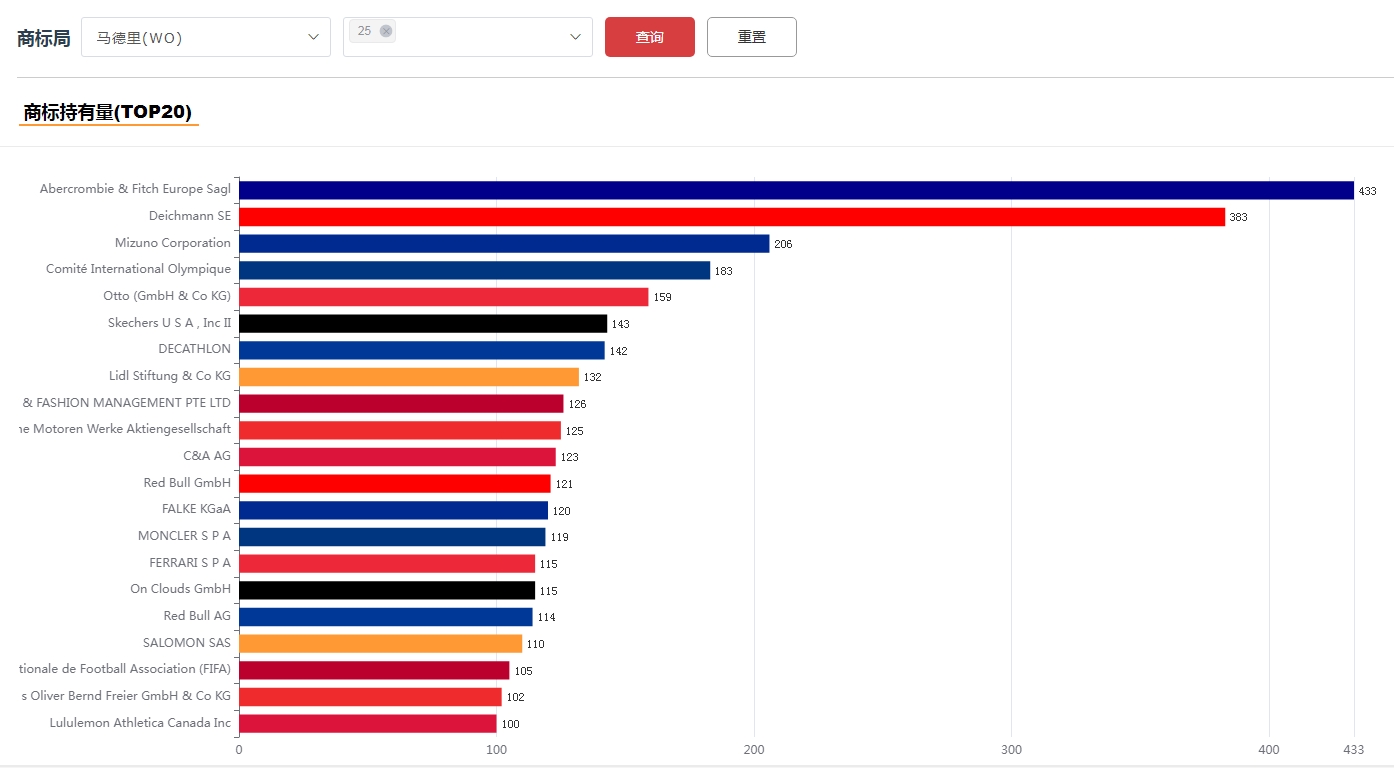
Rankings of Class 25 Trademark Holdings in WIPO
Global Trademark Strategies of Renowned Clothing Brands
Nike
As a globally recognized sports brand, Nike actively establishes its trademarks worldwide. It has numerous trademark registrations in major markets such as China, the United States, the European Union, Japan, and South Korea, reflecting its global brand protection strategy.
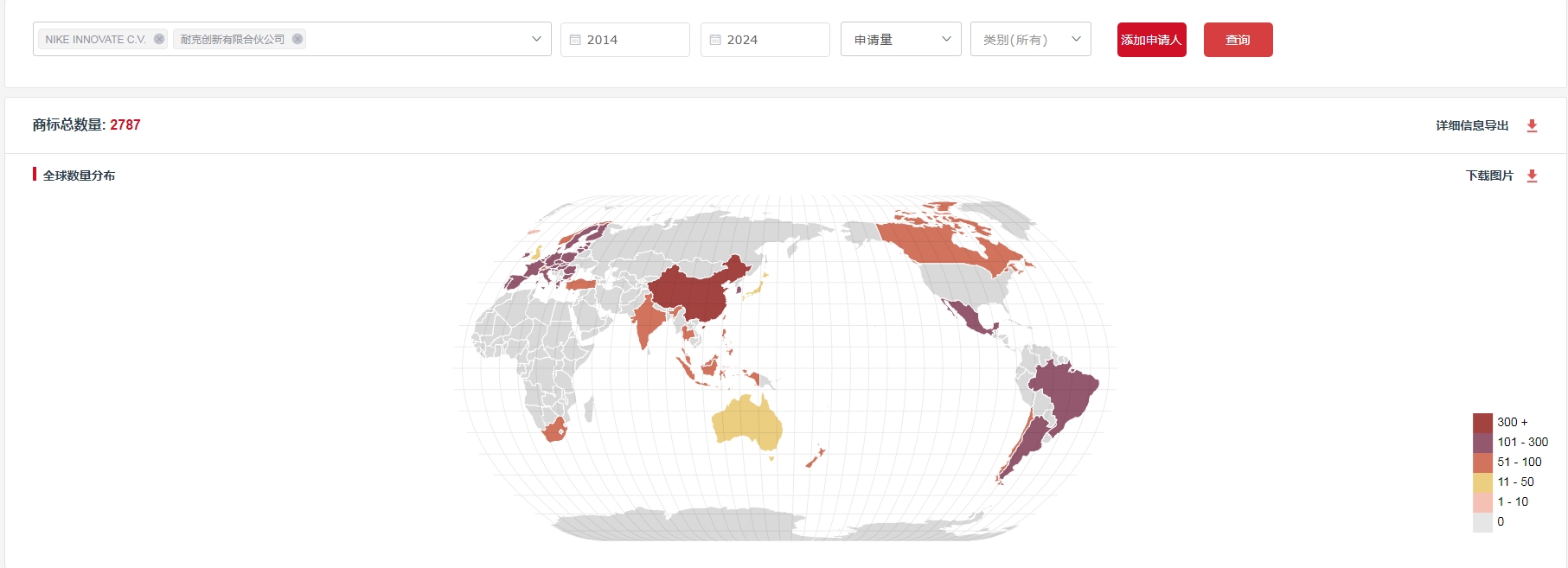
Nike's global trademark layout over the past ten years.
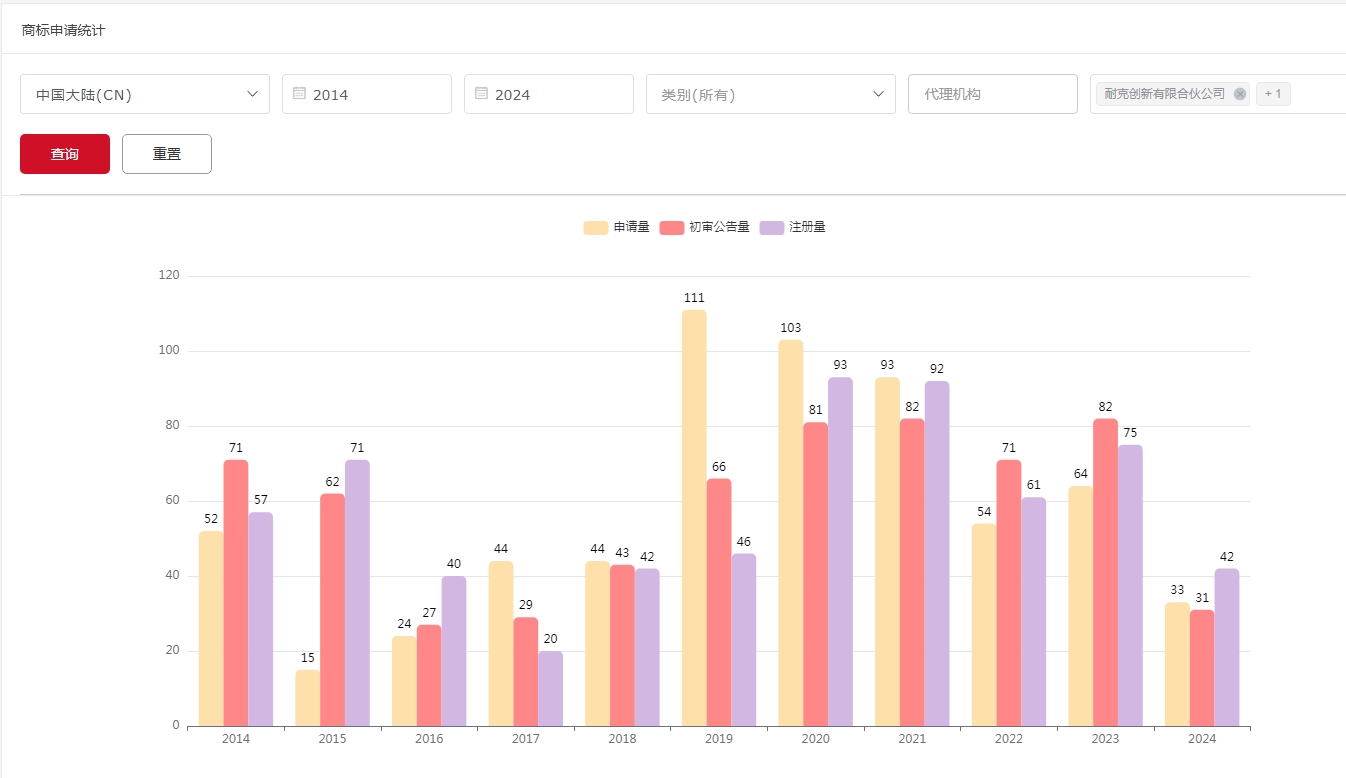
Statistics of Nike's trademark applications in China over the past ten years.
Uniqlo
As a well-known Japanese clothing brand, Uniqlo has trademark registrations in its home country as well as in markets like China, the United States, and the European Union. This reflects its global expansion strategy. By leveraging dual protection through registered trademarks and design patents, Uniqlo has strengthened its brand uniqueness and market competitiveness.
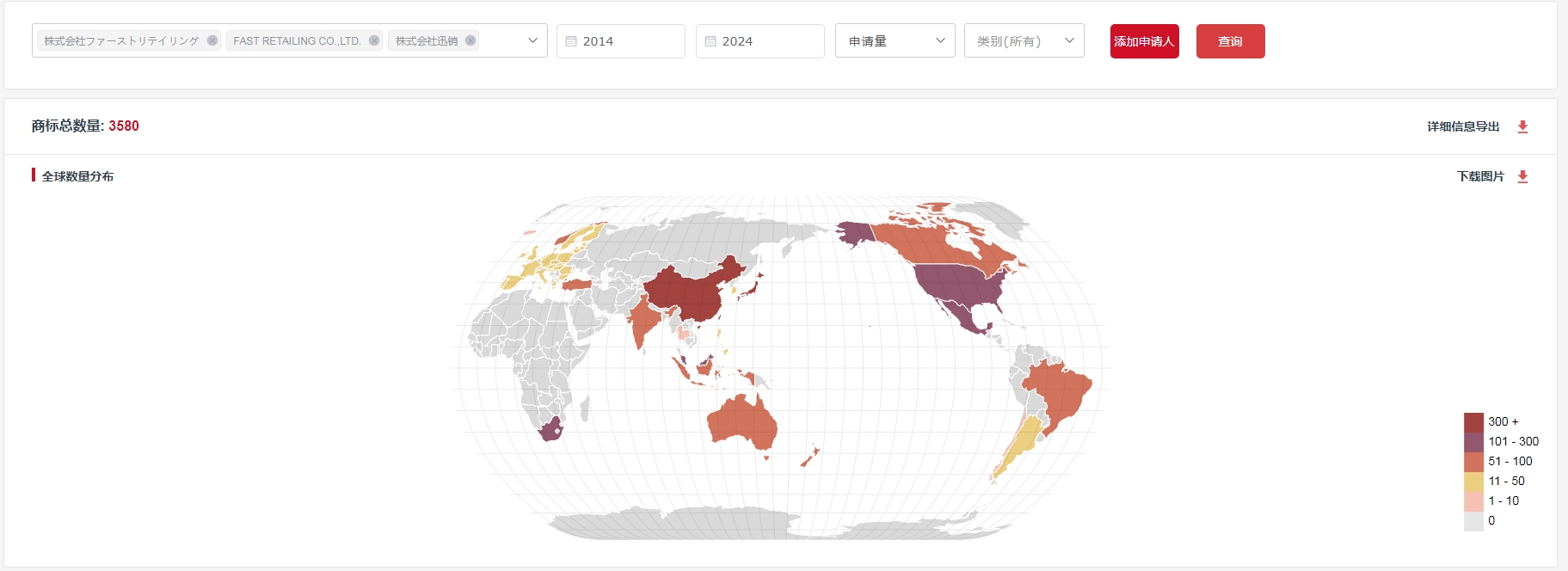
Uniqlo's global trademark layout over the past ten years.
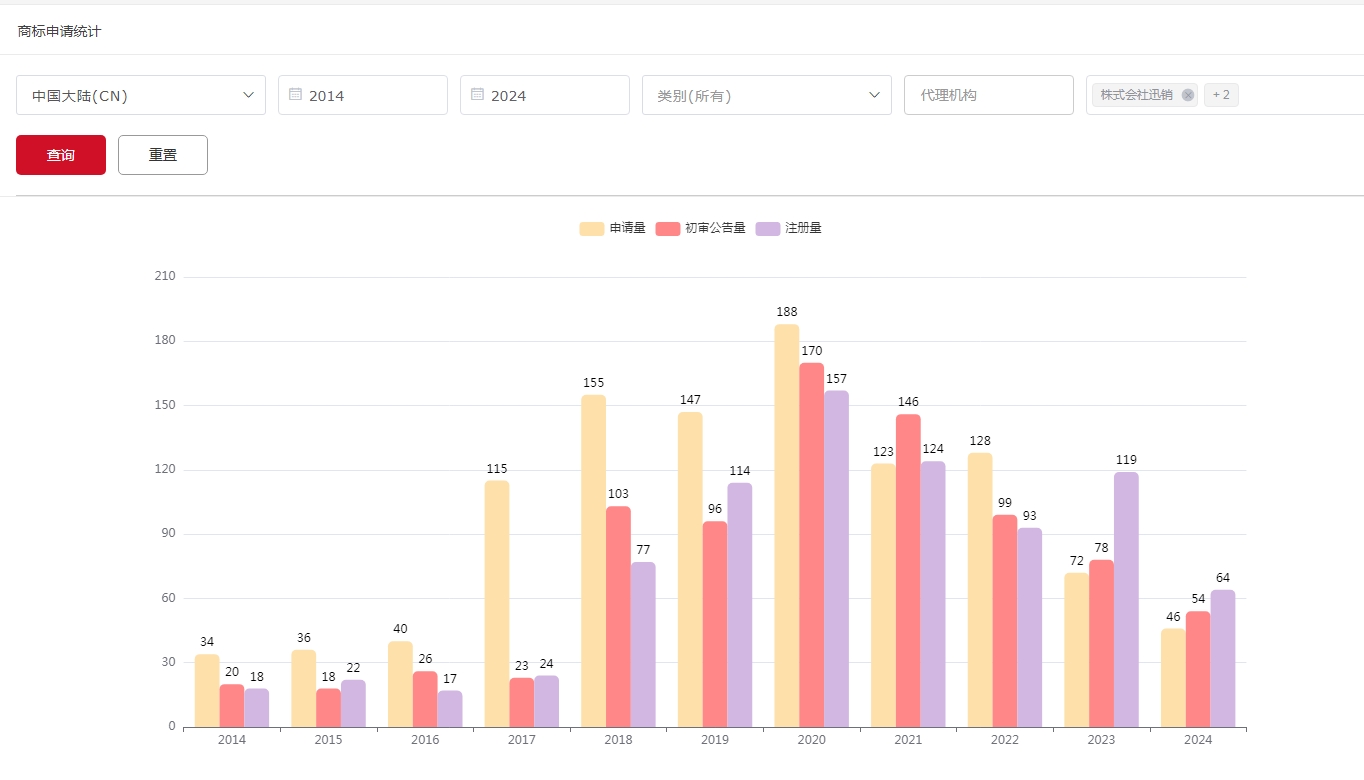
Statistics of Uniqlo's trademark applications in China over the past ten years.
Zara
As a Spanish fast-fashion giant, Zara's trademark protection strategy emphasizes rapid response to market changes. Its trademark applications closely follow product innovation and market expansion. Particularly in emerging markets like China and South Korea, Zara has demonstrated exceptional sensitivity and execution in its trademark layout.
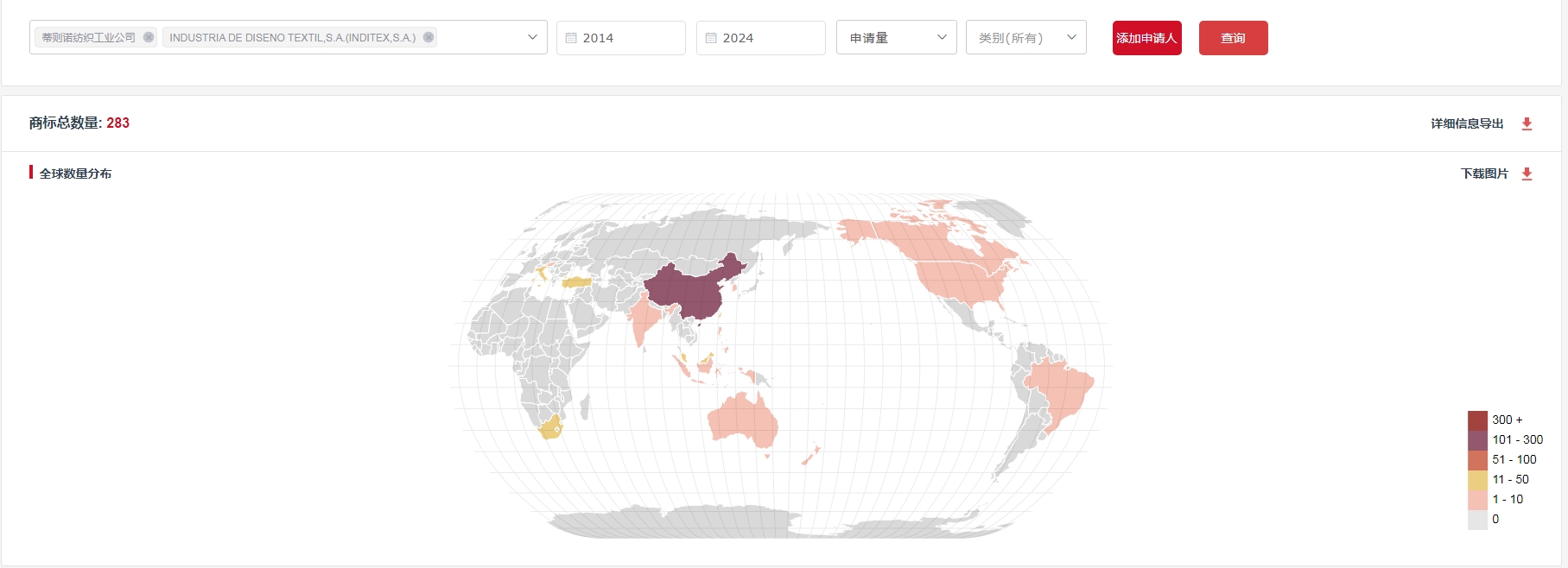
Zara's global trademark layout over the past ten years.
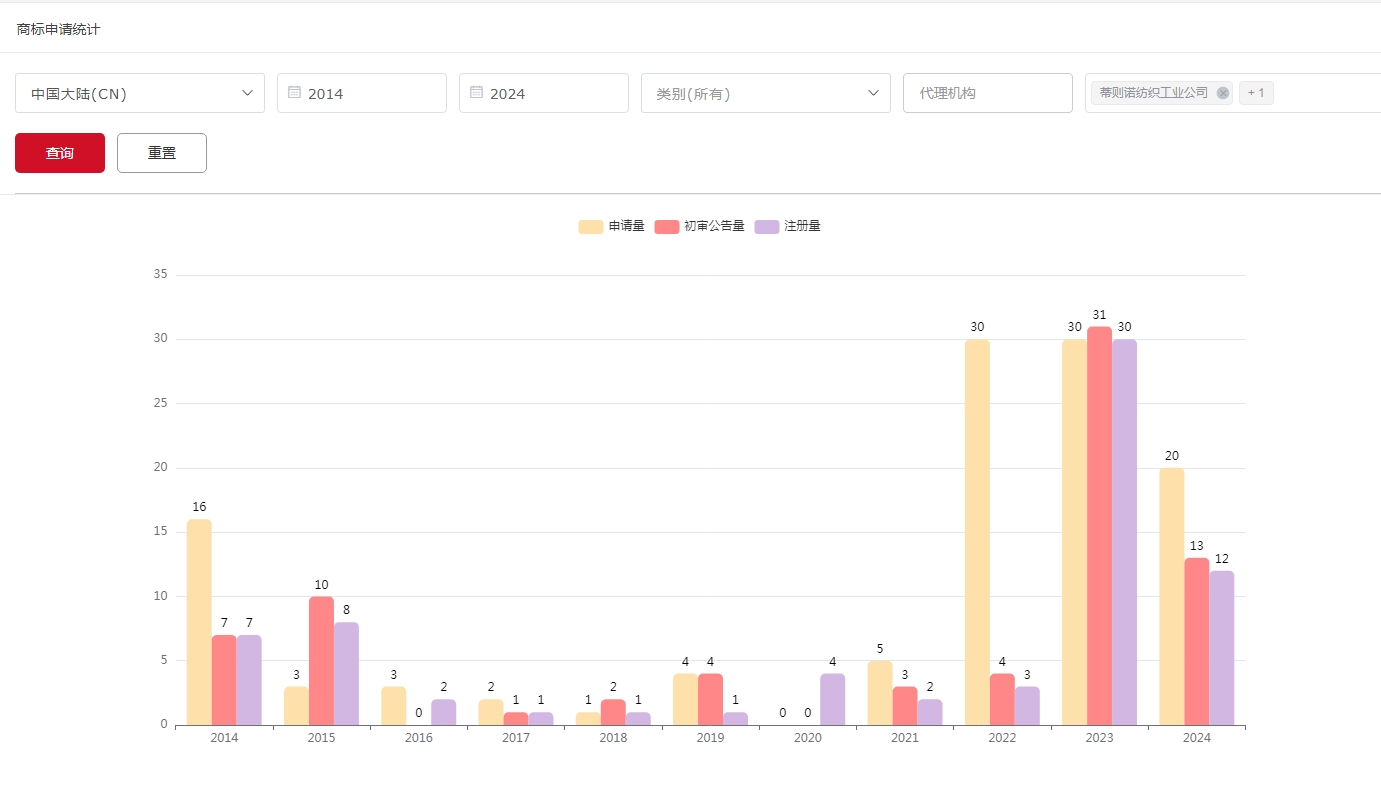
Statistics of Zara's trademark applications in China over the past ten years.
Risks of failing to plan trademarks in advance
Guangzhou Zhongwei Enterprise Management Consulting Service Co., Ltd. and Guangzhou Compass Exhibition Service Co., Ltd. registered a large number of trademarks similar to "优衣库" in multiple categories and attempted to transfer these trademarks to UNIQLO for 8 million yuan. After UNIQLO refused, the two companies filed a total of 42 lawsuits against UNIQLO and its distributor Fast Retailing Co., Ltd. in many places across the country on the grounds of trademark infringement. After the first instance, the second instance and the retrial, the Supreme People's Court determined in the retrial that Zhongwei Company and Compass Company obtained trademark rights by improper means and sought improper benefits through litigation, constituting malicious litigation. The Supreme Court determined that "after obtaining the trademark rights by improper means, Compass and Zhongwei clearly targeted Uniqlo and others, intending to transfer the trademark at a high price. After failing to successfully transfer the trademark, they filed a series of lawsuits based on basically the same facts, claiming that Uniqlo, Fast Retailing and their respective stores had infringed the exclusive right to use the trademark. In each case, they sued Uniqlo or Fast Retailing and a branch company that was one of their stores as co-defendants, taking advantage of the large number of stores of Uniqlo or Fast Retailing to form batch lawsuits across the country, requesting the court to order Uniqlo or Fast Retailing and its many stores to stop using the trademark and demand compensation. Their subjective malice was obvious, and their behavior clearly violated the principle of good faith. This court will not protect their behavior of using judicial resources to seek improper benefits with trademark rights in accordance with the law; Uniqlo's defense that Compass and Zhongwei filed malicious lawsuits was established and supported. Although the second-instance court considered the malice of Compass and Zhongwei and ruled not to support their claims, it did not fully consider whether they exercised their trademark rights in good faith, and the application of the law was inappropriate, which this court corrected."
Summary and Analysis of Trademark Strategies
Balancing Global Vision with Localization Strategy: Successful brands like Nike, Zara, and Uniqlo showcase the ability to broadly establish their presence in global markets while implementing differentiated strategies for specific regions. This requires brands to not only understand international trademark laws but also to deeply study the cultural backgrounds and consumer habits of target markets.
Synchronizing Continuous Innovation with Trademark Protection: As product lines expand and brand narratives deepen, brands should concurrently update their trademark protection strategies. This ensures that trademarks cover new products and services, preventing market losses due to trademark infringement.
Utilizing International Registration Systems for Accelerated Expansion: International trademark registration systems like the Madrid Protocol offer efficient and cost-effective global expansion solutions, helping brands quickly establish a worldwide trademark protection network.
Strengthening Trademark Monitoring and Maintenance: Regular trademark monitoring to promptly identify and address potential infringement risks is crucial for maintaining brand reputation and market share.
By deeply analyzing the trademark application trends in major global markets and the strategic layouts of well-known brands, it becomes clear that a successful trademark protection strategy requires a deep integration of global vision and localization. Simultaneously, attention must be paid to continuous innovation and trademark monitoring. For Chinese clothing enterprises, learning from international experiences and tailoring them to their own realities to build a comprehensive and efficient trademark protection system will be key to enhancing international brand influence and achieving sustainable development.
 {{item.truncatedText}}
{{item.basicDescription&&item.basicDescription.slice(0,150)}}{{item.basicDescription&&item.basicDescription.length>150?"...":""}}
{{item.truncatedText}}
{{item.basicDescription&&item.basicDescription.slice(0,150)}}{{item.basicDescription&&item.basicDescription.length>150?"...":""}}