
In-Depth Analysis of Kuaishou’s Trademark Strategy: Global Vision and Localized Practice
Time:2025-09-22
Publication Date:2025-09-22
I. Kuaishou Platform Overview: A Leader in the Short Video Race
Kuaishou Technology, one of the two giants in China’s short video industry, demonstrates its core competitiveness through its development trajectory and data performance:
Timeline: launched as a GIF-making tool called GIF Kuaishou in March 2011, transformed into a short video community in 2013, introduced live streaming in 2016, and listed on the Hong Kong Stock Exchange in 2021 (code: 01024.HK).
User Scale: As of February 2025, the platform has 685 million monthly active users and 387 million daily active users, with 60% of users from third-tier cities and below, forming the foundation of the “Laotie Economy.”
Content Ecosystem: Over 15 million short videos are uploaded daily, spanning 26 primary content categories, including short dramas, agriculture, and intangible cultural heritage. In 2024, the number of AI-generated videos exceeded 51 million.
User Profile: Dominated by users aged 25-45, over 80% exhibit medium-to-high consumption intent, with 73.7% spending over 1,000 RMB monthly, creating a closed loop of “content consumption to e-commerce conversion.”
II. Trademark Strategy: A Multidimensional Global Offense and Defense
Application Trends: From Local to Global Expansion
China: As its primary market, Kuaishou, through its parent company Beijing Dajia Internet Information Technology Co., Ltd., has applied for over 5,000 trademarks, covering all 45 international classes.
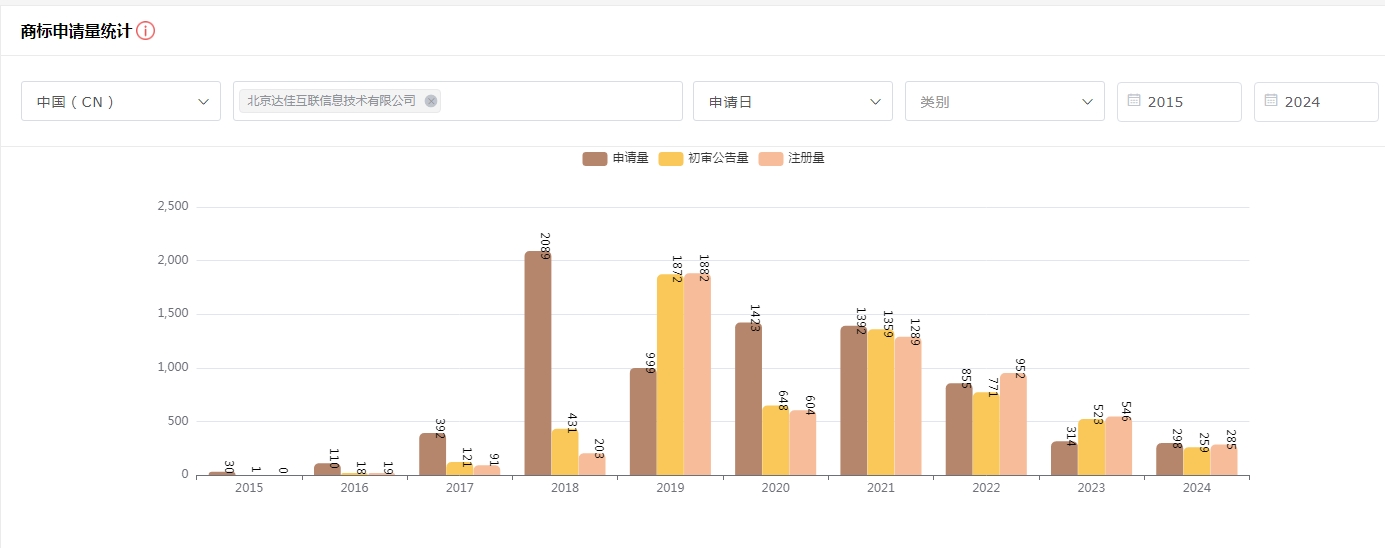
Statistics on Trademark Application Volume in Mainland China Over the Past Decade
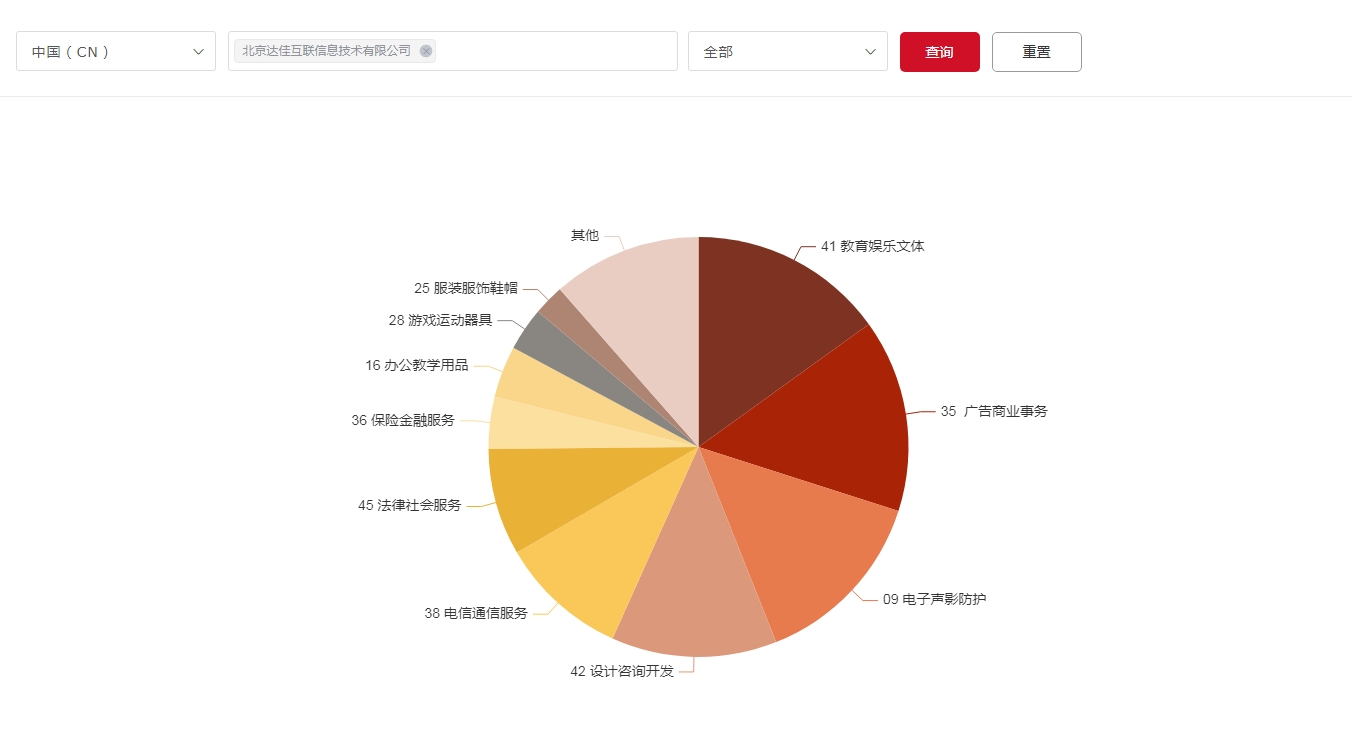
Statistics on Categories of Trademark Applications in China
International Market:
United States: A total of 327 applications were filed by designating the U.S. through the Madrid System, with a focus on core classes: Class 9 (Software), Class 35 (Advertising), and Class 41 (Entertainment).
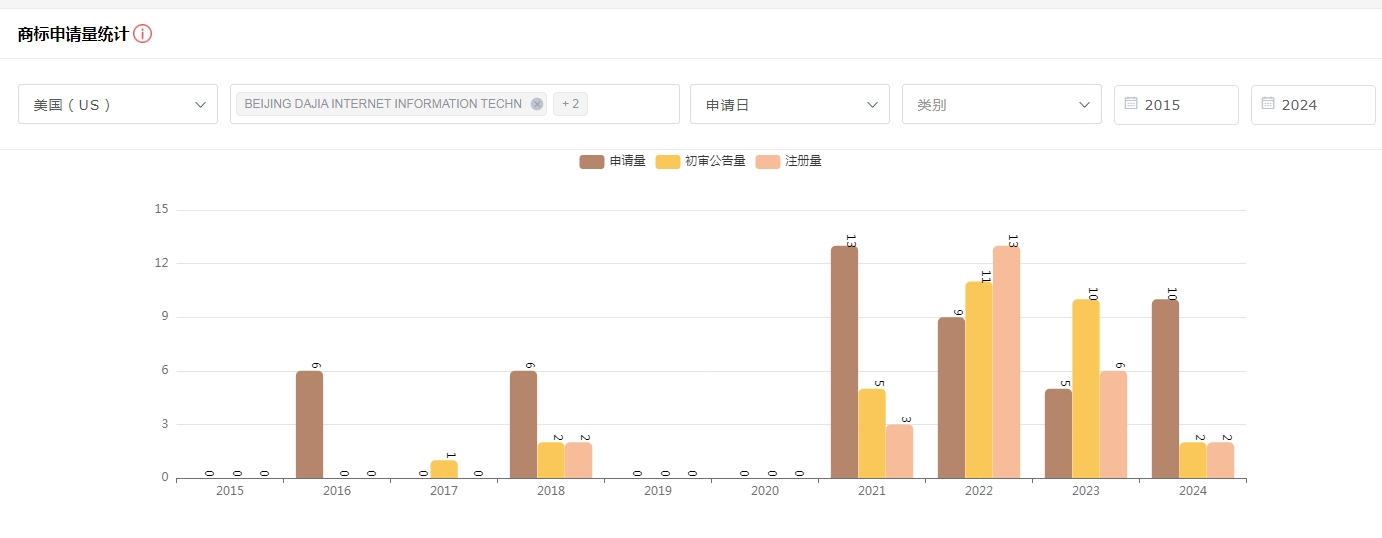
Trademark Application Statistics in the United States Over the Past Decade
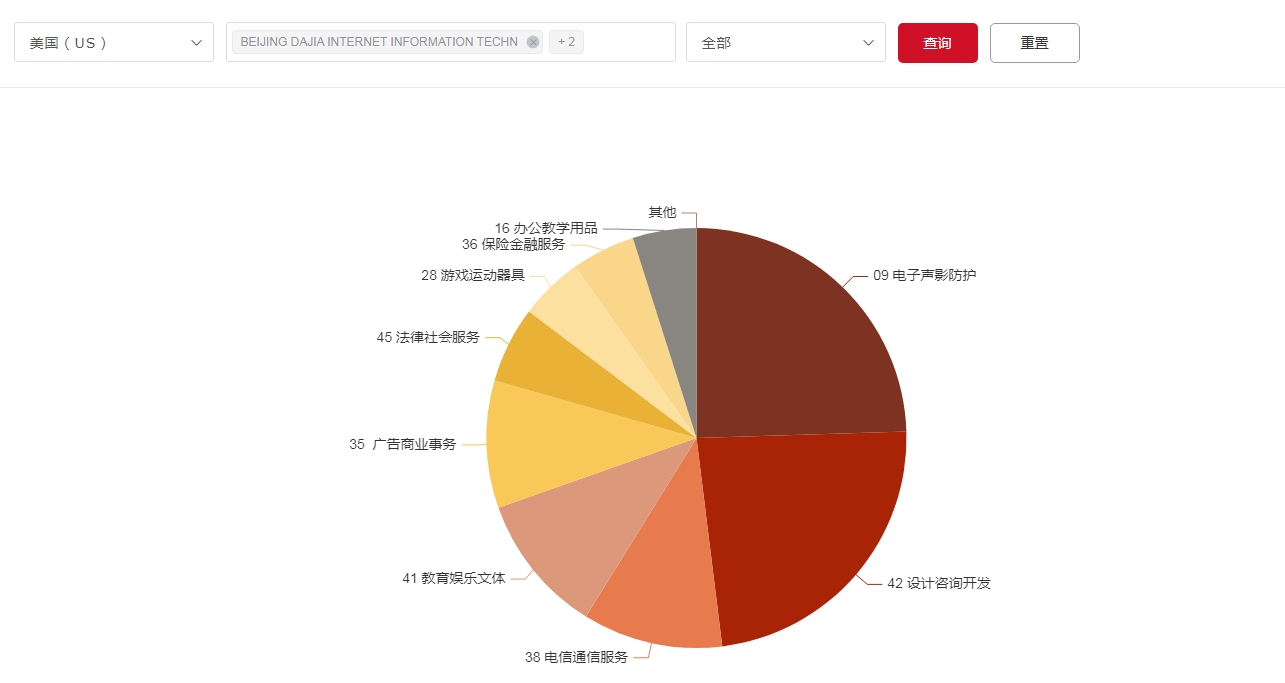
Statistics of Trademark Application Classes in the United States
European Union:
A total of 215 applications were submitted via the EUIPO channel, with a strategic focus on Class 38 (Telecommunication Services) and Class 42 (Technological Research and Development).
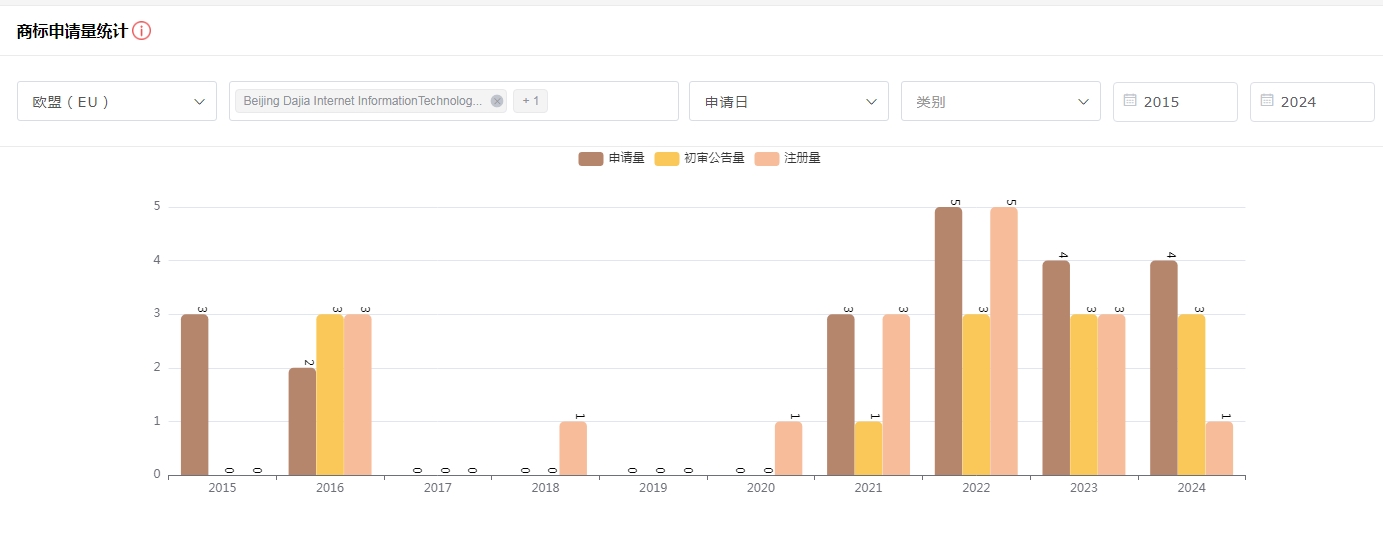
Trademark Application Statistics in the European Union Over the Past Decade
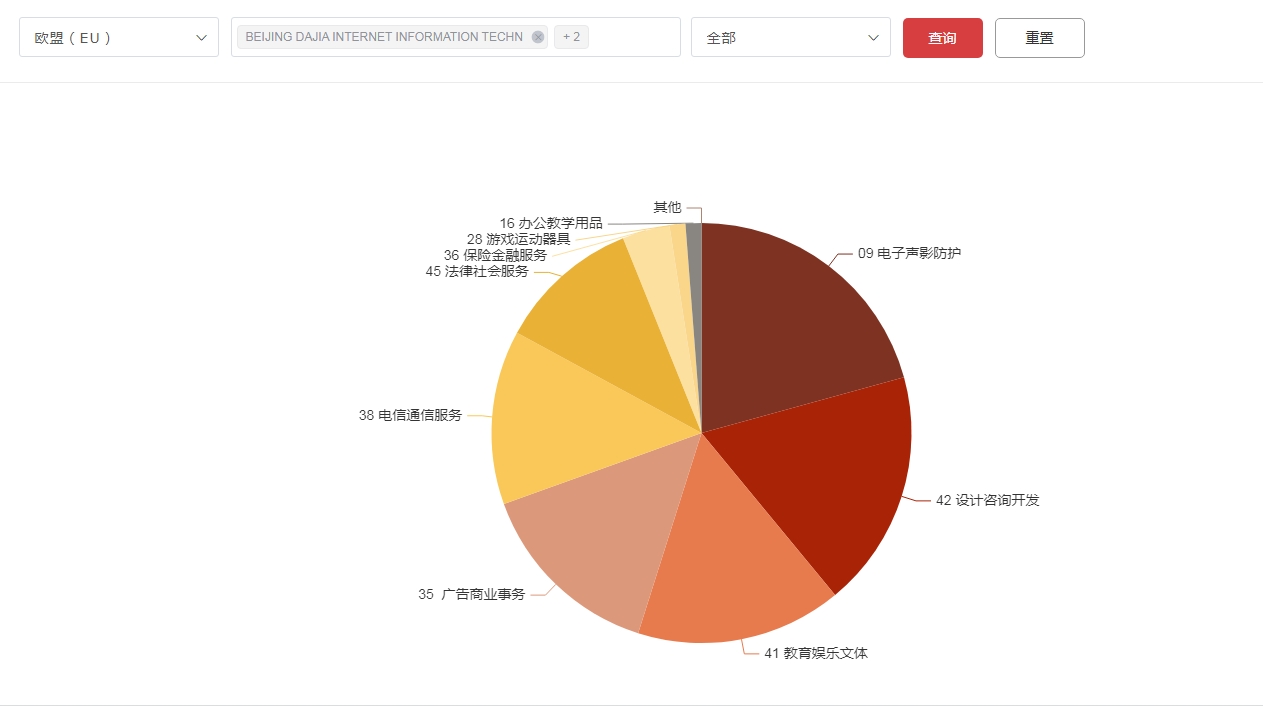
Statistics of Trademark Application Classes in the European Union
Japan/South Korea:
The number of applications reached 89 and 67 respectively, with a focus on derivative categories such as Class 25 (Clothing) and Class 30 (Food Products).
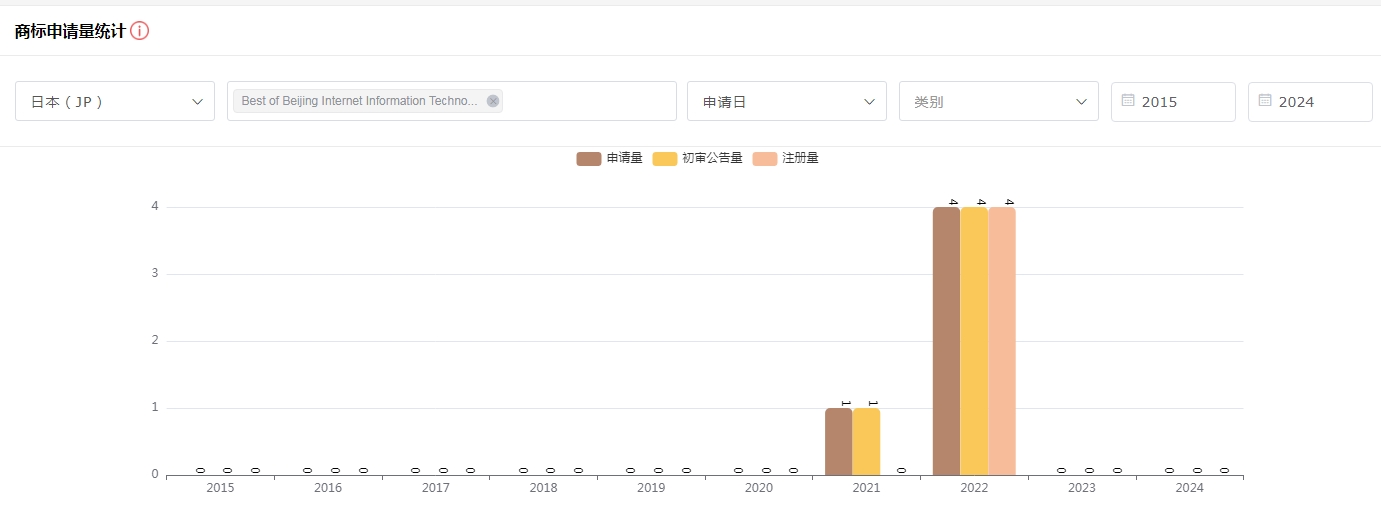
Trademark Application Statistics in Japan Over the Past Decade
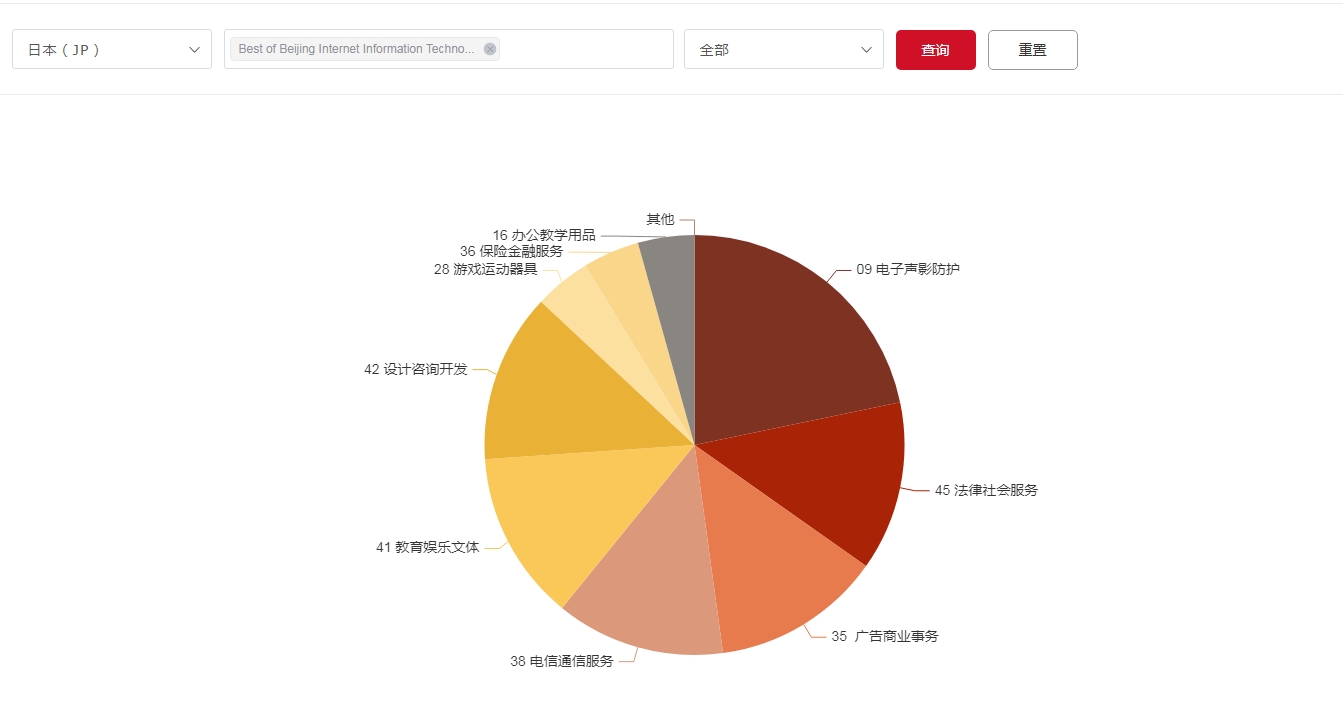
Statistics of Trademark Application Classes in Japan
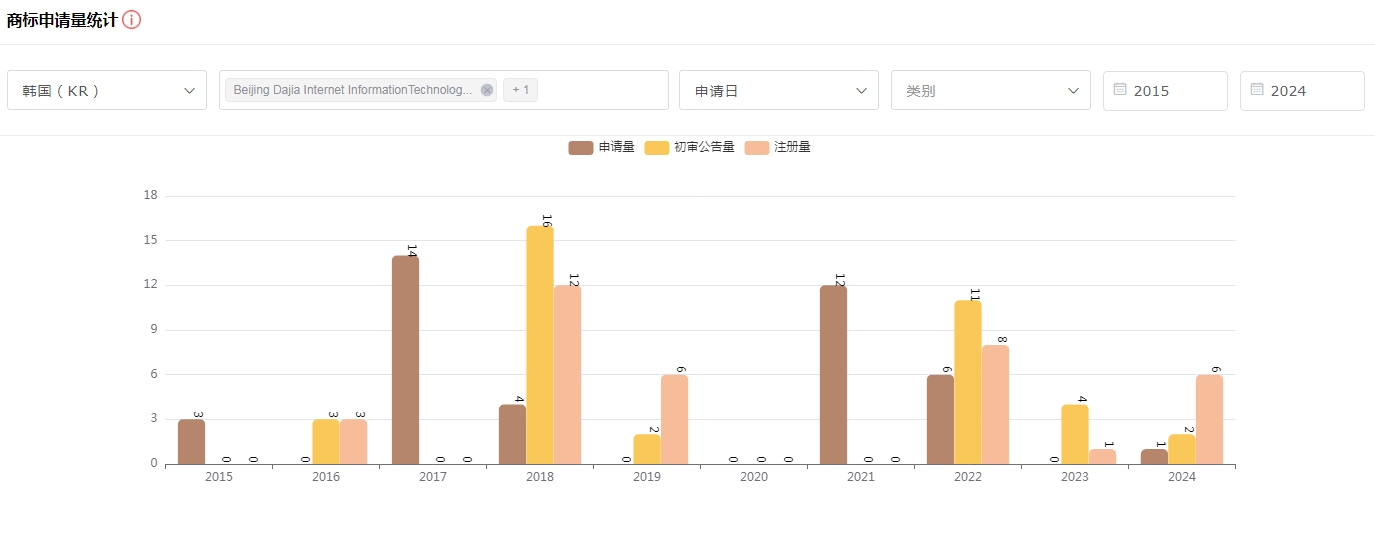
Trademark Application Statistics in South Korea Over the Past Decade
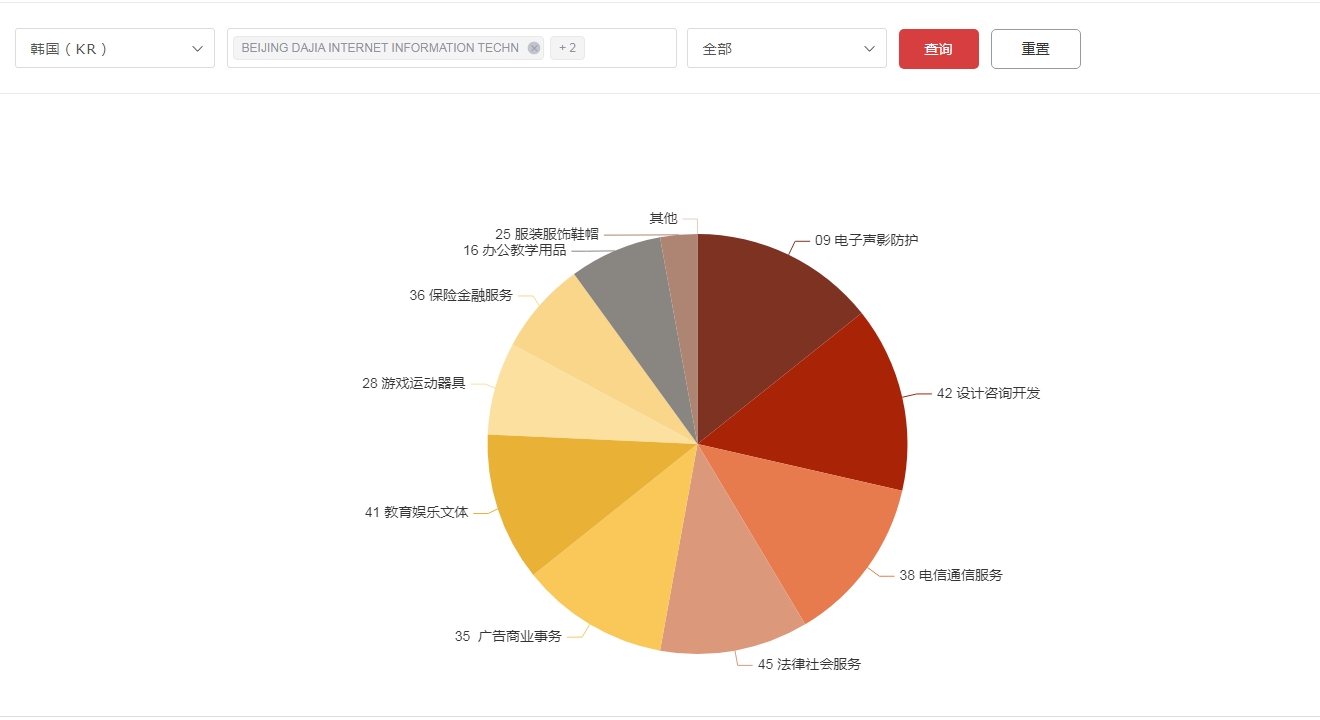
Statistics of Trademark Application Classes in South Korea
WIPO System:
In 2023, a total of 47 international registration applications were submitted through the Madrid System, marking a 25% year-on-year increase and reflecting the acceleration of the globalization strategy.
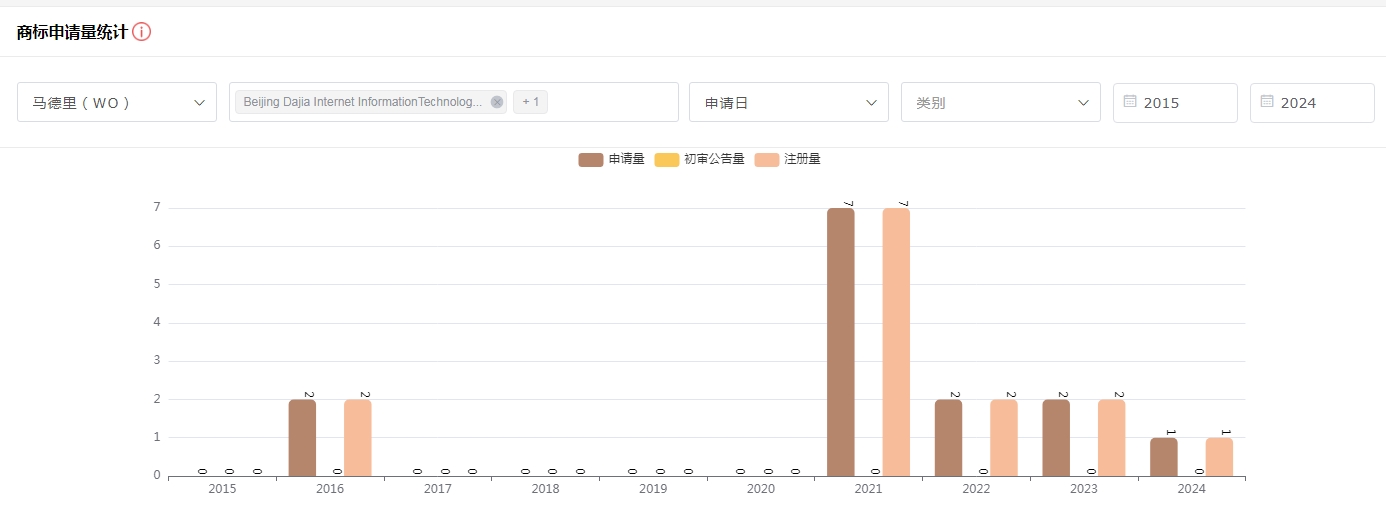
Trademark Application Statistics under the WIPO System Over the Past Decade
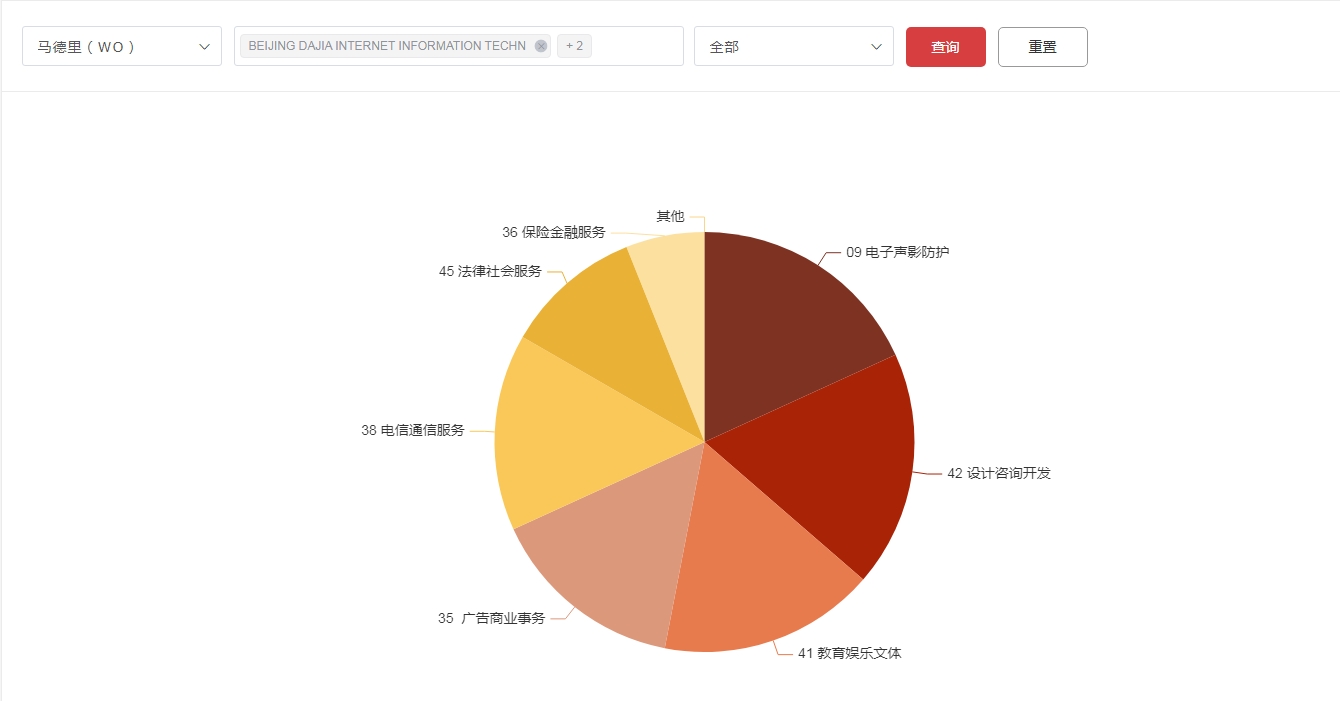
Statistics of Trademark Application Classes under the WIPO System
2. Distribution of Goods and Services Classes: Core Business and Ecosystem Expansion
Core Classes:
Class 9 (Scientific Instruments): Covers "computer software," "downloadable mobile applications," accounting for 28%.
Class 35 (Advertising and Sales): Includes "online advertising," "marketing," accounting for 22%.
Class 41 (Education and Entertainment): Involves "video production," "online games," accounting for 19%.
Ecosystem Expansion:
Class 3 (Cosmetics and Cleaning Products): Registered the "Fangshou" trademark series to enter the consumer goods sector.
Class 39 (Transportation and Storage): Launched the "Kuaibangshou" brand to expand into local lifestyle services.
Class 43 (Food and Accommodation Services): Applied for the "Kuaishou Shendao" trademark to explore offline service scenarios.
3. Distribution of Similar Groups: Defensive Registration Strategy
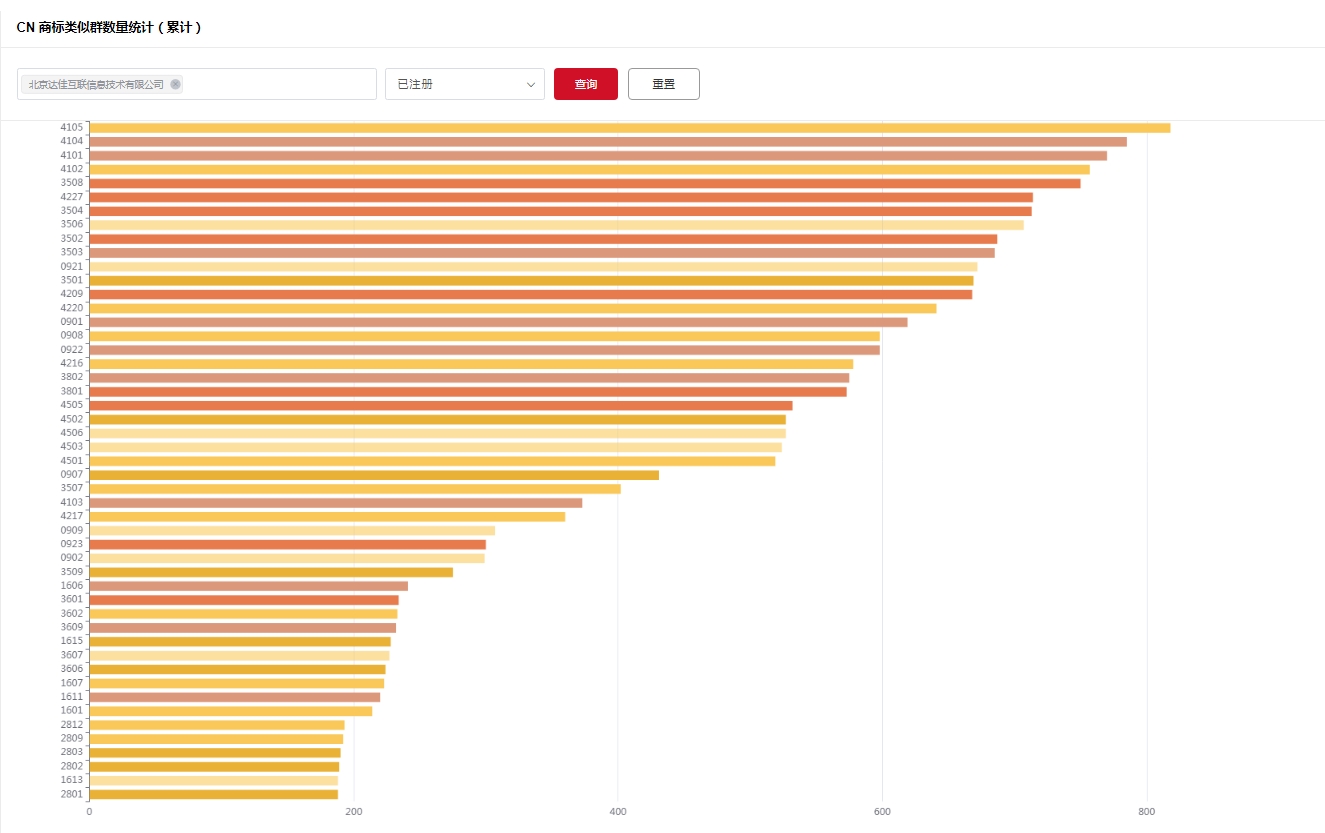
Class 42: Registered trademarks such as "FASTBOMSOR" in groups related to "computer programming" and "website design" to build technological barriers.
Class 35: Covered groups such as "advertising and publicity" and "business management" to defend against infringement in the e-commerce sector.
Class 25: Registered the English trademark "KUAISHOU" in groups related to "clothing" and "footwear and headgear" to expand the derivative product mark
4. Trademark Map and Bubble Chart: Visualization of Layout Strategy

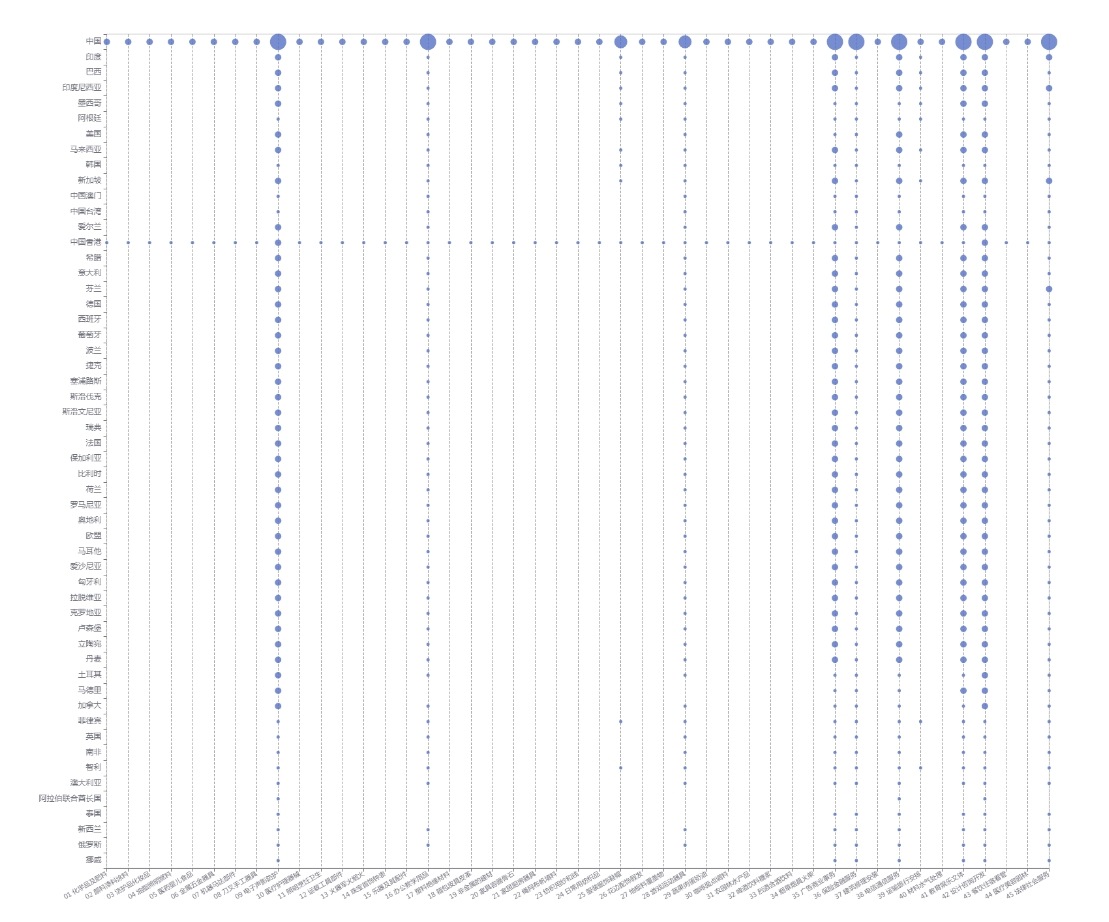
III. Obstacles and Disputes in International Trademark Registration: Analysis of Typical Cases
1. United States: Trademark Squatting and Rights Protection Battle
Case: In 2022, an individual preemptively registered the trademark “KUAISHOU” under Class 41. Kuaishou filed an opposition through the TTAB (Trademark Trial and Appeal Board), submitting evidence such as platform user volume and advertising revenue. The disputed trademark was eventually invalidated.
Strategy: Kuaishou established a three-tiered defense system of “Monitoring – Opposition – Litigation,” achieving an 89% success rate in trademark enforcement in the U.S. market in 2023.
2. European Union: Language Barriers and Cross-Class Challenges
Case: In 2023, Kuaishou’s application for the “Kuaishou” trademark in Class 35 was opposed by a German company, claiming similarity to the German word kaufen (to buy). After examination by the European Union Intellectual Property Office (EUIPO), the opposition was rejected due to significant differences in pronunciation and meaning.
Insight: Localization review should consider both linguistic differences and cultural associations.
3. South Korea: Cultural Elements and Legal Conflicts
Case: In 2021, Kuaishou applied for a trademark containing the term “韩方” (Korean traditional medicine) in Class 3. The application was initially rejected by the Korean Intellectual Property Office due to its reference to traditional medical terminology. The trademark was later approved after a clarification was added stating that it does not imply medicinal efficacy.
Lesson: It is essential to anticipate cultural taboos and legal boundaries in target markets in advance.
IV. Conclusion: The Future Evolution of Trademark Strategies
Kuaishou has built a comprehensive intellectual property protection network through a strategy of “deep cultivation of core classes + coverage of ecosystem scenarios + global localization.” As global competition with rivals like TikTok intensifies, Kuaishou’s trademark strategy should continue to focus on:
AI-derived categories: Such as trademarks related to “AI model training” under Class 42.
Metaverse scenarios: Trademark layouts under Class 9 for “virtual reality devices.”
Emerging markets: Localized registrations in the Middle East (e.g., Saudi Arabia) and Africa (e.g., Nigeria).
As a core carrier of intangible corporate assets, the depth of trademark layout directly determines the strength of a company’s competitive moat in globalization. Kuaishou’s practice offers a classic model for internet enterprises aiming to expand their business and intellectual property overseas in parallel.
(All chart data screenshots are sourced from the Kangxin IP Platform.)
 {{item.truncatedText}}
{{item.basicDescription&&item.basicDescription.slice(0,150)}}{{item.basicDescription&&item.basicDescription.length>150?"...":""}}
{{item.truncatedText}}
{{item.basicDescription&&item.basicDescription.slice(0,150)}}{{item.basicDescription&&item.basicDescription.length>150?"...":""}}