
Analysis of Graphic Trademark and Combination Trademark Similarity Determination
Time:2025-04-17
Publication Date:2025-04-17
In today's increasingly competitive market environment, trademarks are essential identifiers of a company's image and product recognition. Graphic trademarks, as well as Combination trademark of graphics and text (the following text refers to "Combination mark"), are a primary form of trademarks characterized by their intuitiveness, ease of recognition, and memory. They are widely used across various goods and services. However, determining the similarity of Graphic trademarks and Combination trademarks is a complex and meticulous process that involves multiple considerations.
The determination of similarity of Graphic trademarks and Combination trademarks is mainly based on the relevant provisions of the "Trademark Examination and Trial Standards" and the "Interpretation of the Supreme People's Court on Several Issues Concerning the Application of Law in the Trial of Civil Dispute Cases Involving Trademarks". Specifically, the following aspects should be considered when judging whether the trademarks are similar:
1. Overall Appearance: Assess whether the overall appearance of the trademarks is similar, including elements such as composition, lines, and colors.
2. Main Components: Compare the main components of the trademarks to see if they have distinctive features that might easily cause the relevant public to misidentify them.
3. General Attention of the Relevant Public: Use the general attention level of the relevant public as a standard to judge whether the trademarks are likely to cause confusion.
4. Distinctiveness and Reputation of the Trademark: Consider the distinctiveness and reputation of the trademark. If a trademark has a high level of reputation and distinctiveness, the criteria for determining its similarity will be stricter.
Using the examples in the "Trademark Examination and Trial Standards" as an example:
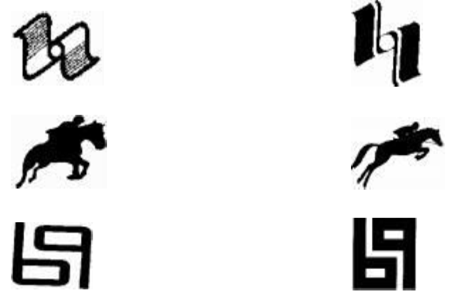
Pure Graphic Trademarks:
If the composition and overall appearance of the trademark graphics are similar, which may cause confusion among relevant public about the origin of the goods or services, it will be determined as a similar trademark
For example:
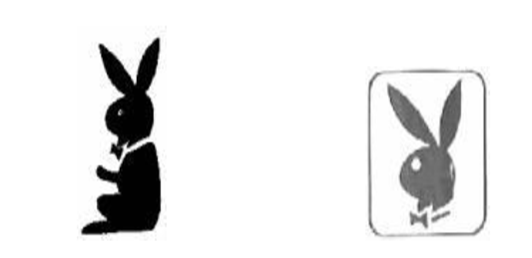
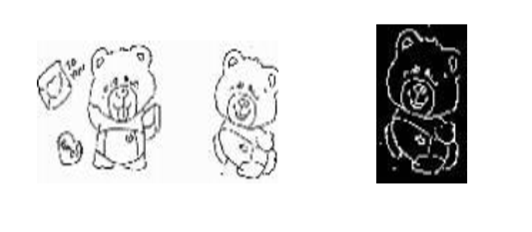
The trademark includes a graphic trademark that has a higher level of recognition or significant distinctiveness by others, which may lead the relevant public to believe that it belongs to a series of trademarks, causing confusion about the origin of goods or services, and is determined to be a similar trademark
For example:
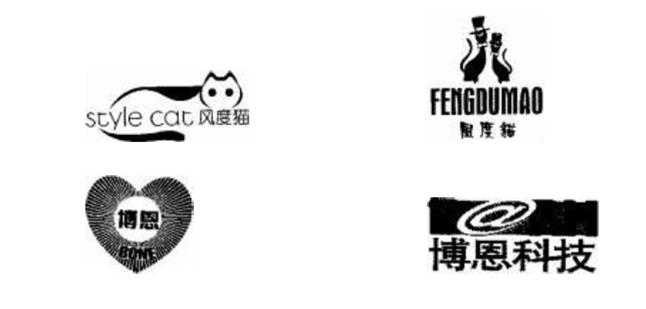
Combination Trademarks:
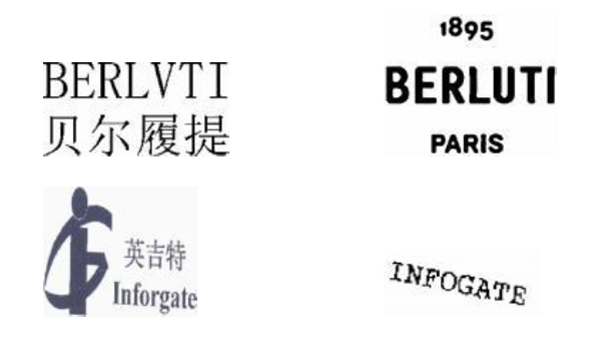
If the Chinese characters of the trademark are the same or similar, which may cause confusion among relevant public about the source of goods or services, it shall be determined as a similar trademark.
For example:
If the foreign language and numerical parts of a trademark are the same or similar, it may cause confusion among the relevant public as to the origin of goods or services, and be deemed as a similar trademark.
For example:
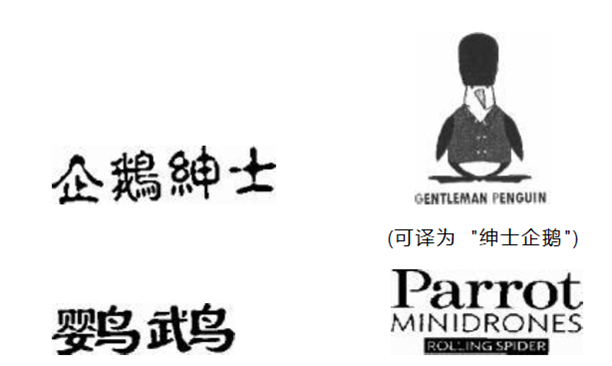
The main meaning of the Chinese and foreign text of a trademark is the same or substantially similar, which easily confuses the relevant public about the source of goods or services, and is judged as a similar trademark.
For example:
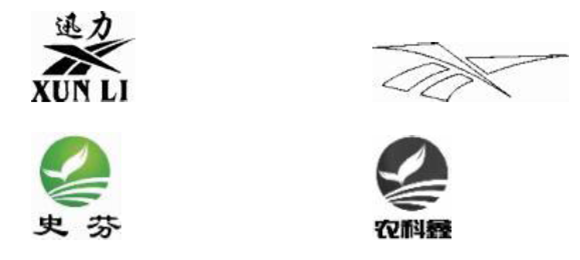
The graphic part of the trademark is the same or similar, which may confuse the relevant public about the origin of the goods or services, and is judged as a similar trademark.
For example:
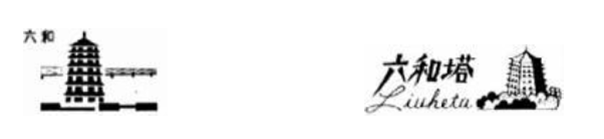
Trademark texts and graphics are different, but the arrangement and combination of them, or the overall description of the things are basically the same, making the overall appearance or meaning of the trademark similar, which may cause confusion among relevant public regarding the origin of goods or services, and be determined as similar trademarks
For example:

The Kangxin IP Platform (https://eservice.kangxin.com), as an intelligent tool in the intellectual property industry, has demonstrated powerful functions in Graphic trademark and Combination trademark searches.
The search function of the Kangxin IP Platform has numerous advantages, which are reflected in its immense value in practical applications:
1. High Efficiency and Accuracy: Utilizing AI and big data technology, the Kangxin IP Platform achieves rapid search and accurate judgment of a trademark with graphics. Users only need to upload the trademark they wish to search, and the platform can display similar trademarks with one click, greatly improving search efficiency.
2. Intelligent Recognition: The platform possesses intelligent graphics recognition capabilities, accurately identifying various features of the graphics, including shapes, lines, and colors, thereby conducting precise similarity assessments.
3. One-Stop Service: The Kangxin IP Platform not only provides trademark search functions but also covers the entire process of trademark registration, monitoring, renewal, and transfer, offering users a convenient one-stop solution.
4. Intellectual Property Protection: Through the platform's search function, users can promptly discover and prevent the registration of infringing trademarks, effectively protecting their intellectual property rights.
Conclusion
The determination of Graphic trademark and Combination trademark similarity is a complex and meticulous process that requires a comprehensive consideration of multiple factors. As an intelligent tool in the intellectual property field, the Kangxin IP Platform has demonstrated powerful functions and advantages in trademark searches. Through the platform's search function, users can quickly and accurately find similar trademarks, providing strong support for processes such as trademark registration, monitoring, and transfer. Additionally, the platform offers full-process trademark services, providing users with a convenient one-stop solution.
 {{item.truncatedText}}
{{item.basicDescription&&item.basicDescription.slice(0,150)}}{{item.basicDescription&&item.basicDescription.length>150?"...":""}}
{{item.truncatedText}}
{{item.basicDescription&&item.basicDescription.slice(0,150)}}{{item.basicDescription&&item.basicDescription.length>150?"...":""}}