
OpenAI's Trademark Landscape: A Giant in Artificial Intelligence
Time:2025-02-19
Publication Date:2025-02-19
In the vast sky of artificial intelligence, OpenAI undoubtedly shines as one of the brightest stars. From its humble beginnings as a non-profit organization to becoming a global tech giant, OpenAI has not only revolutionized the world with its groundbreaking technological products but has also demonstrated deep strategic insight in its trademark positioning. This article will delve into OpenAI’s development journey, key products and technologies, core team, and its social impact.
OpenAI, officially named Open Artificial Intelligence, was founded in December 2015 and is headquartered in San Francisco, USA. As a pioneering company dedicated to the safe, fair, and transparent development of artificial intelligence, OpenAI was co-founded by Silicon Valley tech moguls, including Elon Musk and Sam Altman. The company consists of the for-profit OpenAI LP and its non-profit parent company, OpenAI Inc., with the mission to ensure that artificial general intelligence benefits all of humanity.
From the outset, OpenAI has focused on cutting-edge AI research, launching natural language generation models such as GPT-1, GPT-2, and GPT-3, along with innovative products like the DALL-E image generator. In 2022, the release of ChatGPT ignited the global tech world, becoming the fastest-growing consumer software application in history. With investments and partnerships from giants like Microsoft, OpenAI has made significant achievements in technology development, product promotion, and market applications.
Key Products and Technologies
GPT Series: OpenAI’s GPT series is one of its most well-known products. From GPT-1 to GPT-4, the models have continually evolved in scale, performance, and functionality, with applications in text generation, conversational systems, intelligent customer service, and writing assistants. GPT-4, with 33 trillion parameters, is capable of handling more complex language tasks and generating more natural and fluent text.
DALL-E: As a leader in the image generation field, DALL-E can create images based on textual descriptions provided by users. Its applications range across advertising, design, art, and education, offering users unprecedented creative convenience.
Other Technologies: OpenAI is also exploring AI applications in scientific research and robotics, such as the AlphaFold protein structure prediction system and the Dexterous Hand robotic operating system, continuously pushing the boundaries of artificial intelligence.
Core Team
OpenAI’s core team consists of top talents from the tech and business world, including Sam Altman (current interim CEO), Greg Brockman (former Chairman and President), Ilya Sutskever (co-founder and Chief Scientist), and Mira Murati (current interim CEO, former CTO). Together, they have driven OpenAI’s technological advancements and commercialization, laying a solid foundation for the company’s global influence.
Social Impact
Through its cutting-edge research and innovative products, OpenAI has had a profound impact on global technology, economics, culture, and more. Products like ChatGPT have not only enhanced productivity and quality of life but have also accelerated the development and adoption of AI technology. Simultaneously, OpenAI actively advocates for AI ethics and responsibility, working to ensure the safety, fairness, and transparency of artificial intelligence.
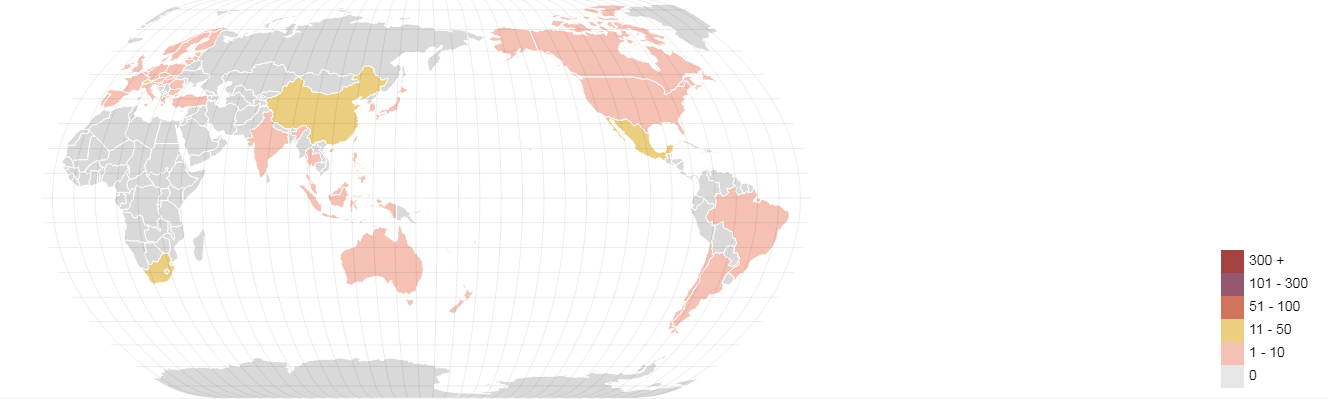
Analysis of Global Trademark Positioning
By searching OpenAI’s global trademark positioning through the Kangxin IP platform (eservice.kangxin.com), it is evident that OpenAI's trademark strategy is characterized by globalization and diversification. In major countries and regions such as the US, Europe, and Asia, OpenAI has registered numerous trademarks , such as "OpenAI," "ChatGPT," and "DALL-E," to ensure its brand's uniqueness and recognition in these markets. These trademarks span a wide range of categories, including technology, software, education, and entertainment, demonstrating OpenAI’s strong brand protection awareness on a global scale. Additionally, OpenAI has flexibly adjusted its trademark registration strategies based on the characteristics and needs of different markets, adapting to varying legal environments and business regulations.
Core Trademark Infringement Risks
Despite OpenAI’s forward-looking and strategic approach to trademark positioning, there remains a risk of core trademarks being infringed upon, especially in emerging markets and regions with underdeveloped legal frameworks. To address this issue, OpenAI needs to strengthen its collaboration with local legal institutions, closely monitor and combat infringement activities, and protect its brand image and legal rights.
As AI technology continues to advance and its application scenarios expand, the importance and urgency of OpenAI’s trademark positioning become increasingly prominent. In the future, OpenAI will continue to adhere to its principles of openness, collaboration, transparency, and ethics, continuously optimizing its trademark strategies to lay a solid foundation for global development and brand building. At the same time, OpenAI will continue to lead the wave of innovation in AI technology, contributing more wisdom and strength to the progress of human society.
 {{item.truncatedText}}
{{item.basicDescription&&item.basicDescription.slice(0,150)}}{{item.basicDescription&&item.basicDescription.length>150?"...":""}}
{{item.truncatedText}}
{{item.basicDescription&&item.basicDescription.slice(0,150)}}{{item.basicDescription&&item.basicDescription.length>150?"...":""}}