
Someone Registered a Lookalike Domain of Our Brand — What Are Our Options, and What Does UDRP Cost? (2026)
Time:2026-08-25
Publication Date:2026-08-25
Key takeaways (TL;DR)
• You have four main routes: an abuse complaint to the registrar/hosting provider (fastest and free — the first move whenever the site is phishing or distributing malware); a UDRP complaint to get the domain transferred or cancelled; URS for a rapid but temporary suspension of clear-cut cases in new gTLDs; or court litigation where you need damages or an injunction.
• UDRP requires proving three elements together: the domain is identical or confusingly similar to a trademark in which you have rights; the registrant has no rights or legitimate interests in it; and it was registered and is being used in bad faith.
• Typical UDRP cost and speed: the WIPO Arbitration and Mediation Center’s filing fee starts at USD 1,500 for 1–5 domains with a single panelist (USD 4,000 for a three-member panel), plus professional fees for preparing the complaint; decisions typically issue around two months from filing (fees and timing as of August 2026 — check the provider’s current schedule). The only remedies are transfer or cancellation — UDRP awards no damages.
• .cn domains are different: they fall under the CNDRP, not UDRP, with its own providers and a notable bar — complaints are generally not accepted once the domain has been registered for more than three years. A Chinese trademark registration materially strengthens your position.
• A registered trademark is the entry ticket for nearly every route, and monitoring across 400+ TLD suffixes is what turns “a customer told us about the fake site” into “we caught it the week it was registered”.
The site is phishing our customers — what can we do right now?
Direct answer: preserve evidence first, then hit the infrastructure — registrar and host abuse channels act in days, sometimes hours, while a UDRP takes about two months. Before anything is taken down, capture the evidence you will need for every later step: timestamped screenshots and page captures of the site, the WHOIS/RDAP record, and if payments or credentials are being harvested, examples of the phishing flow.
Then work through the fast channels in parallel: file an abuse report with the registrar (every ICANN-accredited registrar must maintain an abuse contact) and the hosting provider; report the URL to browser blocklist services such as Google Safe Browsing so mainstream browsers warn visitors off; and where customer credentials are at risk, notify your own users through your official channels. Fraud-based takedowns rest on the phishing conduct, not on trademark law, so they work even before your trademark position is fully sorted — but they are also reversible: the registrant can move to another host or registrar. That is why the fast channels stop the bleeding while a UDRP or CNDRP resolves ownership of the domain itself.
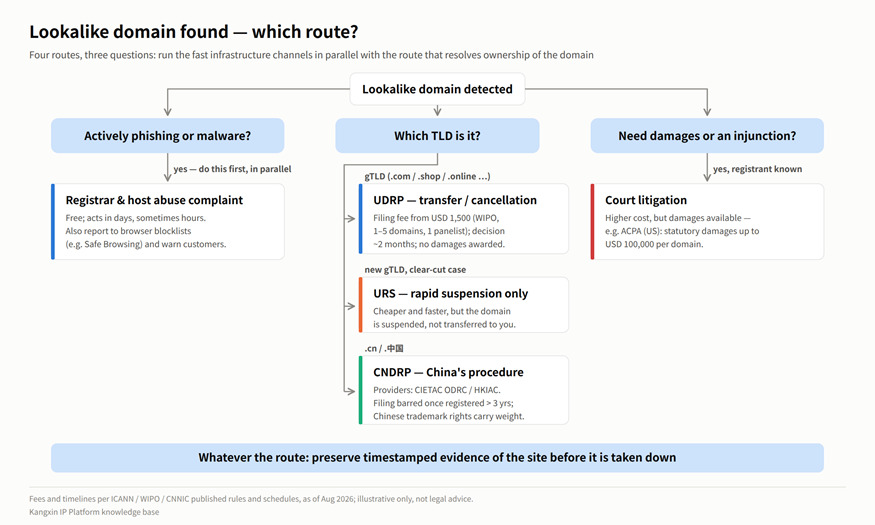
Figure 1 | Lookalike domain found — which route?
What do we have to prove in a UDRP, and does our case qualify?
Direct answer: all three UDRP elements, cumulatively — trademark similarity, no legitimate interest, and bad-faith registration and use. The Uniform Domain-Name Dispute-Resolution Policy is an ICANN policy binding on every gTLD registrant through their registration agreement, which is what makes it enforceable worldwide without suing anyone.
On the first element, a registered trademark anywhere is the cleanest basis; typosquats (brandd.com), brand-plus-keyword domains (brand-official.shop, brand-support.online) and homoglyph tricks are routinely found confusingly similar. On the second, resellers and fan sites occasionally raise genuine defenses, but a site imitating your login page or selling counterfeits has none. On the third, panels look at patterns: the registrant’s history of squatting, concealment behind privacy services combined with false contact data, offers to sell the domain at a profit, and use of the site to impersonate the brand. Two long-settled points help complainants: passive holding of a domain (parked, no active site) can still constitute bad-faith use where the mark is well known and no good-faith use is plausible — a line of panel decisions running since the late-1990s Telstra case — and phishing is treated as bad faith per se. The main losing scenario to screen for before filing: the domain was registered before you had any trademark rights, which usually defeats bad-faith registration.
How much does a UDRP cost, and how long does it take?
Direct answer: budget the provider filing fee — from USD 1,500 at WIPO for 1–5 domains with a single panelist — plus professional fees for the complaint, and expect a decision in roughly two months. The fee schedule at the WIPO Arbitration and Mediation Center, the most-used provider, starts at USD 1,500 (1–5 domains, one panelist) and rises to USD 4,000 where either party opts for a three-member panel; other ICANN-approved providers publish comparable schedules (figures as of August 2026 — always check the provider’s current table). The complainant pays; fees are not recoverable from the registrant.
The procedural clock is fixed by the UDRP Rules: the registrant has 20 days to respond after the proceeding commences, the panel is appointed and must normally decide within 14 days, and the registrar implements a transfer 10 business days after the decision unless the registrant files a court action. End to end, straightforward cases typically resolve in about 60 days from filing. What UDRP does not give you: damages, costs, or any order against the website content itself — it moves the domain. If the registrant’s identity is known, the harm is large, and you are in a jurisdiction with a cybersquatting statute — for example, the US Anticybersquatting Consumer Protection Act (ACPA), which allows statutory damages of up to USD 100,000 per domain — court can be worth the substantially higher cost. For most brands facing a rotating cast of anonymous registrants, UDRP plus fast abuse channels is the better economics.
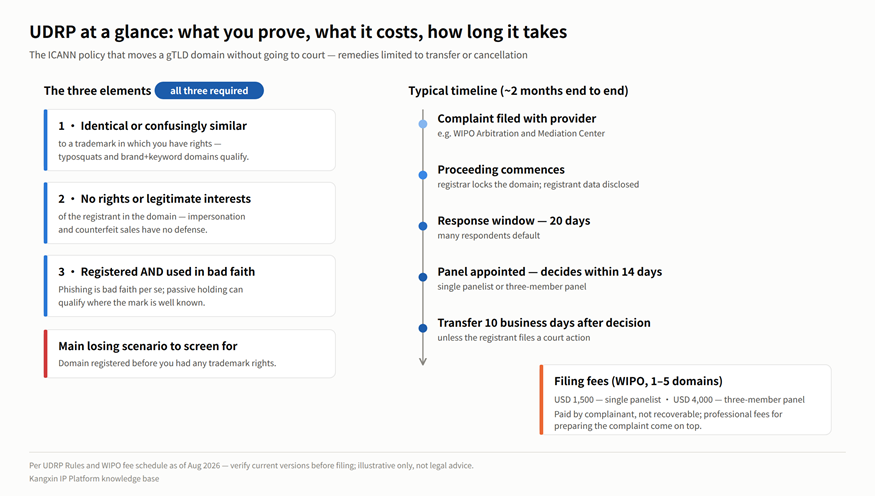
Figure 2 | UDRP at a glance: elements, cost and timeline
The copycat uses a .cn domain — does UDRP apply?
Direct answer: no — .cn and .中国 domains follow China’s CNDRP, and you must move within three years of the domain’s registration. The China ccTLD dispute policy (issued by CNNIC, the .cn registry) mirrors the UDRP’s three-element logic but differs on points that matter. The filing bar is the sharpest: complaints against a domain registered for more than three years are generally not accepted, pushing you to court instead — so a .cn lookalike discovered late needs a strategy decision quickly. Proceedings are handled by the CNNIC-approved providers (the CIETAC Online Dispute Resolution Center and the Hong Kong International Arbitration Centre), typically in Chinese unless otherwise agreed. On substance, CNDRP requires bad-faith registration or use rather than both, which is somewhat friendlier to complainants; and while a trademark registered anywhere can ground a complaint, panels give real weight to Chinese trademark registrations — one more reason brands manufacturing or selling in China should have their China filings in order before a dispute, not after. Evidence formalities are also stricter in the Chinese procedural environment; timestamped captures of the infringing site made through a recognized evidence-preservation service travel much better than plain screenshots.
How do we stop the next lookalike from appearing?
Direct answer: you cannot prevent registrations, so the workable posture is a narrow defensive portfolio plus broad monitoring with a pre-agreed takedown playbook. Defensively registering every TLD is neither possible (there are hundreds of suffixes) nor sensible; register your exact brand in the TLDs where you do business and the handful of high-risk suffixes for your sector, and let monitoring cover the rest. A monitoring service watching 400+ TLD suffixes for your brand strings, typo variants and homoglyphs surfaces new registrations within days — while the site is still parked and before customers are phished — and each alert feeds a standing playbook: preserve evidence with a timestamp, classify (phishing / counterfeit sales / parked), and trigger the matching route from the decision tree above. Because the registrant’s real target is often your product rather than just your traffic, domain monitoring pairs naturally with marketplace monitoring — the same counterfeiter frequently runs the fake site and the fake listings.
Frequently asked questions (FAQ)
Q: Can we file a UDRP without a registered trademark? A: It is possible — panels accept unregistered (common-law) marks with strong evidence of acquired distinctiveness — but it is a materially harder, more expensive complaint to run. If you are trading under the brand, registration is the cheaper fix and strengthens every other route (URS requires a registered mark or validated court/treaty basis outright).
Q: The registrant is hidden behind a WHOIS privacy service. Does that block us? A: No. In a UDRP the provider obtains the underlying registrant data from the registrar after filing, and the complaint can be amended to name them. Concealment combined with false details is itself a factor panels weigh toward bad faith.
Q: Can we recover damages or our costs through UDRP? A: No. UDRP remedies are limited to transfer or cancellation of the domain. Damages require court — in the US, ACPA provides statutory damages of up to USD 100,000 per domain; other jurisdictions offer trademark or unfair-competition claims with their own damages rules.
Q: The lookalike domain just sits on a parking page. Is that still actionable? A: Often yes. Under the passive-holding doctrine, panels have found bad-faith use where the mark is distinctive or well known, the registrant concealed identity or provided false details, and no plausible good-faith use of the domain exists. A parked page with pay-per-click ads pointing at your competitors makes the case easier still.
Q: Should we just buy the domain from the squatter? A: Get a quote through an intermediary if the amount is likely to be below your all-in dispute cost — sometimes it is the rational outcome. But an offer to sell at a profit is itself evidence of bad faith; document the exchange, and never negotiate in a way that reveals urgency before your dispute option is ready.
Next step: turn a one-off incident into a covered flank
A lookalike domain is rarely the last one. Kangxin’s IP platform combines domain monitoring across 400+ TLD suffixes, timestamped evidence preservation, UDRP/CNDRP complaint handling by China- and international-facing counsel, and — because fake sites and fake listings usually share an operator — marketplace monitoring across 150+ e-commerce platforms in the same dashboard. Book a free strategy consultation to map your current exposure and a takedown playbook, or start with a free trademark search across 43 jurisdictions to check the registrations your dispute options will rest on.
 {{item.truncatedText}}
{{item.basicDescription&&item.basicDescription.slice(0,150)}}{{item.basicDescription&&item.basicDescription.length>150?"...":""}}
{{item.truncatedText}}
{{item.basicDescription&&item.basicDescription.slice(0,150)}}{{item.basicDescription&&item.basicDescription.length>150?"...":""}}