
How Do I Register Copyright in China as a Foreign Company — and Is It Worth It? (2026 Guide)
Time:2026-09-01
Publication Date:2026-09-01
Key takeaways (TL;DR)
• You don’t have to register — your copyright already exists in China. China has been a Berne Convention member since 1992, and works of foreign companies are protected automatically from creation, with no registration requirement (PRC Copyright Law, Article 2).
• Registration is still worth it for most foreign companies, because Chinese enforcement runs on certificates: platform takedown portals, China Customs recordal, courts and trademark-squatting actions all move faster when you can hand over a Chinese registration certificate instead of a foreign evidence bundle with translations.
• The process is accessible: foreign companies can register directly with the Copyright Protection Center of China (CPCC) through an agent — no Chinese entity needed. Budget on the order of a few hundred RMB per work in official fees, with a certificate typically in hand within one to two months of acceptance (per the CPCC’s current published schedules; verify before filing).
• A registration certificate is also a weapon against trademark squatters: copyright in a logo or character artwork counts as a “prior right” under Article 32 of the PRC Trademark Law, and is regularly used to oppose or invalidate bad-faith trademark filings that copy your artwork.
• For large portfolios, register in tiers: key works (logos, hero characters, flagship product artwork) get registration; the long tail gets trusted timestamps (about CNY 10 per file, issued in seconds) so every design has dated evidence without registration-level cost.
Do foreign companies need to register copyright in China at all?
Direct answer: no — protection is automatic, but “protected” and “enforceable in practice” are two different things. China acceded to the Berne Convention in 1992, and the PRC Copyright Law protects works of foreign entities under China’s treaty obligations from the moment of creation, with no formalities (Article 2). Registration is voluntary by design — the governing rules are the Trial Measures for the Voluntary Registration of Works — and a foreign company that never registers still owns its copyright in China.
The practical catch is evidentiary. When you actually need to use the copyright — to pull a copied product off Taobao or 1688, to record rights with China Customs, to sue an infringer, or to knock out a trademark application that copies your artwork — someone will ask you to prove ownership. Proving it with foreign materials means assembling creation records, chain-of-title documents and certified Chinese translations, sometimes with notarization and legalization, and then hoping a platform reviewer processes the bundle quickly. A Chinese registration certificate compresses all of that into a single document that every reviewer, customs officer and judge recognizes on sight. Chinese courts treat the registration certificate as prima facie evidence of ownership (Judicial Interpretation on Copyright Civil Disputes, Article 7) — rebuttable, but yours to hold until someone rebuts it.
What does a Chinese registration certificate actually unlock?
Direct answer: five things — platform takedowns, customs recordal, litigation, anti-squatting actions and licensing deals — and in each one it replaces a translated evidence bundle with a document reviewers accept at face value.
E-commerce and content platform takedowns. Complaint portals on Taobao, 1688, Pinduoduo, Douyin and their peers ask for proof of rights, and certificate-type documents have the highest acceptance rates. For copied product photos, packaging artwork, plush-toy designs or in-game art, a registration certificate is the difference between a complaint processed on the first pass and one bounced for supplementary evidence.
China Customs recordal. Copyright — not just trademarks — can be recorded with China Customs, putting seizure of infringing shipments on the table at every Chinese port. Recordal requires proof of the right; a Chinese registration certificate is the standard basis on which foreign rights holders record copyright.
Litigation. In court, the certificate is the anchor of your ownership case, supplemented by creation files and publication records. Without it, ownership is still provable — but with more documents, more translations and more room for the defendant to make procedural noise.
Actions against trademark squatters. A recurring China scenario: a local operator files your character or logo artwork as its trademark. Article 32 of the PRC Trademark Law bars applications that damage another party’s existing prior rights — and copyright in the artwork is exactly such a prior right. A copyright registration (ideally with a registration or creation date before the squatter’s filing date) is the standard documentary basis for an opposition during the 3-month publication window or an invalidation after registration. This route matters because it works even in classes where you never filed trademarks.
Licensing and merchandising. Chinese licensees, distributors and platform partners routinely ask for registration certificates as a condition of signing — the certificate functions as the title document of the deal.
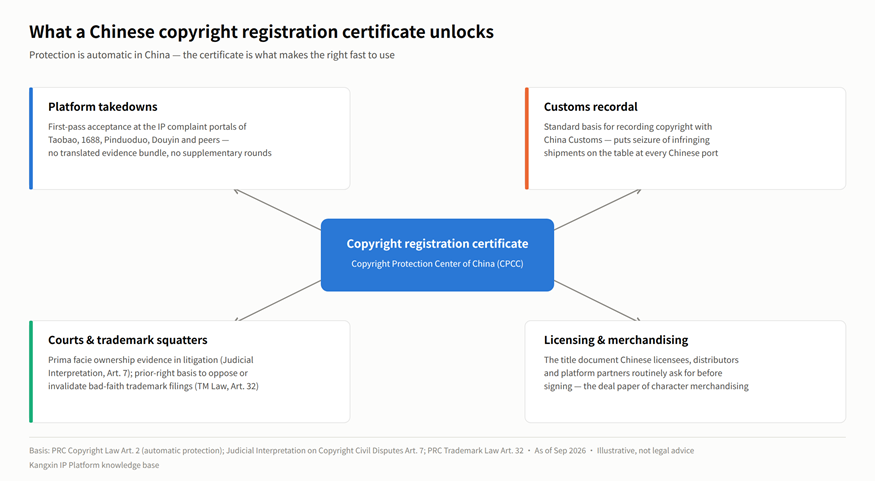
Figure 1 | What a Chinese copyright registration certificate unlocks
How does registration work for a foreign company — documents, cost, timeline?
Direct answer: file with the Copyright Protection Center of China (CPCC) through an agent; prepare identity documents with Chinese translations plus the work and its creation details; budget a few hundred RMB per work in official fees and roughly one to two months to certificate.
Where. Works of foreign authors and companies are registered with the CPCC in Beijing (Chinese applicants can also use provincial copyright administrations). No Chinese subsidiary is required — a foreign company files in its own name, in practice through a Chinese agent who handles the Chinese-language forms and correspondence.
What you file. The application form (work title, category, completion and first-publication dates, authorship); a sample of the work; the applicant’s identity document — for a foreign company, its certificate of incorporation or equivalent with a Chinese translation; a statement or documents showing how the applicant owns the rights (created in-house as a corporate work, commissioned with an assignment, etc.); and a power of attorney if filing through an agent. Works created by employees or outside designers deserve a moment of attention here: register in the name of the entity that actually holds the rights under the contract, because a certificate in the wrong name is a common reason enforcement stumbles later.
Cost and timeline. Official fees vary by work type and are on the order of a few hundred RMB per work, with reduced rates for batches of works in a series; certificates typically issue within one to two months of acceptance, and expedited handling is available at higher fees (all per the CPCC’s current published schedules — verify the numbers before budgeting, as of September 2026). For portfolio planning, the useful mental model: registration is cheap per work but not free at scale, which is why the tiered strategy below exists.
We have hundreds of designs — do we register everything?
Direct answer: no — register the head of the portfolio, timestamp the tail. Registering every SKU’s artwork, every seasonal design and every marketing asset rarely survives a budget review, and doesn’t need to.
The tier worth registering is the artwork you would litigate over or license out: brand logos, hero characters, flagship product designs, core packaging. These get CPCC registration — and, where the artwork could be filed by someone else as a trademark, the registration doubles as your Article 32 ammunition.
The long tail — product photo sets, seasonal variants, drafts, social content — gets a trusted timestamp at about CNY 10 per file: a hash of the file bound to the national standard time, issued in seconds, recognized by Chinese courts as a technical means of proving that the file existed unaltered at that time (Judicial Interpretation on Internet Courts, Fashi [2018] No. 16, Article 11). The file itself never leaves your systems. Timestamps prove existence and possession at a point in time rather than ownership as such, so they work best alongside creation files and publication records — but at this price point, every design in the portfolio can carry dated evidence from the day it’s finished. The full comparison of what timestamps and registration each prove is in our companion guide on trademark and evidence strategy for China.
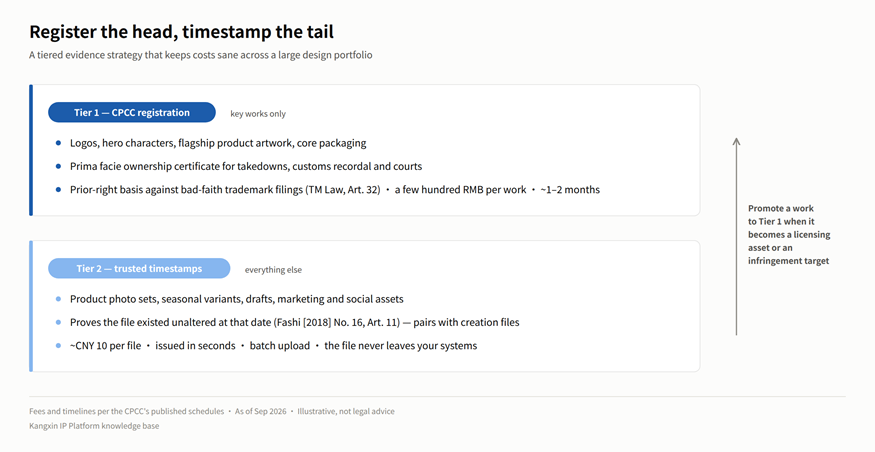
Figure 2 | Register the head, timestamp the tail: a tiered evidence strategy
What if the copying has already started?
Direct answer: registration is still worth filing now — and evidence preservation comes first. Registration is possible after infringement begins; the certificate you obtain will still carry its stated creation and publication dates and still anchors takedowns and litigation going forward. But before any complaint is filed, preserve the infringing pages properly — listings tend to vanish once complaints land, and with them your damages evidence. Evidence-preservation captures for litigation are designed and executed by attorneys so that the record withstands authenticity challenges; self-made screenshots are better than nothing, but not what you want to be holding in court. If the copying extends to someone filing your artwork as their trademark, the clock matters: an invalidation based on prior rights must generally be filed within 5 years of the squatted mark’s registration (PRC Trademark Law, Article 45), and the 3-month opposition window after publication is cheaper than any later remedy — a China trademark watch pays for itself here.
FAQ
Q: Is my US or EU copyright registration valid in China? A: Your copyright is valid in China automatically under the Berne Convention — but a foreign registration certificate is just one piece of foreign evidence, usable with translations and formalities yet not the document Chinese platforms and officials process fastest. Most foreign rights holders with real China exposure register key works domestically precisely to skip that friction.
Q: Can we register without a Chinese subsidiary or office? A: Yes. Foreign companies register in their own name with the CPCC; a Chinese agent handles the filing in practice. There is no requirement of a local entity, and the certificate issues to the foreign company directly.
Q: Does copyright registration protect our brand or character name? A: Generally no — names, titles and short phrases are usually not protectable as works. Names belong to the trademark system: file the name (and a Chinese-character version) as a trademark in the relevant classes. Copyright covers the artwork — the logo design, the character’s visual form, the packaging graphics. For character IP, run both tracks in parallel.
Q: How long does our copyright last in China? A: For works of legal entities, rights are protected for 50 years from first publication under the PRC Copyright Law; for works of natural-person authors, life plus 50 years. Registration does not change the term — it documents the dates from which everything is computed.
Q: Someone filed our character artwork as their trademark in China. Can copyright stop them? A: Often yes. Copyright in the artwork is a prior right under Article 32 of the PRC Trademark Law and is a standard basis for opposing a published application (official fee CNY 500 per class) or invalidating a registration (CNY 750 per class, generally within 5 years). Your prospects improve markedly with a registration certificate — or failing that, dated creation evidence such as timestamps — predating the squatter’s filing date. See our companion guide on what to do when a Chinese supplier registers your trademark.
Next step: put certificates behind your China-facing works
If your products, artwork or content circulate anywhere near China — sold there, manufactured there, or just visible on its platforms — the cheapest time to build your evidence position is before anyone copies anything. Kangxin’s team — a 30-year Beijing firm working in English — handles CPCC copyright registration for foreign companies at transparent fixed fees, trusted timestamping (about CNY 10 per file, self-service with batch upload after sign-up), and the enforcement that follows: monitoring across 150+ e-commerce platforms, platform takedowns, customs recordal and litigation, with your certificates, timestamps and complaint records in one dashboard. Book a free consultation and we’ll map which works belong in the registration tier — and what your current evidence would look like to a platform reviewer.
 {{item.truncatedText}}
{{item.basicDescription&&item.basicDescription.slice(0,150)}}{{item.basicDescription&&item.basicDescription.length>150?"...":""}}
{{item.truncatedText}}
{{item.basicDescription&&item.basicDescription.slice(0,150)}}{{item.basicDescription&&item.basicDescription.length>150?"...":""}}