
I Manufacture in China — Should I Register My Trademark There Before Production Starts? (2026 Guide)
Time:2026-09-01
Publication Date:2026-09-01
Key takeaways (TL;DR)
• Yes — file in China before production starts, and ideally before your brand artwork reaches any factory. China is a first-to-file jurisdiction: your sales, registrations and reputation in the US or EU create no automatic rights there, and until you file, the name is available to whoever files first — including people inside your own supply chain.
• “I don’t sell in China” is not protection. A hostile registration in China can be used to demand license fees, threaten your suppliers, and — the sharpest edge for OEM sellers — be recorded with China Customs to interfere with your own export shipments.
• The economics are lopsided: filing costs CNY 270 per class in official fees (e-filing, up to 10 goods items; CNY 27 per additional item) plus agent fees, and takes about 7–9 months to registration in a smooth case (CNIPA-published levels as of August 2026). Recovering a squatted mark through opposition or invalidation typically runs one to two years and a multiple of the cost.
• Scope the filing like a manufacturer, not just a seller: the goods classes of what you actually produce (designed at China’s sub-class level), the Chinese-character version of your brand, and — if you may ever sell into China — consideration of class 35.
• If someone already filed, you have real remedies — Article 15(2) of the PRC Trademark Law targets exactly the supplier scenario — but every remedy costs more than the filing that would have prevented it.
Why do I need a Chinese trademark if I only manufacture there?
Direct answer: because rights in China go to whoever files first, and manufacturing makes your brand visible in China long before you ever sell there. From the moment you request samples, send artwork or die-lines, sign a supply agreement, or ship branded goods out of a Chinese port, your mark is circulating in exactly the ecosystem where filing activity is fastest — CNIPA received 6.971 million trademark applications in 2024 alone (CNIPA-published figure).
What happens if a third party — a supplier’s affiliate, a trading company, a professional squatter watching marketplaces abroad — registers your mark first? The registration is presumed valid, and its holder can: demand payment for an assignment; file complaints against listings that ship from or through China; pressure your factory to stop producing “infringing” goods — your goods; and record the mark with China Customs, exposing your export shipments to detention at the port. The treatment of OEM-for-export under Chinese case law has shifted over the years and remains fact-sensitive, so “we only export, we’re safe” is not a position to build a supply chain on. A registration in your own name closes all of these doors at once — it is the cheapest insurance policy in your China supply chain.
When exactly should I file — and how does the timeline work?
Direct answer: file when you decide to manufacture in China — before the factory search gets serious, and certainly before artwork, samples or a signed agreement put your mark in circulation. The practical sequence most brands should run: clearance search first (same-day, and free on self-service platforms), filing within days of a clean result, then factory negotiations with the application already on record.
The procedural timeline, at CNIPA’s published pace as of August 2026: substantive examination currently averages about 4 months; approved applications are then published for a 3-month opposition period; the registration certificate follows about 1–2 months later — roughly 7–9 months end to end in a smooth case, longer if an office action or opposition intervenes. Two timing notes matter for manufacturers. First, production usually starts long before the certificate arrives — that is normal and acceptable, because in a first-to-file system your filing date is what stakes your claim; a later filer queues behind you. Second, if you applied for the same mark at home within the last 6 months, you can claim Paris Convention priority and have your China filing assessed as of your home filing date — which makes the weeks right after a US, EU or UK filing the single best window to extend to China.
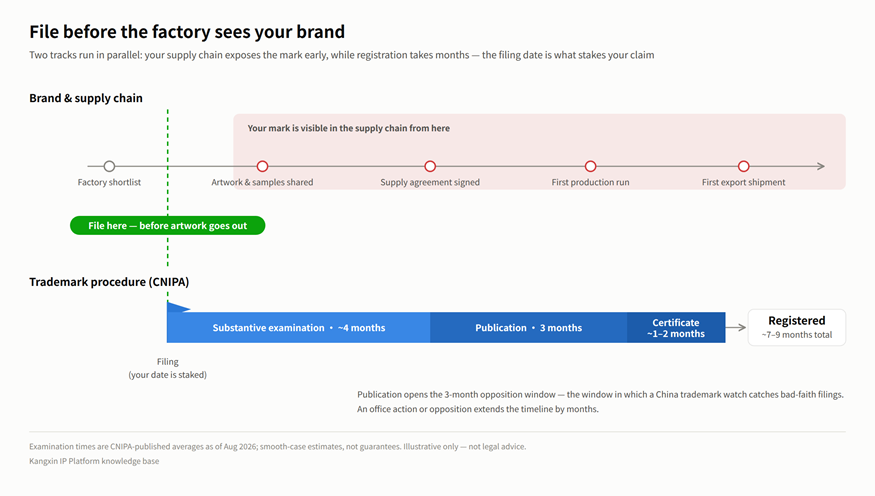
Figure 1 | File before the factory sees your brand: the two-track timeline
Which classes and what scope should I file?
Direct answer: start from the goods you manufacture, design the coverage at sub-class level, add the Chinese-character version of your brand, and weigh class 35 if China could ever become a sales market.
The goods classes. File in the Nice class(es) covering what the factory actually produces — and remember China’s practical layer below the class: examination and conflict assessment run on sub-classes (similar groups), so two marks can coexist in the same class if their goods sit in different sub-classes. “We filed in class 21” is not the question; “which sub-classes did we cover” is. The official fee structure rewards thorough drafting: CNY 270 per class covers up to 10 goods items (e-filing; CNY 27 each beyond ten), so use the ten slots to spread across your product’s sub-class and the adjacent ones a copyist would use. If branding appears on components, packaging or accessories you also source in China, check whether those fall into separate classes.
The Chinese-character mark. Chinese consumers, platforms, media — and squatters — will use a Chinese name for your brand whether or not you choose one. Selecting and filing a Chinese-character version alongside the Latin-script mark closes the most common second front, and matters even for export-only brands: a squatted Chinese name can anchor lookalike products in the domestic market that later leak into your export channels.
Class 35 and expansion classes. Class 35 (advertising, retail-related services) is a recurring question in China practice; whether you need it depends on your business model, but brands planning e-commerce sales into China commonly file it defensively. Expansion classes — adjacent product categories you may enter later — can follow in stages; the goods classes and the Chinese-character mark are the two pieces that should not wait.
What else should I lock down before the first purchase order?
Direct answer: four items alongside the filing — contract language, evidence habits, a watch service, and (once registered) customs recordal.
1. Contract language. Your supply or OEM agreement should state that the brand and all associated IP belong to you, and that the manufacturer will not apply to register your marks (or confusingly similar ones) in any jurisdiction, with consequences specified. A clause does not physically stop a filing, but it converts a squatting attempt into a clean breach-of-contract and bad-faith record — exactly the evidence that wins Article 15 cases.
2. Evidence habits. Keep the ordinary paper trail organized from day one: agreements, purchase orders, invoices, artwork transmittals, chat records where the mark appears. If a dispute ever comes, the winning evidence is usually already in your inbox — the difference is whether you can find it.
3. A trademark watch. A watch service covering China flags new applications for identical or similar marks in time for the 3-month opposition window — the cheapest point of intervention against a bad-faith filing. Without a watch, most brands first learn of a squatted mark when a listing is taken down or a shipment is stopped.
4. Customs recordal, once registered. Recording your registered mark with China Customs turns the port from a risk (someone else’s recordal against you) into a filter (detention of counterfeit exports). It is inexpensive and takes effect across all Chinese ports.
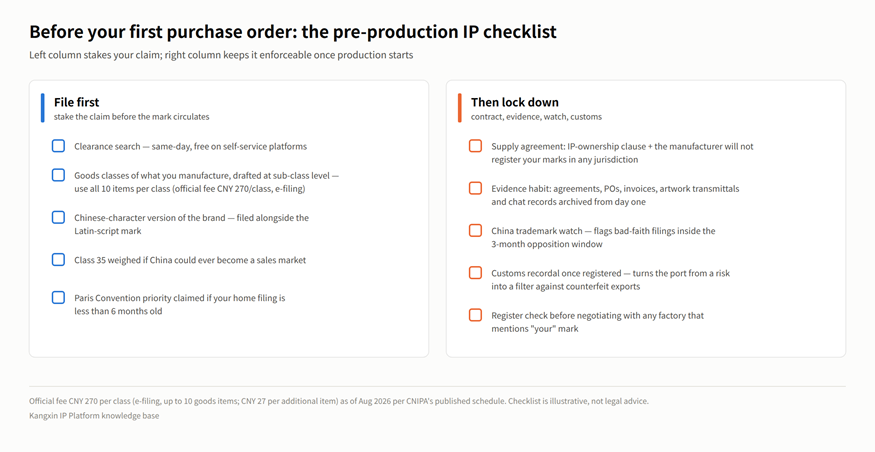
Figure 2 | The pre-production IP checklist before your first purchase order
What if my factory — or anyone else — already filed my mark?
Direct answer: check the register before you negotiate anything, then pick the track that matches the filing’s stage. If the application is still in its 3-month publication window, file an opposition (official fee CNY 500 per class). If it is registered, the workhorse is invalidation — Article 15(2) of the PRC Trademark Law is aimed precisely at partners who register a mark they knew was yours from contractual or business dealings, and must be invoked within 5 years of registration (official fee CNY 750 per class); a non-use cancellation (CNY 500 per class) adds a low-cost second track once the mark has been registered three years. File your own application in parallel on day one, so the slot falls to you when the squatted mark falls. Fees per CNIPA’s published schedule as of August 2026. The full playbook — grounds, evidence, buy-back tactics — is in our companion guide My Chinese Supplier Registered My Trademark — What Can I Do?.
FAQ
Q: Production starts in six weeks and I haven’t filed. Is it too late? A: No — file now. In a first-to-file system every day of delay is exposure, and a filing this week still beats a squatter’s filing next month. If your home application is less than 6 months old, claim Paris Convention priority so your China filing is assessed as of the earlier date. What you should not do is let the six weeks pass while you “finish the branding first.”
Q: Can I file myself, or do I need a Chinese agency? A: Foreign companies without a place of business in China must file through a licensed Chinese trademark agency (Article 18, PRC Trademark Law). The power of attorney is ordinarily a signed form — no notarization or legalization for a standard filing. Madrid designations of China are an alternative route for multi-country programs, though direct national filings allow finer sub-class drafting.
Q: Should the factory register the mark for me “to keep things simple”? A: No — never let the mark be filed in anyone’s name but your own entity’s. A registration in the factory’s name is the squatting scenario with extra steps, and untangling it later runs through the same Article 15 machinery, with you as the petitioner. If a local holding structure ever makes sense for tax or licensing reasons, set it up with counsel — not by defaulting ownership to a supplier.
Q: How much should I budget all-in? A: Official fees are CNY 270 per class (e-filing, up to 10 items; CNY 27 per extra item), plus agency service fees and any search work — a fixed all-in quote per class is the market standard among transparent providers. For the full cost anatomy, including where markups typically hide in double-layered referral chains, see our guide to the all-in cost of a China trademark filing.
Q: Does my China registration cover Hong Kong or Taiwan? A: No. Hong Kong, Macau and Taiwan each run separate trademark systems and need separate filings. If your logistics or sourcing route runs through Hong Kong, weigh a Hong Kong filing as well.
Q: I registered in the US through Amazon’s IP program. Does that help in China? A: It helps your Amazon storefront, not your Chinese supply chain. Brand Registry protection follows the marketplaces it covers; it does not create rights in China or stop a Chinese filing. Treat the US registration as one node of the portfolio and China — where your goods are made — as another that needs its own filing.
Next step: search the register before your artwork ships
Ten minutes on the register tells you whether your mark is still available in your goods classes — and whether someone in your supply chain has already moved. Kangxin’s platform offers free self-service trademark search across 44 jurisdictions (170M+ records), including China’s register. When you are ready to file, our team — a 30-year Beijing firm and CNIPA-recorded agency, working in English — handles clearance, sub-class drafting, the Chinese-character version and the filing at transparent fixed fees (official + service fees quoted upfront, no surprises), with your applications trackable in one dashboard alongside any later marks in the US, EU, UK or Japan.
 {{item.truncatedText}}
{{item.basicDescription&&item.basicDescription.slice(0,150)}}{{item.basicDescription&&item.basicDescription.length>150?"...":""}}
{{item.truncatedText}}
{{item.basicDescription&&item.basicDescription.slice(0,150)}}{{item.basicDescription&&item.basicDescription.length>150?"...":""}}