
Trademark Search Techniques: A Guide for Legal Professionals
Time:2025-06-17
Publication Date:2025-06-17
Trademark searches are essential for safeguarding a company’s brand identity, preventing infringement, and avoiding legal disputes. This article outlines key scenarios for conducting trademark searches, provides effective methods for identifying similar trademarks, examines standards for evaluating similarity, discusses response strategies for identified conflicts, and highlights the advantages of utilizing the Kangxin IP Platform.
1.When to Conduct Trademark Searches
Trademark searches are crucial during:
• Launch of new brands or products: Ensuring uniqueness before market entry.
• Market expansion: Confirming trademark availability in new jurisdictions.
• Rebranding: Verifying new names or logos are conflict-free.
• Mergers and acquisitions: Assessing intellectual property assets and avoiding inherited disputes.
• Regular monitoring: Detecting new conflicting applications or infringements early.
2.Methods for Identifying Similar Trademarks
Effective searches involve:
• Utilizing official databases: Checking national and international trademark offices for registered marks.
• Searching comprehensively: Including variations in spelling, pronunciation, and meaning to detect confusingly similar marks.
• Logo searches: Employing image recognition tools or Vienna Code classifications to identify similar designs.
• Professional services: Consulting trademark attorneys or search firms for deeper, nuanced searches.
3.Evaluating Trademark Similarity
For word marks, examiners assess:
• Visual similarity: Appearance, letter sequences, and spelling variations.
• Phonetic similarity: Pronunciation, regardless of spelling differences.
• Conceptual similarity: Shared meanings or concepts.
Example: "KARMA" vs. "CARMA" differ slightly visually but remain similar phonetically and conceptually, creating potential confusion.
For graphic marks, evaluations include:
• Dominant visual elements: Comparing central design themes or characters.
• Overall impression: Considering the commercial perception rather than minor differences.
Example: Two rabbit logos might conflict despite minor differences in posture or design elements because they create similar consumer impressions.
4.Strategies When Similar Trademarks Are Found
Discovering similar trademarks requires careful response strategies:
• Modify or abandon the trademark: Significant alterations or selecting alternative names/designs to avoid conflicts.
• Coexistence agreements: Negotiating permission or agreements with prior trademark owners. Clarify the respective scope of each party’s use, to avoid potential disputes.
• Investigate usage: Determining if conflicting trademarks are active; inactive trademarks may allow for cancellation proceedings.
• Adjust goods/services descriptions: Clarifying product categories to avoid overlaps.
• Legal consultation: Seeking professional legal assessments for risk mitigation or preparing strategic responses to potential conflicts.
Advantages of Kangxin IP Platform
The Kangxin IP Platform significantly enhances trademark search processes through:
• Multi-language search capability: Handling multiple scripts including Latin, Chinese, Japanese, and Korean characters, bridging linguistic gaps.
• Global coverage: Comprehensive searches across multiple international jurisdictions.
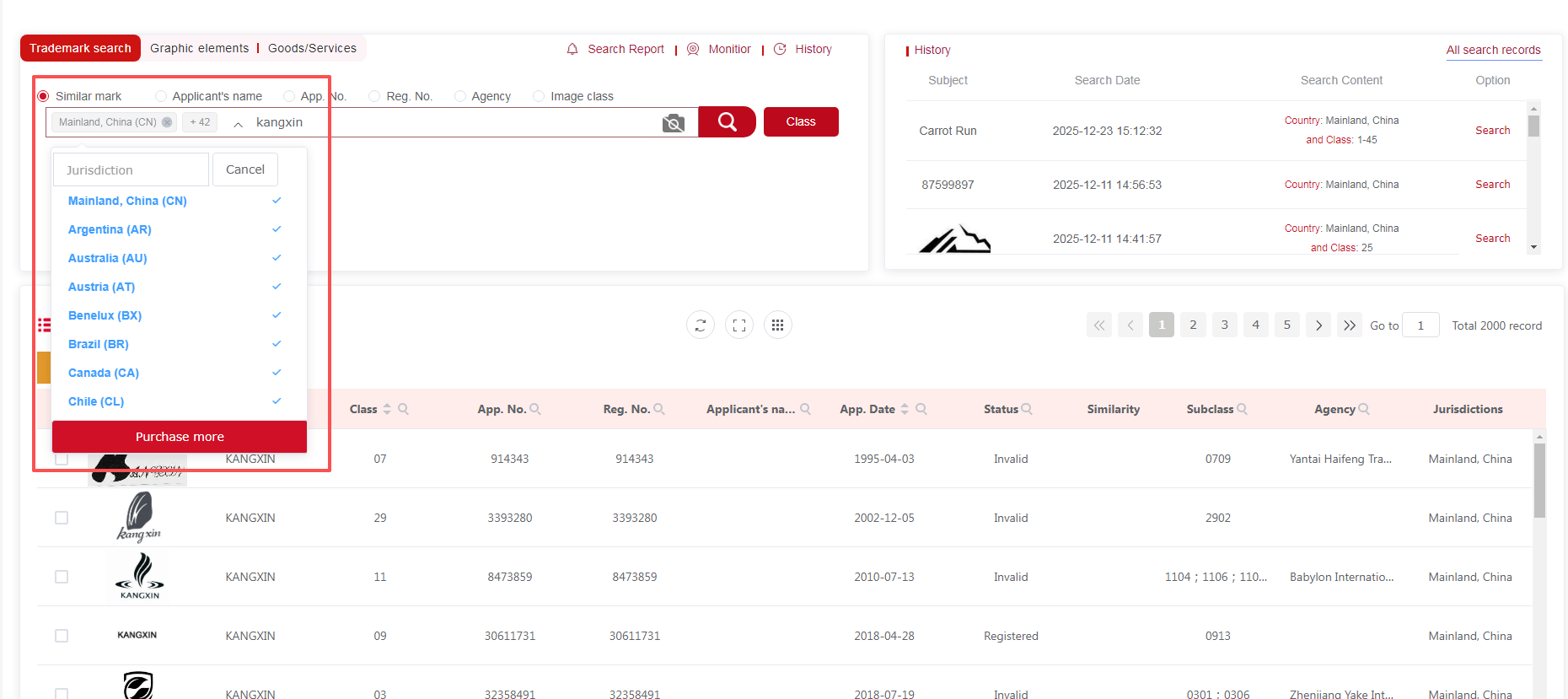
• Advanced AI tools: Identifying phonetic, visual, and conceptual similarities efficiently for both text and graphic trademarks.
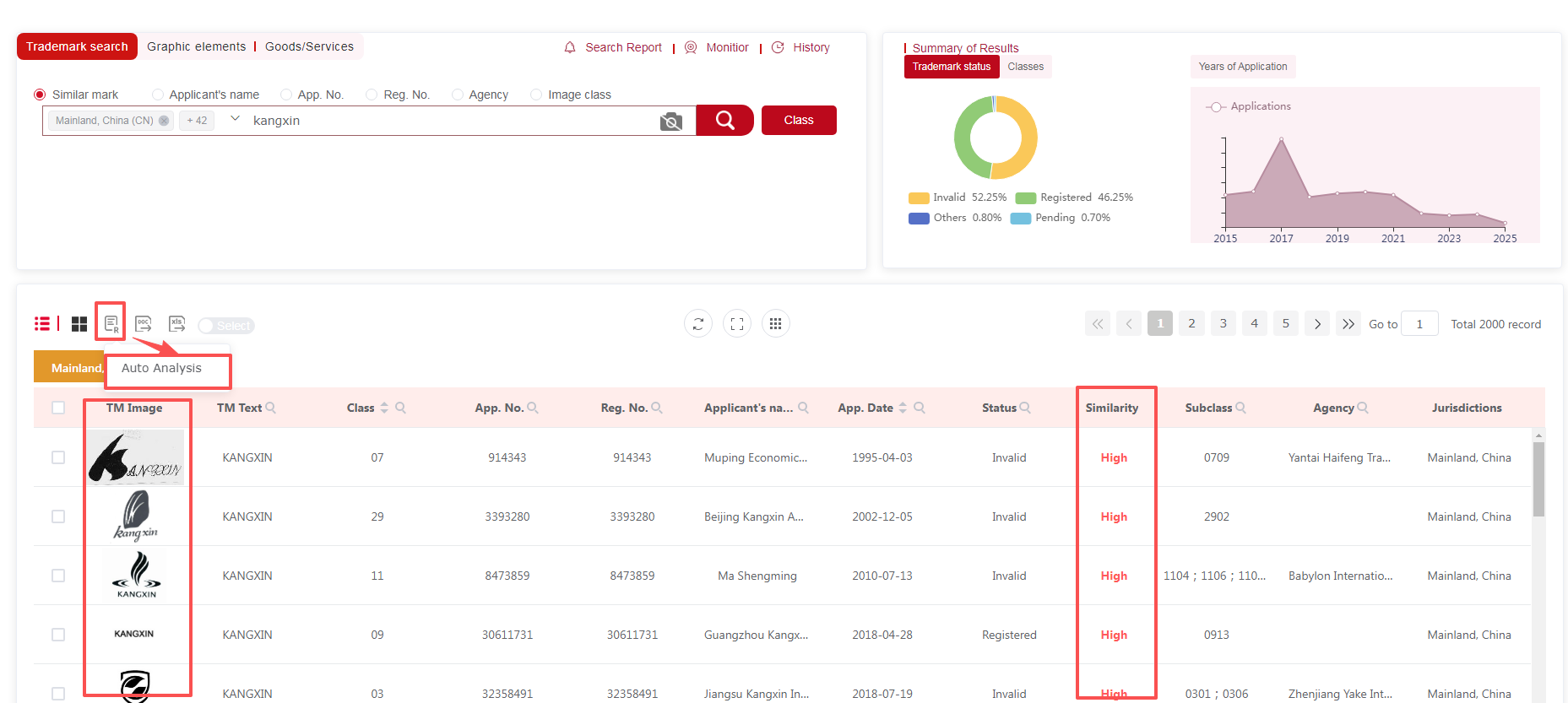
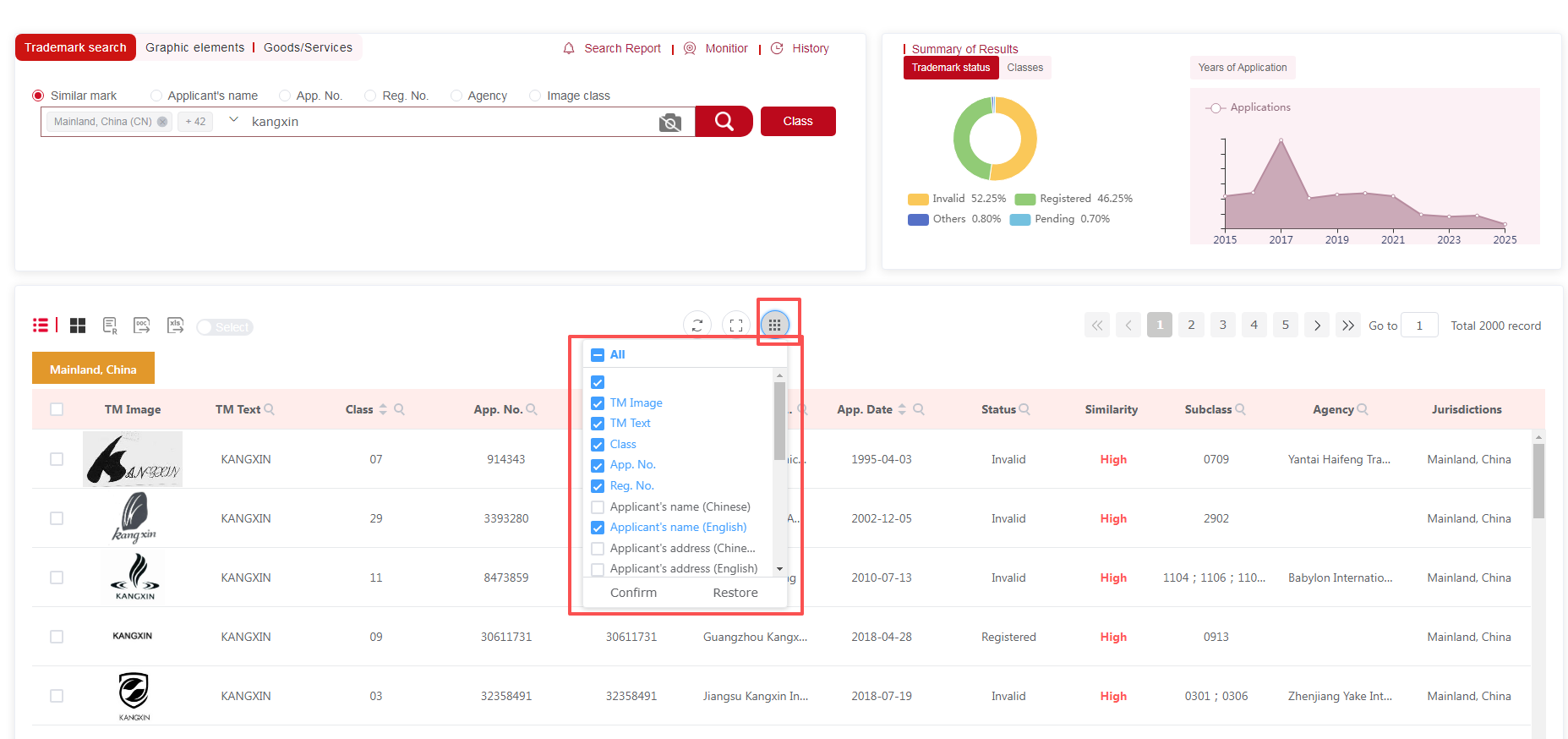
• Powerful analytics: Visual data summaries and filtering options streamline complex data analysis.
• Expert integration: Access to professional legal evaluations and advice from Kangxin attorneys, combining technological efficiency with expert consultation.
• Continuous monitoring: Alerts on new filings, ensuring timely identification of potentially conflicting marks.
Conclusion
Trademark searches are fundamental to brand protection, legal compliance, and strategic risk management. Understanding when and how to conduct these searches, properly assessing similarity standards, effectively responding to identified conflicts, and utilizing sophisticated platforms like Kangxin IP greatly reduces infringement risks and supports robust intellectual property strategies. Legal professionals can leverage these practices and technologies to proactively safeguard their clients’ trademarks.
 {{item.truncatedText}}
{{item.basicDescription&&item.basicDescription.slice(0,150)}}{{item.basicDescription&&item.basicDescription.length>150?"...":""}}
{{item.truncatedText}}
{{item.basicDescription&&item.basicDescription.slice(0,150)}}{{item.basicDescription&&item.basicDescription.length>150?"...":""}}