
Trademark Analysis of Global Social Media Platforms: A Closer Look at Douyin and TikTok
Time:2025-09-28
Publication Date:2025-09-28
In recent years, social media platforms have rapidly evolved into major international players, influencing not only how we communicate and consume content, but also how global brands manage their intellectual property. Among these platforms, Douyin (known internationally as TikTok) has achieved remarkable success and widespread adoption. This article provides a concise overview of Douyin and TikTok, and then explores their trademark layouts, including application trends in key jurisdictions, goods and services distribution, and significant registration obstacles.
1. Overview of Douyin and TikTok
1.1 Platform Background and Launch Timeline
- Douyin: Developed by ByteDance, Douyin was first launched in China in 2016. It quickly gained popularity with its short-form video format, music overlays, and easy-to-use editing tools.
- TikTok: Recognizing the potential of a global short-video platform, ByteDance introduced an international version of Douyin under the name TikTok in 2017. After merging with Musical.ly in 2018, TikTok became a worldwide phenomenon.
1.2 User Base and Engagement
- Registered Users: TikTok reportedly surpassed 1 billion global registered users by 2021, while Douyin has hundreds of millions of users within China.
- Monthly Active Users (MAU): TikTok boasts over 1 billion monthly active users worldwide, and Douyin’s monthly active users exceed 700 million in China.
- Content Volume: Both platforms collectively host billions of short videos, ranging from dance challenges and comedic skits to educational clips and brand promotions.
- Demographics: Douyin and TikTok primarily attract Gen Z and Millennial audiences, although their user base continues to diversify. Users are drawn to easy content creation tools, personalized recommendation algorithms, and community-driven trends.
2. Trademark Layout Analysis
In analyzing Douyin’s and TikTok’s trademarks, we turn to a combination of publicly available databases and platform-specific statistics. ByteDance, as the applicant, leads in the number of trademark registrations for both Douyin and TikTok across multiple jurisdictions.
2.1 Global Trademark Application Trends
A broad review of ByteDance’s applications shows consistent growth across China (CN), the United States (US), Japan (JP), the European Union (EU), South Korea (KR), and through the World Intellectual Property Organization (WIPO) filings under the Madrid System.
- 2017–2018: Initial trademark filings were concentrated in China, aligning with Douyin’s domestic launch and TikTok’s international expansion.
- 2019–2020: Significant increase in filings across the US, EU, and Japan as TikTok’s popularity soared. Applications began to cover a wider range of goods and services in anticipation of platform diversification.
- 2021–Present: Sustained growth continues globally, with notable expansions in South Korea and an increasing number of WIPO applications to secure coverage in emerging markets.
2.2 Goods and Services Classes Distribution
Analysis of the Nice Classification classes for Douyin and TikTok applications reveals the following key focus areas:
1. Class 9 (Software and Apps): Covering downloadable mobile applications and related software.
2. Class 35 (Advertising and Business Services): Reflecting the platform’s increasing role as an advertising medium for businesses and content creators.
3. Class 41 (Entertainment and Education Services): Encompassing online entertainment, live streaming, and multimedia content.
4. Class 42 (Software as a Service, R&D): Relating to continuous platform development, AI-based recommendation systems, and data management.
Secondary classes also appear, reflecting further commercial and service expansions, such as Class 25 (Merchandise/Apparel) and Class 38(Telecommunications).
2.3 Similar Group Distribution
From a similar group perspective (whereby trademark authorities categorize marks that share related or overlapping goods/services), ByteDance’s strategy for Douyin and TikTok shows consistent coverage of relevant groups associated with:
- Online social networking
- Digital media and entertainment
- Audio and video streaming services
- Software design, hosting, and maintenance
Such coverage ensures robust protection against potential infringement across various related industries.
2.4 Trademark Maps and Bubble Charts
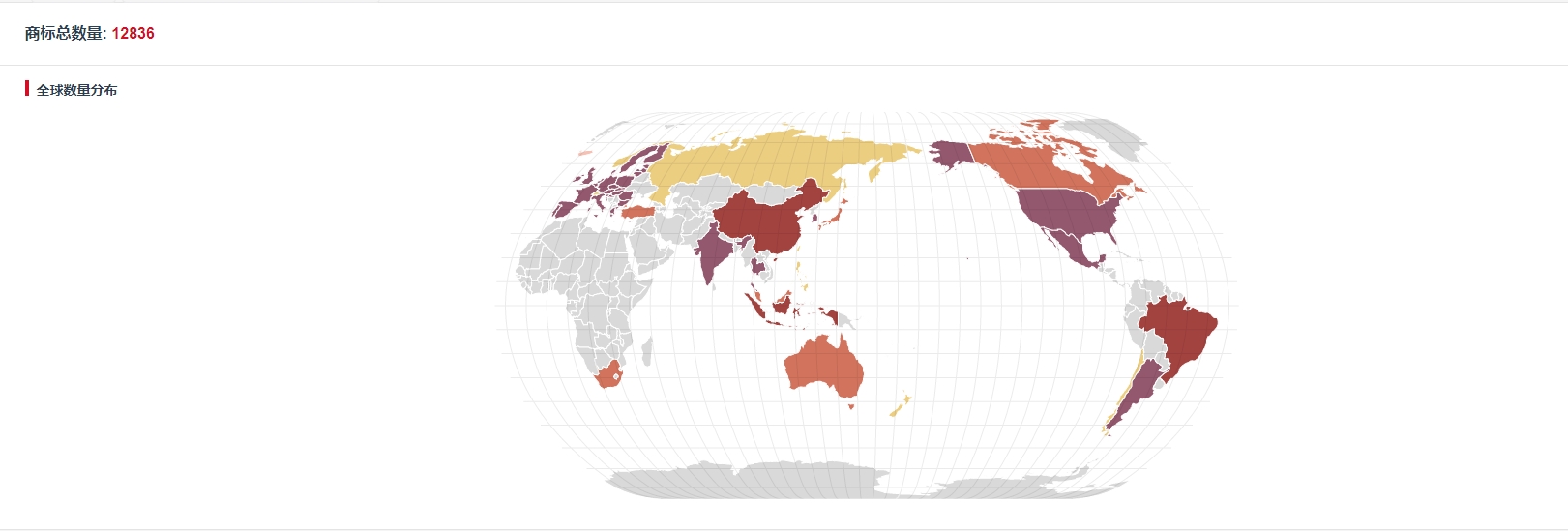
- Trademark Map: Geographically, the concentration of trademark protection efforts follows TikTok’s major user markets. Large clusters are found in North America, Europe, and East Asia, while growing clusters appear in Southeast Asia, Latin America, and the Middle East.
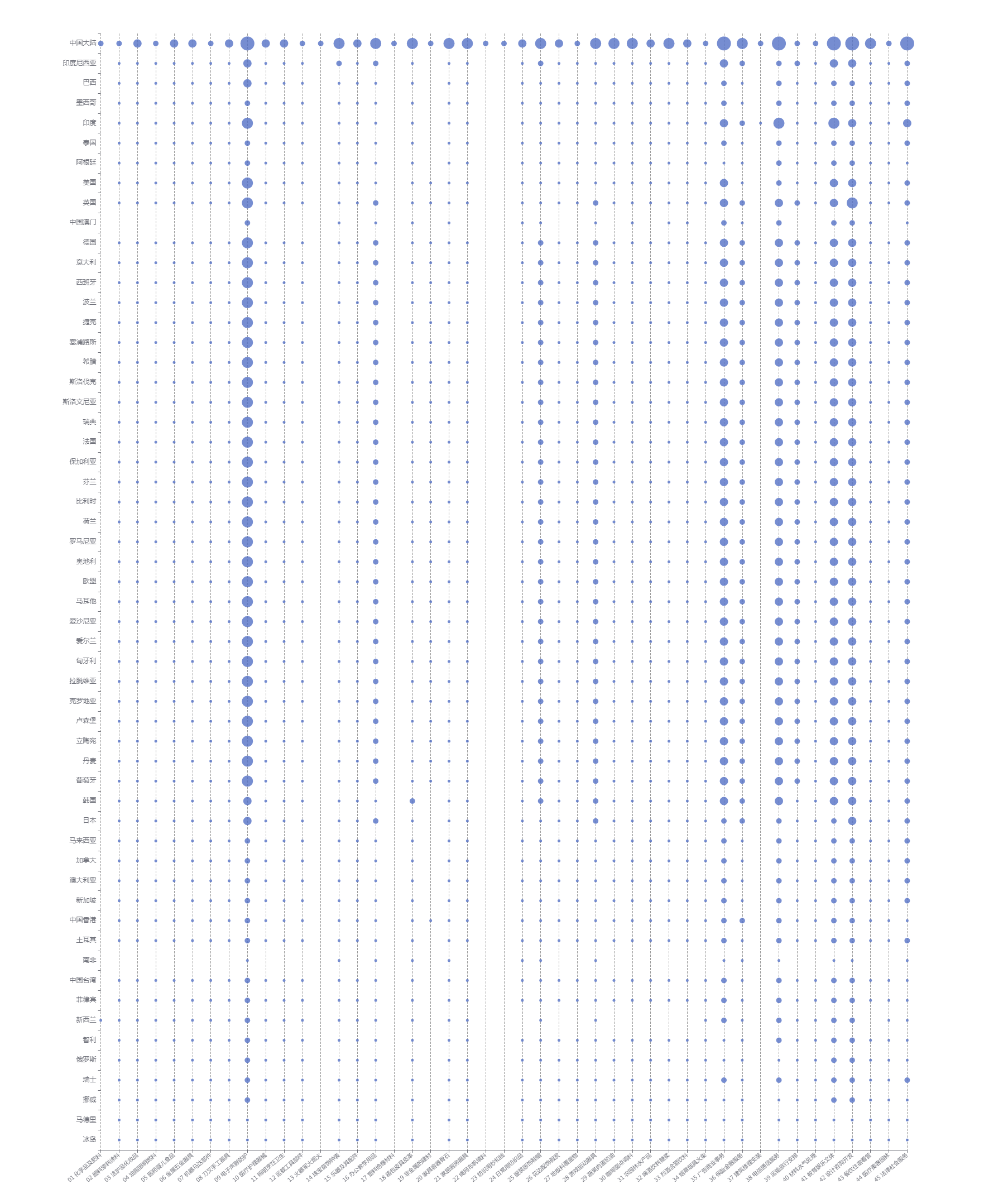
- Bubble Chart: A typical bubble chart analyzing ByteDance’s filings indicates the volume of registrations along one axis (e.g., number of trademarks in each jurisdiction), and the diversity of goods/services classes along the other. The largest bubbles appear in China and the United States, correlating with the highest volume of applications and broadest class coverage.
3. Recent Trademark Registration Obstacles and Disputes
Despite ByteDance’s comprehensive strategy, Douyin and TikTok have encountered registration obstacles and legal disputes:
1. Local Prior Marks: In certain countries, prior trademark owners have filed or already own marks that are confusingly similar to “TikTok” or phonetic equivalents of “Douyin.” This has led to office actions or refusals, requiring negotiations or oppositions to resolve conflicts.
2. Opposition Proceedings: Competitors or unaffiliated individuals sometimes file opposition when they perceive potential overlap in goods/services or try to leverage TikTok’s fame.
3. Litigation in Emerging Markets: In emerging markets across Southeast Asia and South America, ByteDance has occasionally faced trademark squatters seeking to capitalize on the platform’s global reputation, resulting in legal actions to reclaim or secure exclusive rights.
4. Brand Enforcement Challenges: With TikTok’s expanding ecosystem—covering e-commerce, marketing, and gaming—ByteDance must continually monitor and enforce its trademark rights to prevent dilution or infringement.
While ByteDance remains proactive in navigating these obstacles, legal conflicts can sometimes delay product launches or require resource-intensive litigation.
4. Conclusion
Douyin and TikTok have revolutionized short-form video content, propelling ByteDance into the global spotlight. Their trademark strategy—built on sustained growth in core jurisdictions, coverage of critical classes, and vigilance in emerging markets—demonstrates the importance of proactive, multi-jurisdictional IP protection for fast-scaling digital platforms.
By analyzing the volume of trademark applications, class distribution, major jurisdictions, and ongoing disputes, it becomes clear that Douyin and TikTok are highly conscious of the need to safeguard their brands worldwide. As the platforms continue to innovate and expand, robust trademark protection and effective rights enforcement will remain essential in maintaining their competitive edge and brand integrity on the global stage.
 {{item.truncatedText}}
{{item.basicDescription&&item.basicDescription.slice(0,150)}}{{item.basicDescription&&item.basicDescription.length>150?"...":""}}
{{item.truncatedText}}
{{item.basicDescription&&item.basicDescription.slice(0,150)}}{{item.basicDescription&&item.basicDescription.length>150?"...":""}}