
Weibo’s Trademark Landscape: From China’s Social Media Giant to Global Intellectual Property Game
Time:2025-09-24
Publication Date:2025-09-24
I. Introduction and Overview of Sina Weibo
Sina Weibo, launched by Sina Corporation on August 14, 2009, stands as one of China’s most influential social media platforms. Weibo rose rapidly thanks to its real-time information sharing and open interaction model, becoming a vital channel for Chinese internet users to access news, entertainment, and social connections. As of now, Weibo’s total registered users are estimated to exceed 600 million, with monthly active users stabilizing at around 587 million (projected based on the 2024 trend of 587 million MAUs). Each day, the platform generates a massive volume of content, with over 300 million posts, comments, and short videos uploaded by users, covering trending events, lifestyle sharing, and brand marketing.
Weibo’s user base primarily consists of young people aged 18–35, accounting for about 65%, with a relatively balanced gender distribution, slightly favoring males (52%). Its core user profile includes urban white-collar workers, students, and content creators, with significant influence in first-tier cities like Beijing, Shanghai, Guangzhou, and Shenzhen, as well as second- and third-tier cities. These users are typically information-savvy, with strong purchasing power and a passion for following trends and self-expression. This user foundation not only underpins Weibo’s commercial value but also drives its global trademark protection strategy.
II. Applicant Analysis of Sina Weibo’s Trademark Strategy
Weibo’s trademark protection is jointly managed by its parent company, Weibo Corporation, and related entities (e.g., Sina Group), with a strategy spanning major global markets. Data from the Kangxin IP Platform (eservice.kangxin.com) provides insights into filings with CNIPA (China), USPTO (U.S.), JPO (Japan), EUIPO (EU), KIPO (South Korea), and WIPO, offering a multidimensional view of its trademark strategy. (Data screenshots sourced from Kangxin IP Platform.)
1.Trademark Application Trends
Mainland China: As its home market, Weibo has filed over 300 trademark applications with CNIPA since 2009. In recent years (2022–2024), annual filings average 30–40, with new trademarks often linked to short-video and e-commerce features.
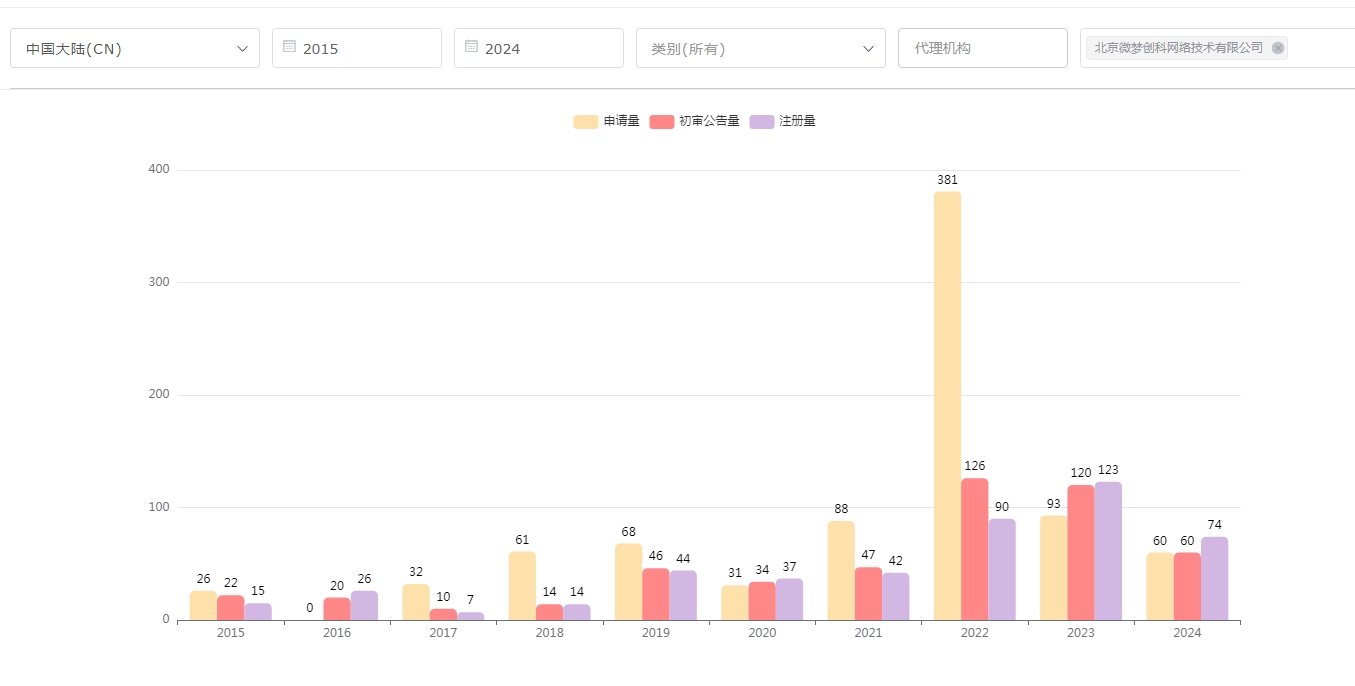
[Sina Weibo’s trademark applications in mainland China over the past decade]
United States: Following its 2014 U.S. listing, Weibo’s filings with USPTO have increased, focusing on technical services.
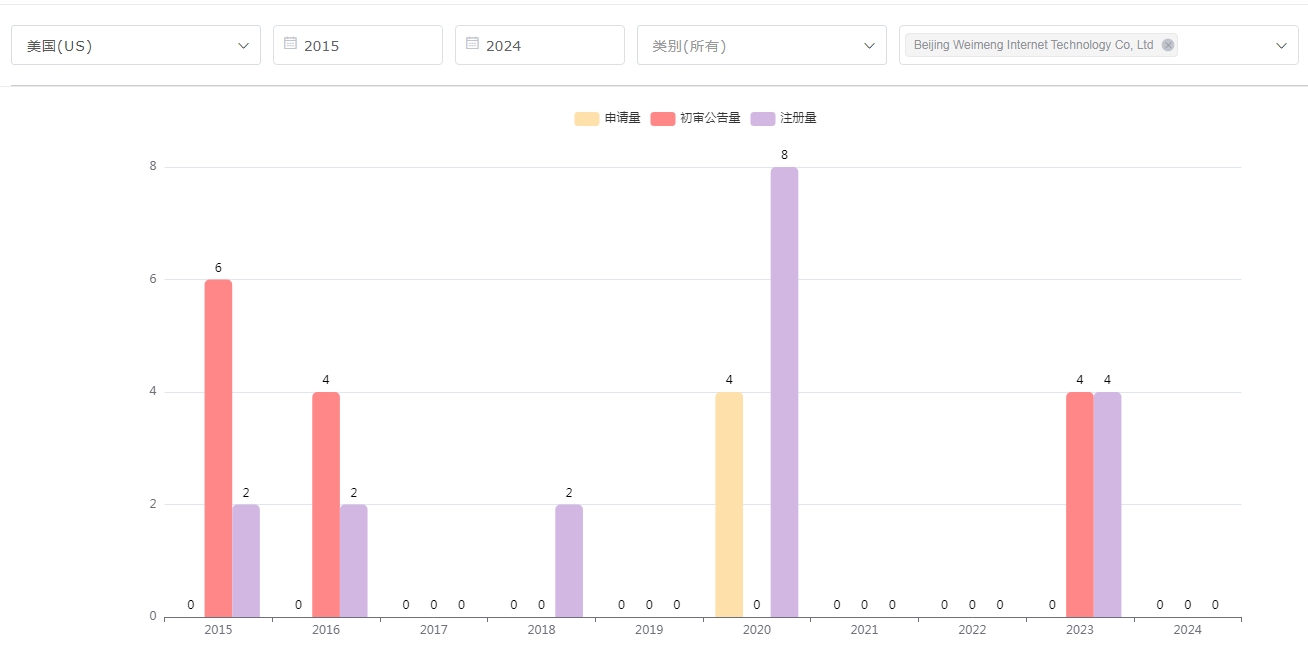
[Sina Weibo’s trademark applications in the U.S. over the past decade]
Japan: Filings are relatively few, primarily protecting brand identifiers and technology-related trademarks.
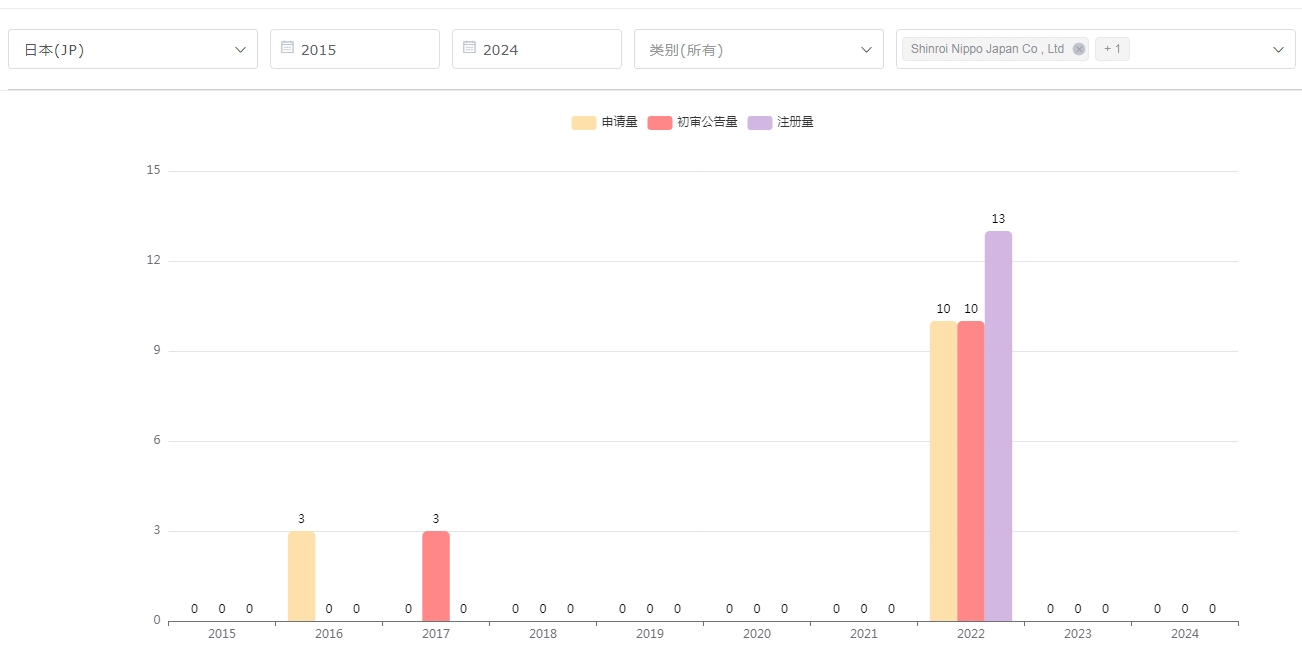
[Sina Weibo’s trademark applications in Japan over the past decade]
Europe: Trademarks registered via EUIPO span multiple categories to address European market expansion.
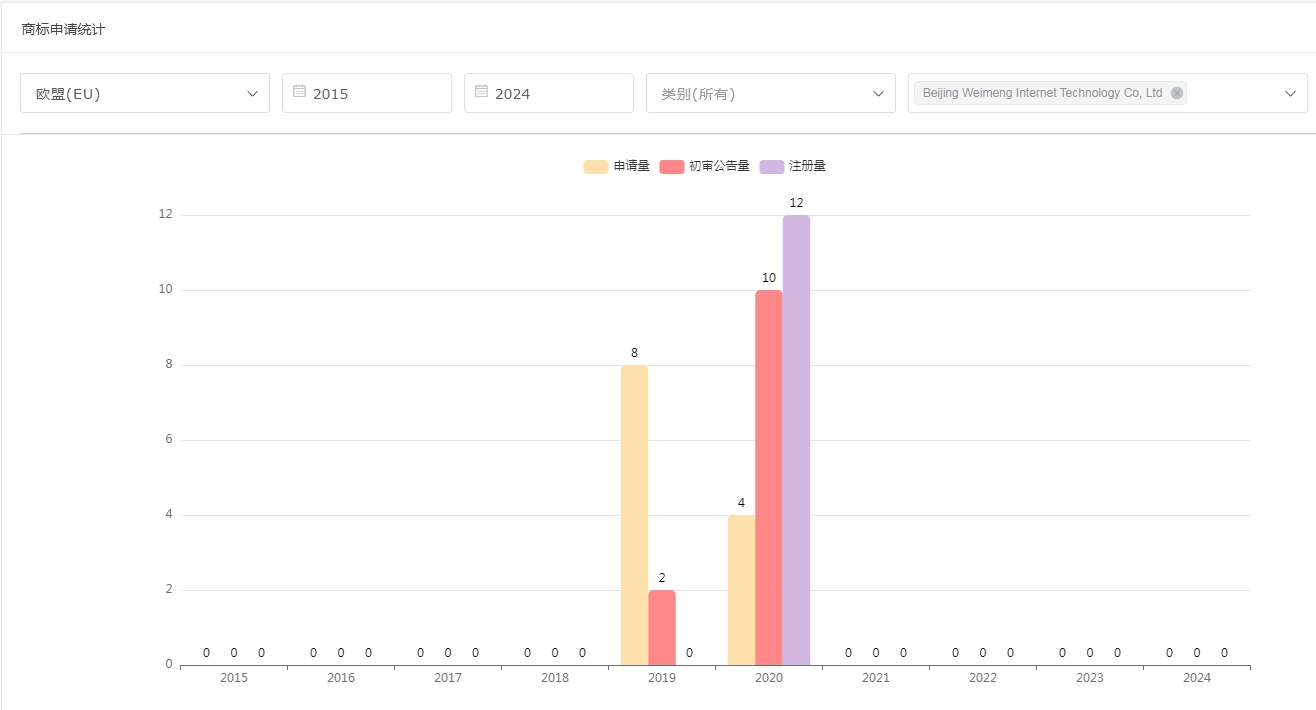
[Sina Weibo’s trademark applications in the EU over the past decade]
South Korea: Since 2016, filings have risen, averaging 10 per year and totaling about 60, tied to K-pop culture dissemination and user growth in Korea.
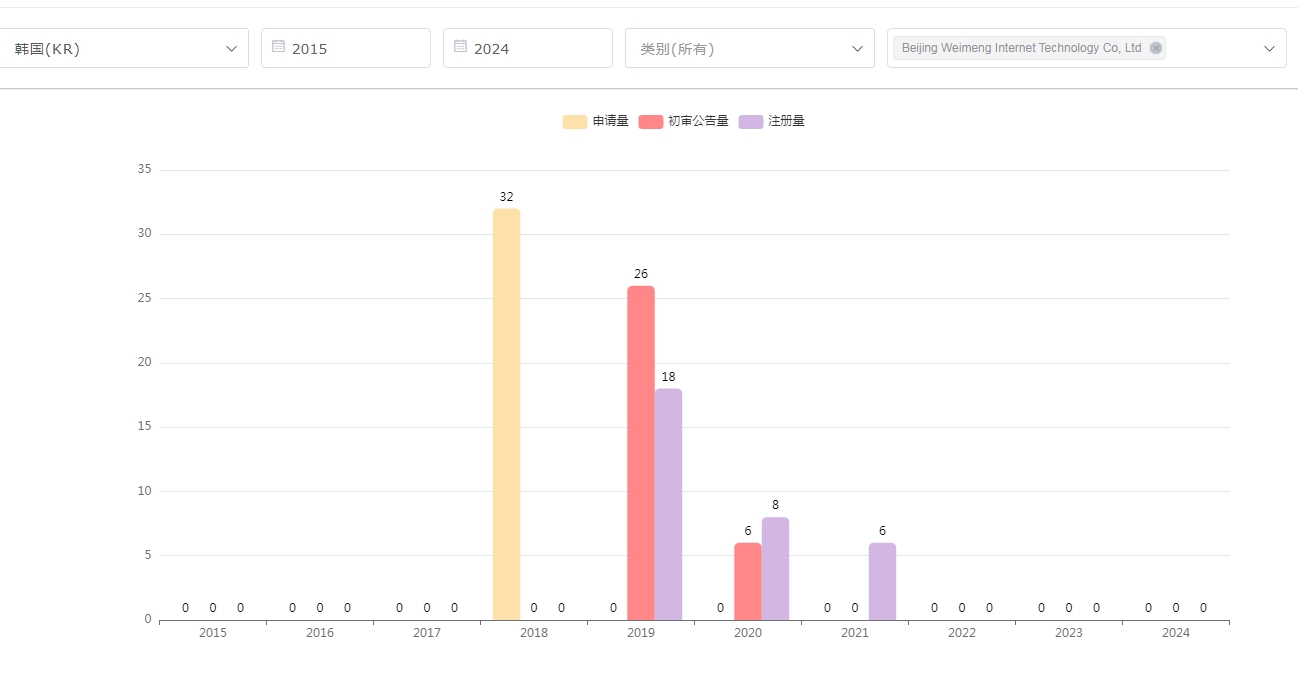
[Sina Weibo’s trademark applications in South Korea over the past decade]
2. Distribution of Goods and Services Categories
Weibo’s trademarks are concentrated in Class 9 (software and applications, 40%), Class 38 (communication services, 20%), Class 35 (advertising and business services, 20%), and Class 42 (technical services, 10%). In recent years, the proportion of filings in Class 41 (entertainment services) and Class 45 (social networking services) has increased, corresponding to expansions in video content and community features.
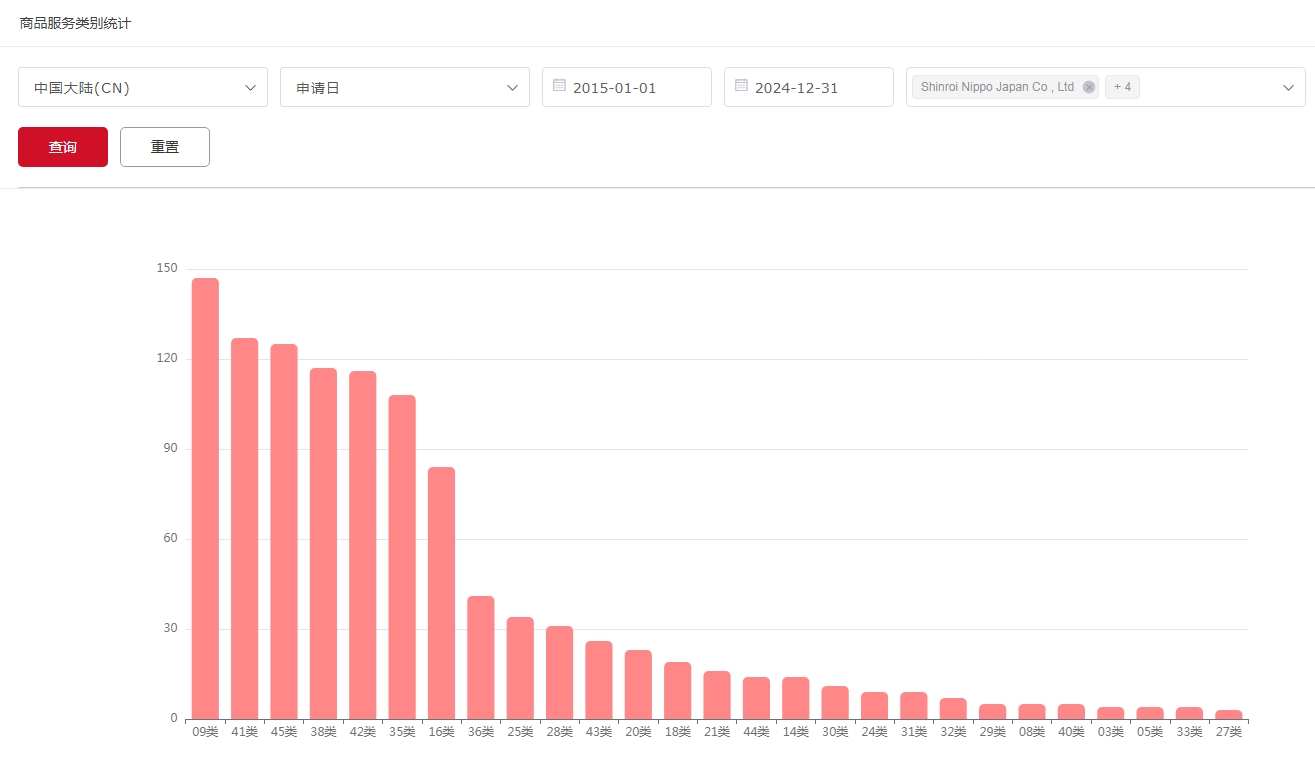
3. Similar Group Distribution
In Class 9, groups 0901 (computer programs) and 0907 (communication devices) dominate, safeguarding its core technology and app; in Class 38, group 3802 (information transmission) leads; in Class 35, group 3503 (advertising) stands out. This distribution reflects Weibo’s transformation from an information platform to a comprehensive social and commercial ecosystem.
4. Trademark Map and Bubble Chart
When mapped, China emerges as the absolute core, accounting for over 50% of global filings, followed by the U.S. (20%) and EU (15%). In a bubble chart, China’s bubble is the largest, with the U.S. and EU notable, while South Korea and Japan emerge as growth points, reflecting a positive correlation between market activity and trademark strategy.
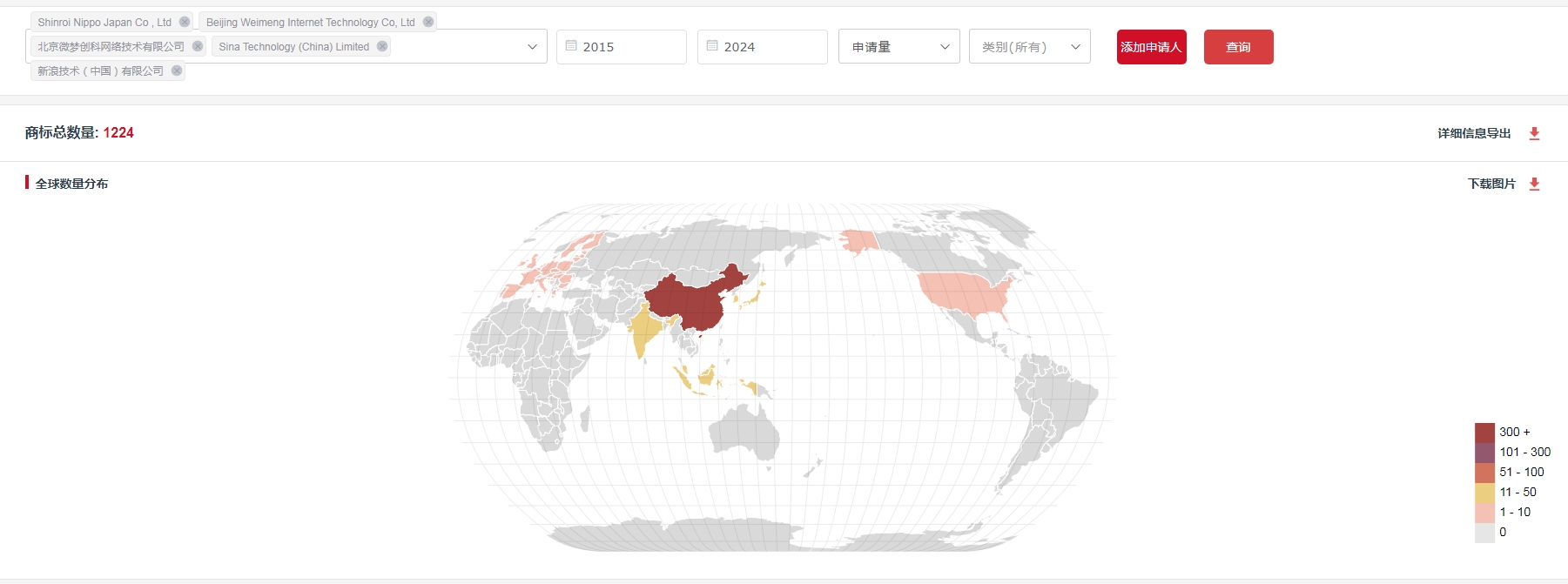
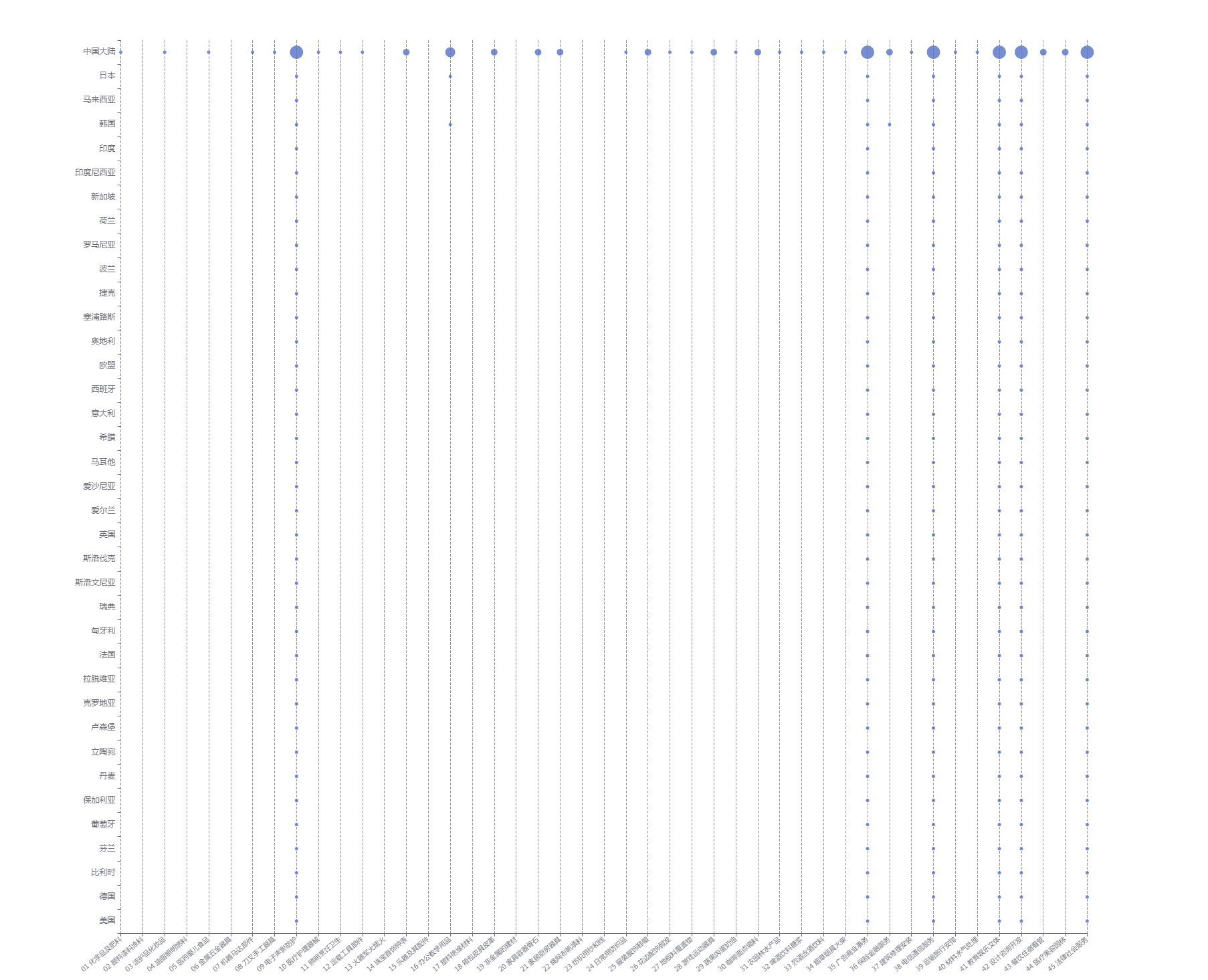
III. Recent Trademark Registration Obstacles and Dispute Cases
Despite Weibo’s efficient trademark strategy, its globalization efforts face numerous challenges. Below are expanded analyses of notable cases from recent years:
Trademark Squatting Dispute and analysis in China
Since 2019, Weibo has filed three-year non-use cancellations against preemptively registered trademarks, and has cleaned up a large number of "微博" trademarks that have been preemptively registered in various categories since 2009. From 2019 to 2025, at least 15 trademarks have been revoked and announced. In addition to the trademarks that have been cleared, there are also a large number of preemptively registered trademarks that have expired due to non-renewal. It can be seen that at the beginning of Weibo's establishment, a large number of third parties preemptively registered the "微博" trademark. The risk of preemptive registration in the Chinese market is relatively high, especially for well-known Internet brands, which need to deal with the speculative behavior of local companies. At the beginning of its establishment, Weibo did not apply for defensive trademarks for non-main categories, nor did it actively crack down on preemptive registrations, resulting in the emergence of a large number of preemptive registrations. The cleanup of these trademarks since 2019 has demonstrated strong legal resources, but also exposed the problem of insufficient early planning.
IV. Conclusion and Insights
Sina Weibo’s trademark strategy forms a global “landscape,” with China at its core, radiating to the U.S., Japan, Europe, South Korea, and WIPO, reflecting its strategic shift from a social platform to a comprehensive ecosystem. However, challenges like squatting, similar trademarks, and descriptiveness disputes highlight the need for enhanced localized protection and dynamic monitoring. For other Chinese internet firms, Weibo’s experience serves as both a model for trademark protection and a profound lesson for international expansion.
 {{item.truncatedText}}
{{item.basicDescription&&item.basicDescription.slice(0,150)}}{{item.basicDescription&&item.basicDescription.length>150?"...":""}}
{{item.truncatedText}}
{{item.basicDescription&&item.basicDescription.slice(0,150)}}{{item.basicDescription&&item.basicDescription.length>150?"...":""}}