Indonesian Trademark Opposition Analysis
2024-03-18
Indonesia, with a population of 278 million, is a significant market for many businesses. The country receives about 100,000 domestic trademark applications every year, a number that has been growing over the past five years. Although the growth rate of applications from abroad has slowed, foreign applicants still submit 11,000 applications annually, hoping to gain trademark protection in Indonesia.
Long-standing issues include trademark infringement and malicious applications. Based on data from 400 trademark objections in 2022 and 2023, we provide a comprehensive analysis of trends and advice for rights holders.
Objection applications for classes 3, 9, 25, and 35 are relatively high
Most of the objections are lodged against trademarks in Classes 25, 9, 3, and 35, accounting for 23%, 23%, 21%, and 15% of the total number of objections respectively between 2022 and 2023. According to data from the Directorate General of Intellectual Property (DGIP) in their 2022 annual report, these are also the most popular categories for trademark applications.
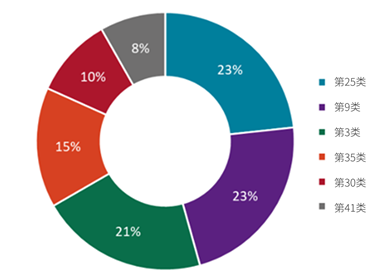
Over the years in Indonesia, trademarks identical or similar to well-known trademarks have been applied for registration in Class 25 for fashion-related goods. Luxury brands and fashion brands from Europe and the United States seem to be popular with those seeking to gain trademarks. Hence according to our data, commercial courts have handled 67 disputes involving Class 25 trademarks, averaging seven each year.
The issue of resembling trademark applications has begun to spillover into Classes 9 and 35, which involve goods and services related to the software, online, and e-commerce industries. This is consistent with the trend of the digital and online industry exacerbated by the pandemic.
Commonalities of successful objections
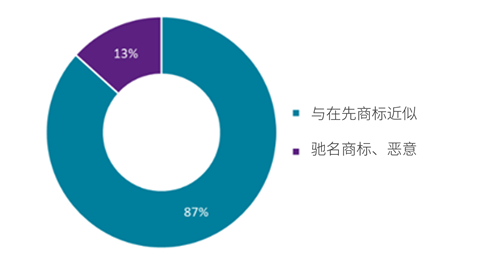
From 2022 to 2023, "Similarity with an earlier trademark (in Indonesia)" was the most accepted reason by the Trademark Office, accounting for over 80% of successful decisions in favor of the objection. This underlines the importance in Indonesia of gaining priority rights by submitting an application.
Other reasons such as "Similarity with a well-known trademark" and "Bad faith application" come in second and third place respectively. However, the proportion these reasons make up for successful objections is far behind that of "Similarity with an earlier trademark".
Based on our data and experience, the chances of accepting "well-known trademark" as a reason are higher in the following circumstances:
For the reason of "bad faith," if the trademarks are nearly identical, or if the objector can provide evidence of bad faith (e.g., documents proving that the trademark applicant is a former employee, or the applicant has a history of copying well-known trademarks), the reason is more likely to be supported either alone or in conjunction with the well-known trademark reason.
Another possible reason can be a protection of existing copyright. Usually, if copyright evidence can be submitted, including copyright registrations in other jurisdictions, this reason is more likely to be successful.
Why it is necessary to submit objections before examination
Unfortunately, due to inconsistencies in the practice amongst examiners, the Trademark Office during the examination period cannot guarantee the citation of earlier registrations. Even though trademarks may be nearly identical, goods and services in the same class may be deemed dissimilar. Thus, some Court revocation actions involve highly similar trademarks on similar goods that have already passed Trademark Office examinations.
Moreover, in the absence of objections, examiners lack a basis to reject the application on the grounds of well-known trademarks and bad faith. Once third-party trademarks are registered, it can only be revoked through costly court litigation.
Unlike the lengthy procedures in other jurisdictions, Indonesia''s trademark objection process is relatively simple - all evidence must be submitted within two months after the objection is lodged and after public notification. Afterwards, upon submission of a Reasons of Statement, the objector can await an official decision, anticipated within 9 to 12 months.
How should trademark owners protect their trademarks?
Trademark owners should set up alert tips for crucial trademarks to ensure a comprehensive trademark portfolio in the pertinent classes. Relying merely on overseas trademark registrations and use abroad may not be advantageous, as during examination of trademark objections, the Trademark Office tends to be conservative and value senior Indonesian trademark registrations as the basis for a successful objection.
As there have been many resembling applications across the fashion and digital platform industries in recent years, trademark rights holders in these industries must pay closer attention and enhance their trademark portfolio.
Trademark owners are encouraged to collect and manage evidence in terms of their trademark usage, particularly in Indonesia. This preparation is crucial in effectively asserting well-known trademarks and introducing bad faith claims in objections.
Predictions for 2024
The data from 2023 highlights the importance of vigilance and astuteness to protect trademark rights at the registration stage in Indonesia, especially because the sole route to revoke a registered trademark is through costly court litigations.
But now, objection decisions are being issued faster, generally within 9 to 12 months. We hope that, in cases where evidence is available, the Trademark Office will consider reasons based more on well-known trademarks and adopt stronger measures to refuse third-party''s bad faith applications. This would be an encouraging sign for rightful brand owners.