
Jiangsu Courts’ Intellectual Property Judicial Protection Status in 2024
Time:2025-06-16
Publication Date:2025-06-16
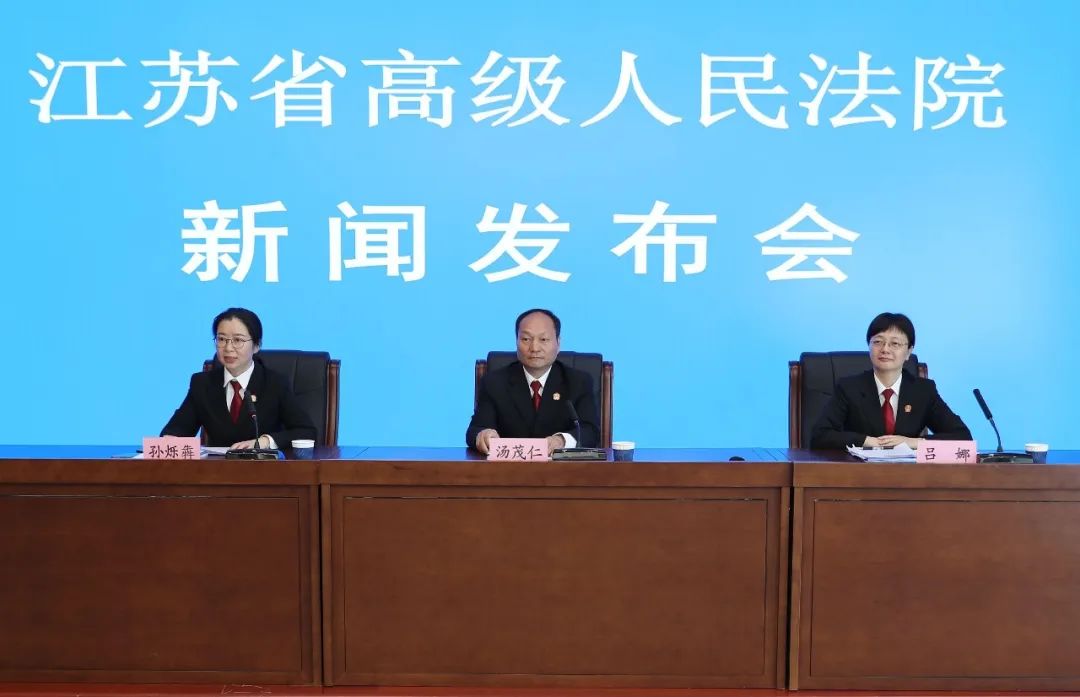
In 2024, Jiangsu courts, guided by Xi Jinping Thought on Socialism with Chinese Characteristics for a New Era, fully leveraged their judicial functions of protecting intellectual property, fostering innovation, and incentivizing innovation. They continued to deepen the strictest intellectual property judicial protection, providing strong judicial services and guarantees for accelerating the development of new productive forces, building a strong nation in science and technology and intellectual property, and optimizing the business environment.
In 2024, courts across Jiangsu accepted a total of 37,445 intellectual property cases, a year-on-year decrease of 3.98%. Among these, civil cases accounted for 36,416, criminal cases 982, and administrative cases 47. They concluded 32,097 cases, a year-on-year decrease of 5.19%, including 31,251 civil cases, 817 criminal cases, and 29 administrative cases. Newly accepted intellectual property cases totaled 32,302, a year-on-year decrease of 6.38%, with 31,418 civil cases, 851 criminal cases, and 33 administrative cases. Newly accepted first-instance cases numbered 29,989, including 29,299 civil cases, 666 criminal cases, and 24 administrative cases. Newly accepted second-instance cases were 1,971, applications for retrial 168, and retrial cases 23.
I. Adhering to the Overall Situation and Promoting High-Quality Development from a Higher Standpoint
Profoundly grasp the new requirements for judicial protection work put forward by further comprehensively deepening reform and advancing Chinese modernization. Accurately identify the focal points and integration points of judicial services for high-quality development, closely centering on major decisions and deployments of the Party and the state. Focusing on the requirement of “accelerating the development of new productive forces,” the Provincial High People’s Court issued 12 judicial measures to serve the acceleration of building an important base for new productive forces. Courts in Wuxi, Yancheng, Zhenjiang, Taizhou, and other places successively issued relevant opinions and action plans, providing strong judicial guarantees for escorting high-quality development and the development of new productive forces.
1.
Severely Punishing Infringement According to Law. Implement “strict protection” for highly innovative inventions, highly renowned commercial signs, and highly original works, providing strong protection, broad scope, and high compensation amounts according to law. Actively apply punitive damages; courts across the province applied punitive damages or considered punitive factors in determining compensation amounts in 83 cases, with the highest compensation reaching 120 million yuan, effectively curbing serious infringement. Concluded a case involving the infringement of the well-known trademark “Changxiulin,” the only domestic insulin glargine injection, and unfair competition in packaging and decoration. Punitive damages were applied to infringers who deliberately counterfeited and had serious circumstances, ordering them to compensate the right holder 60 million yuan, effectively safeguarding public health and assisting the revitalization of China’s pharmaceutical industry. Strengthen intellectual property criminal protection, severely crack down on chain-based, industrialized, and livelihood-related intellectual property crimes, with 666 newly accepted first-instance intellectual property criminal cases. Promote “fast protection,” actively apply evidence preservation and behavioral preservation according to law to prevent irreparable losses to right holders or the loss of important evidence. In a trade secret infringement case, Suzhou Intermediate People’s Court, within 48 hours of receiving the application, issued a pre-litigation injunction to stop the infringement of technical secrets, effectively protecting the right holder’s core technical secrets from disclosure and illegal use. Wuxi Intermediate People’s Court, based on the urgent situation that the accused infringing product was about to enter the market, promptly issued a behavioral preservation ruling to protect integrated circuit layout design exclusive rights, immediately stopping the manufacture and sale of related infringing products. Nanjing Intermediate People’s Court issued the “Guidelines for Evidence Preservation in Intellectual Property Civil Litigation,” providing operable rules for evidence preservation and efficient judicial relief for right holders.
2.
Strengthening the Protection of Scientific and Technological Achievements in Key Areas. Strengthen the protection of high-tech and original innovation achievements in emerging industries such as artificial intelligence, integrated circuits, biomedicine, new energy, and new materials, ensuring that the intensity of protection is proportional to the degree of innovation. Throughout the year, 3,555 new first-instance technical disputes were accepted, including 1,786 patent ownership and infringement disputes. Changshu Court concluded the first “AI text-to-image” case in Jiangsu Province and the second in the country, with its judgment attracting widespread attention. Suzhou Intermediate People’s Court concluded a patent infringement case involving an image transmission signal processing method and device, determining the technical contribution rate of the patent to product profit using the “signal type proportion method,” and ordering the infringer to compensate over 6 million yuan, assisting the rapid development of China’s image display signal detection technology industry. Focus on promoting the transformation and application of scientific and technological achievements. In a standard-essential patent dispute, Nanjing Intermediate People’s Court facilitated an agreement between the plaintiff and defendant on a package licensing scheme for 170 semiconductor storage patents, including the patents involved in the case. This case was selected as a typical case for judicial services supporting the development of new productive forces in the Yangtze River Delta region and one of the top ten typical cases of Jiangsu courts in 2024.
3.
Assisting the Development of the Digital Economy. Courts across the province accepted 8,941 new first-instance intellectual property disputes involving internet platforms. These disputes involve various types of internet platforms such as audio and video, live streaming, e-commerce, social media, and games, and involve the identification of various new types of infringement, such as game boosting, bidding rankings, data migration, and “mixed reviews” in online evaluations. Jointly issued the “Measures for the Registration and Management of Data Intellectual Property (Trial)” with the Provincial Intellectual Property Office to regulate data intellectual property registration and ownership in Jiangsu Province, promoting data circulation, use, and industrialization. Jointly established the “Digital Intellectual Property Innovation Laboratory” with the Provincial Procuratorate and Nanjing University of Science and Technology to jointly promote the application of cutting-edge digital and intelligent technologies in the modern industrial system. Yangzhou Intermediate People’s Court issued ten measures to guarantee the development of the digital economy and signed a memorandum with administrative agencies to promote data property rights definition and resource utilization. Promote the establishment of specialized judicial organizations for data resources, setting up data resource courts in Nanjing, Suzhou, and Wuxi. Concluded a “data migration” unfair competition case, legally determining that the defendant’s act of illegally crawling over 160 million product data from Taobao and Tmall platforms using technical means and replicating them to other e-commerce platforms for profit constituted unfair competition, ordering the defendant to cease infringement and compensate 5 million yuan, and supporting administrative agencies in their administrative penalties, strongly protecting the basic data resource rights of e-commerce platforms and the healthy development of the industry.
4.
Promoting Cultural Prosperity and Innovative Development. Courts across the province accepted 16,321 new first-instance copyright disputes, accounting for 55.7% of newly accepted first-instance civil cases. Increased protection for highly original works, promoting the dissemination of excellent literary and artistic works, cultural prosperity, and industrial innovative development. Strengthen rule guidance, concluded multiple copyright infringement disputes involving film and television platforms and popular film and television works, ordering infringing short video platforms to bear high compensation, promoting film and television platforms and other operators to respect copyright, compete fairly, and operate with integrity. Severely crack down on copyright infringement crimes. Xinwu District Court of Wuxi City concluded the largest “pirated link” criminal case in China, involving over 80,000 film and television works and illegal gains of nearly 400 million yuan, sentencing the principal offender to five years and six months in prison and a fine of 20 million yuan, protecting copyright with the strictest rule of law and escorting industrial development. Explored and established adjudication rules to promote the development of new cultural formats. Qinhuai District Court of Nanjing City concluded a trade secret dispute involving a new version of a game, determining that unauthorized spoilers of unreleased new game test content infringed on the enterprise’s business secrets. Strengthened intellectual property protection of excellent traditional Chinese culture, concluded intellectual property cases involving intangible cultural heritage such as Song brocade, combs, Hanfu, Su embroidery, Yixing purple clay teapots, and Grand Canal ship models, promoting the creative transformation and innovative development of excellent traditional culture. Strengthened judicial protection of intellectual property in traditional Chinese medicine, conducted special research, and issued fifteen judicial measures to strengthen intellectual property protection in traditional Chinese medicine. Nanjing courts and the Municipal Hospital of Traditional Chinese Medicine jointly established the “Traditional Chinese Medicine Intellectual Property Judicial Protection Research Base,” continuously providing precise services and guidance for the protection and industrial development of traditional Chinese medicine.
5.
Serving Rural Revitalization. Strengthen the protection of new plant varieties, geographical indications, and intellectual property related to means of production, severely cracking down on agricultural infringement. Nanjing Intermediate People’s Court, in the “Aotiannuo 75” corn new plant variety infringement case, determined that the infringer who could not truthfully prove the source of the seeds constituted infringement, which has guiding significance for combating illegal sub-packaging and concealing infringement. This case was selected as one of the fourth batch of typical cases for judicial protection of intellectual property in the seed industry by the People’s Court. Suining Court, in a criminal case involving the manufacture and sale of counterfeit pesticides, sentenced the manufacturers and sellers who forged and counterfeited pesticide trademarks to real imprisonment, imposed heavy fines, and applied occupational prohibition orders, fully safeguarding people’s lives and health and the orderly development of agricultural production. Sheyang Court, in the trial of the “Sheyang Rice” trademark case, increased efforts to combat source infringement, applied punitive damages to severely punish producers who deliberately and repeatedly infringed, and explored ways for sellers who had no legal source but had minor faults to purchase or act as agents for genuine products instead of economic compensation, achieving a combination of punishment and education, and creatively promoting the development of local characteristic industries.
II.
Optimizing the Business Environment and Serving the Construction of a Unified Large Market with Higher Standards
Adhere to the equal protection of intellectual property rights of market entities and the legitimate rights and interests of scientific and technological innovators according to law, and fully maintain a fair competition market order, providing services and guarantees for creating a first-class market-oriented, legalized, and internationalized business environment and a good innovation ecosystem.
1.
Strengthening Anti-Monopoly and Anti-Unfair Competition Work. Severely crack down on “brand-piggybacking” and “free-riding” behaviors involving imitation of commercial signs. Accepted 8,444 new trademark infringement disputes and 746 monopoly and unfair competition disputes. Concluded a case involving the infringement of the “Schneider” trademark and unfair competition, legally determining that the defendant’s agreement with a third party to obtain authorization to use a sign similar to the well-known trademark involved in the case constituted an appropriation of the goodwill of the trademark, ordering the defendant to cease infringement, change its trade name, compensate for losses, and eliminate the impact. This case was selected as a typical case for anti-monopoly and anti-unfair competition by the Supreme People’s Court. Regulate new types of unfair competition according to law. Suzhou Intermediate People’s Court concluded a case involving “mixed reviews” in online evaluations, ruling that the act of misleading consumers by providing false evaluations and suggestions on certain types of goods, stores, or services in online evaluations constituted false advertising, setting rules and boundaries for online evaluation behavior, and was reported by CCTV News Channel and “People’s Court Daily.” Taizhou Intermediate People’s Court concluded a case involving unfair competition related to the “Xiao Ai Tongxue” voice command, ruling that using a term similar to another’s well-known intelligent voice wake-up word on a product constituted infringement, maintaining a fair competition order in the innovation and industrialization process of artificial intelligence products. Severely crack down on monopolistic behaviors involving abuse of market dominance. Nanjing Intermediate People’s Court concluded the first anti-monopoly public interest litigation case in the country, facilitating a settlement between the parties, and legally stopping the abuse of market dominance by bottled liquefied gas enterprises that harmed public interests.
2.
Equally Protecting the Intellectual Property Rights of Chinese and Foreign Parties. Accurately apply international conventions, international practices, and domestic legislation to ensure equal litigation status and rights, and equal application of law and legal responsibilities for Chinese and foreign parties. Concluded a case involving the infringement of the “BURBERRY” trademark and unfair competition. In response to the defendant’s actions of registering shell companies overseas, preemptively registering and using infringing trademarks domestically, and comprehensively and extensively imitating internationally renowned brands, the court ordered the defendant to compensate the plaintiff 6 million yuan. The British Consulate General in Shanghai sent a letter to the Provincial Foreign Affairs Office, highly praising Jiangsu courts’ determination and efforts in intellectual property protection and optimizing the business environment. Yangzhou Intermediate People’s Court substantially resolved the “Ferrero” trademark infringement case in a package, and the right holder sent a thank-you letter, stating that the outcome of the case made them “more confident in the Chinese market.”
3.
Safeguarding the Legitimate Rights and Interests of Innovators. Adhere to the principle that talent is the primary resource. Through judgments, legally confirm the creative contributions of inventors in scientific and technological achievements, properly handle the relationship between enterprise trade secret protection and employee job changes, and protect the rights of innovators to obtain intellectual property, remuneration, rewards, and career choices according to law, achieving a two-way incentive for inventors and enterprise innovation, creating an innovative environment that respects knowledge and talent, and promoting the deep integration of the innovation chain, talent chain, and industrial chain. Suzhou Intermediate People’s Court, in a dispute over the right of authorship of scientific and technological achievements in the field of critical care medicine, legally confirmed the inventor status of two researchers who made substantial contributions to the invention, effectively safeguarding the legitimate rights and interests of researchers and stimulating their innovative enthusiasm, which was published on the official WeChat account of the Supreme People’s Court Intellectual Property Tribunal.
4.
Promoting the Construction of a Credit System. Strengthen the identification and regulation of dishonest litigation behaviors. Xuanwu District Court of Nanjing City imposed a fine of 100,000 yuan in two copyright disputes for the act of falsely using others’ photographic works for copyright registration and initiating lawsuits based on them, effectively punishing illegal “rights defenders” who sought profit under the guise of rights protection. Tongzhou Bay Jianghai Linkage Development Demonstration Zone Court of Nantong and Sucheng District Court of Suqian successively transferred clues of suspected fraud and false litigation discovered during the trial of intellectual property cases to public security organs. Explored the establishment of a joint disciplinary mechanism. Yancheng Intermediate People’s Court sent judicial recommendations to market supervision departments to promote credit punishment for serious infringement. The Provincial High People’s Court issued the second batch of typical cases of Jiangsu courts promoting the construction of an intellectual property credit system, effectively guiding right holders to litigate honestly and rationally protect their rights according to law, creating an honest, trustworthy, and upward social atmosphere.
III.
Assisting Social Governance and Promoting the Resolution of Disputes at the Source with More Practical Measures
Effectively implement “grasping the front end and preventing diseases before they occur,” actively participate in social governance in conjunction with judicial functions, and promote the improvement of a social governance system of co-construction, co-governance, and shared benefits.
1.
Extensively Conduct Visits and Research. The Provincial High People’s Court held a symposium for scientific and technological innovation enterprises and launched the “Hundred Enterprises Tour” activity in courts across the province, visiting over 200 “little giant,” “gazelle,” and “specialized, refined, unique, and new” enterprises. They conducted in-depth exchanges on issues encountered by enterprises in intellectual property creation, utilization, protection, and management, carefully listened to enterprise needs and suggestions, and helped guide enterprises to strengthen intellectual property management and enhance intellectual property strategic layout and protection capabilities. Nantong Intermediate People’s Court specially issued the “Guidelines for Preventing Legal Risks in Online Live Marketing Industry,” providing risk prevention guidance for live marketing platforms, operators, marketers, and related service agencies. Huai’an Intermediate People’s Court, Taizhou Intermediate People’s Court, and Suqian Intermediate People’s Court carried out special actions, issued guiding opinions or compiled guidance manuals, providing systematic, comprehensive, precise, and in-depth judicial services and guarantees for enterprises.
2.
Actively Sending Judicial Recommendations. Establish a closed-loop mechanism for judicial recommendations, including “risk warning, tracking feedback, and industry governance,” promoting the extension of judgments to source governance. Courts across the province sent 36 judicial recommendations related to intellectual property, a year-on-year increase of 44%. After the conclusion of an unfair competition dispute, the Provincial High People’s Court sent a judicial recommendation to the Provincial Intellectual Property Office regarding the malicious pre-registration and hoarding of registered trademarks by the intellectual property agency involved in the case, punishing illegal agency behavior and regulating the operation of agencies. Taizhou Intermediate People’s Court, during the trial of a series of cases involving building names, explored the root causes behind real estate enterprises “piggybacking on brands” and “imitating foreign names,” and promptly suggested strengthening the standardized management of building name naming and renaming. The Municipal Housing and Urban-Rural Development Bureau attached great importance to this and replied, stating that it would further improve the process for naming and renaming residential buildings and properties, and strengthen the legality review of names. Suqian Intermediate People’s Court suggested to Yanghe Winery to strengthen the management of white wine packaging materials and plug loopholes, and continuously tracked and revisited to ensure the implementation of the suggestions.
3.
Effectively Promoting Diversified Dispute Resolution. Suzhou Intermediate People’s Court’s “Suzhou Harmonious” intellectual property diversified dispute resolution work experience was selected as one of the third batch of typical cases for national intellectual property powerhouse construction. Continuously promote the judicial confirmation of administrative mediation, with a total of 92 administrative mediation agreements judicially confirmed across the province, a year-on-year increase of 46.03%. Kunshan Court and the Municipal Market Supervision Bureau jointly issued working rules, launching a pilot project for the standardization of national patent infringement administrative adjudication, promoting the implementation of the administrative mediation judicial confirmation mechanism. Jointly deepened the online mediation and litigation对接 work for copyright disputes with the Provincial Party Committee Propaganda Department, identifying 19 mediation organizations and 81 mediators and organizing online training, jointly resolving copyright disputes. Strengthen people’s mediation. Taizhou Medical High-tech Industrial Development Zone Court and the Municipal Intellectual Property Dispute Mediation Committee established the “Three Mutual, Three Same” working method for mediation and litigation对接, which was awarded as a typical experience in diversified intellectual property dispute resolution in 2023 by the National Intellectual Property Office and the General Office of the Supreme People’s Court. Strengthen diversified dispute resolution for characteristic industries. Suqian Intermediate People’s Court strengthened communication with the Wine Association, guiding it to carry out pre-examination of wine trademarks, timely assessing whether the signs intended to be used by operators had infringement risks, effectively resolving potential wine trademark disputes.
4.
Vigorously Creating an Atmosphere for Intellectual Property Protection. During the World Intellectual Property Day theme publicity week, the Provincial High People’s Court continuously for twenty years released the “Jiangsu Courts’ Intellectual Property Judicial Protection Status” and “Jiangsu Courts’ Intellectual Property Cases Annual Report” and the top ten typical cases, and simultaneously released Chinese and English versions for six consecutive years; organized public hearings of typical cases, with nearly 70 representatives from provincial organs, people’s congresses, political consultative conferences, and media attending press conferences and observing trials; the official WeChat account of the Supreme People’s Court centrally publicized and displayed the outstanding achievements of the Provincial High People’s Court Intellectual Property Tribunal in intellectual property protection over the past five years through videos; “People’s Court Daily” and “Jiangsu Rule of Law Daily” reported on the front page the work measures of Jiangsu courts to strengthen intellectual property protection and serve the development of new productive forces. Yangzhou Intermediate People’s Court, Suqian Intermediate People’s Court, and others entered campuses to conduct legal popularization lectures and public trials, guiding students to establish the concept of respecting innovation and creation and intellectual property.
IV.
Improving Systems and Mechanisms and Deepening Reform and Innovation with Greater Efforts
Improve and perfect the intellectual property protection system and mechanisms, and actively promote the modernization of the intellectual property judicial protection system and capabilities.
1.
Improving and Perfecting the Supervision and Guidance Mechanism for Lower Courts. Conduct special research, promoting the further deepening of centralized jurisdiction, specialization, and “three-in-one” trial work for intellectual property cases. Strengthen the overall management of batch rights protection cases and the comprehensive governance of abnormal rights protection behaviors, promoting right holders to protect their rights legally and rationally, and regulating dishonest litigation behaviors such as abuse of rights, malicious litigation, and false litigation. Strengthen business guidance. Effectively leverage the roles of “Fada.net” and “People’s Court Case Library,” with courts at all levels raising 857 questions, providing 835 replies, and submitting 67 cases to the People’s Court Case Library, effectively improving the timeliness and targeting of guidance, and clarifying and unifying the adjudication concepts, ideas, and standards for similar cases. Conducted review of overturned and remanded cases and analysis of trial operation trends, issuing review reports and analysis reports. Conducted line-specific training, with over 200 judges and judicial assistants from the intellectual property trial line across the province participating, improving trial capabilities through expert lectures and thematic discussions.
2.
Exploring and Applying Trial Mechanisms that Conform to the Characteristics and Laws of Intellectual Property. Improve and perfect the mechanism of upward jurisdiction, trying 210 cases such as difficult and complex cases, new types of cases, cases with significant social impact, and cases with guiding significance for legal application, fully leveraging the exemplary and guiding role of higher courts’ judgments. Continuously promote the diversion of complex and simple cases. Actively respond to the urgent relief demands of right holders, further promoting the application of small claims procedures in intellectual property cases where facts are clear, rights and obligations are clear, and disputes are minor. Courts across the province tried 6,543 intellectual property cases using the small claims mechanism, a year-on-year increase of 126.95%. Conducted special research on deepening the “three-in-one” trial mechanism for intellectual property, with relevant results published in “People’s Judicature” journal. Explored the conduct of intellectual property public interest litigation, with Zhenjiang Intermediate People’s Court and the Municipal Procuratorate jointly issuing opinions, exploring the use of public interest litigation to strengthen the strict protection and inheritance and development of intangible cultural heritage, traditional crafts, and time-honored brands.
3.
Improving and Perfecting the Technical Investigator Work Mechanism. Explored the establishment of a technical investigator “professional adaptation + full-domain dispatch” operation mode, focusing on solving technical fact-finding bottlenecks. Technical investigators in courts across the province participated in the trial of 1,299 cases, a year-on-year increase of 87.99%. Nanjing Intermediate People’s Court continued to improve the system of employed full-time technical investigators, perfecting management assessment opinions and work manuals, further standardizing technical investigation operating procedures and incentive and restraint mechanisms. Huai’an Intermediate People’s Court, relying on the Nanjing Metropolitan Area Intellectual Property Judicial Protection Alliance, explored cross-regional use of Nanjing Intermediate People’s Court’s technical investigators to assist in the trial of disputes involving medical computer software development contracts, accumulating experience for cross-regional dispatch and sharing of technical investigator talent resources. Suzhou Intermediate People’s Court, in conjunction with the National Intellectual Property Administration Patent Examination Cooperation Jiangsu Center, compiled and published the book “Suzhou Path of Technical Investigators Assisting Intellectual Property Judicial Protection,” summarizing and refining successful experiences of technical investigators, and continuously expanding the influence of the “Suzhou Model” for technical fact-finding. Wuxi Intermediate People’s Court and Xuzhou Intermediate People’s Court launched the implementation of the part-time technical investigator model, achieving full coverage of the technical investigator system in the four intellectual property tribunals.
4.
Strengthening the Implementation of Collaborative Protection Mechanisms. Deepen judicial cooperation in the Yangtze River Delta region. Regularly carry out judicial protection work and business exchange activities in the Yangtze River Delta region, striving to promote the unification of regional adjudication ideas and enforcement standards. Tongzhou Bay Jianghai Linkage Development Demonstration Zone Court of Nantong signed collaborative protection agreements with Fengxian Court, Bozhou Intermediate People’s Court, and Keqiao Court for Yangtze River Delta cluster industries, further establishing and improving working mechanisms such as cross-regional case filing, diversified dispute resolution, and digital collaboration. The Nanjing Metropolitan Area and Huaihai Economic Zone Intellectual Property Collaborative Protection Alliances fully played their roles, holding meetings to research and improve collaborative mechanisms, issuing typical cases, complementing resource advantages, and actively enhancing regional judicial protection efficiency. Strengthen law enforcement and judicial collaboration. The Provincial High People’s Court held a symposium on the handling of criminal cases involving trade secrets by public security, procuratorial, and judicial organs. Wuxi Intermediate People’s Court signed a memorandum of understanding on collaborative protection of trade secrets with the Municipal Market Supervision Bureau, jointly improving the level of trade secret law enforcement and judicial protection. Taizhou Intermediate People’s Court signed the “‘e-Sword Protecting Enterprises’ Intellectual Property Protection Co-construction Agreement” with the Municipal Cyberspace Administration and the Municipal Intellectual Property Protection Center, establishing a timely and efficient collaborative handling mechanism for harmful internet intellectual property information and infringement behaviors involving enterprises, improving internet intellectual property governance capabilities, and purifying the online space. Lianyungang Court, together with the Municipal Intellectual Property Office, Judicial Bureau, and other units, jointly established a collaborative protection mechanism for data intellectual property in logistics enterprises, actively exploring data intellectual property protection paths and work measures.
V. Enhancing Judicial Capabilities and Building a High-Quality Judicial Team with Greater Responsibility
Integrate and promote the construction of political quality, professional quality, and professional ethics, striving to build an intellectual property judicial team that is “politically firm, considers the overall situation, is proficient in law, familiar with technology, and has an international perspective.” The Intellectual Property Tribunal of the Provincial High People’s Court and the Civil Division III of Zhenjiang Intermediate People’s Court were selected as “Outstanding Collectives in National Intellectual Property Protection Work” by the Supreme People’s Court, the Supreme People’s Procuratorate, the Ministry of Public Security, and the National Intellectual Property Administration. The Intellectual Property Tribunal of the Provincial High People’s Court has been continuously rated as a meritorious unit in combating infringement and piracy by the National Copyright Administration for five consecutive years.
1.
Always Adhering to Political Guidance. Adhere to using Xi Jinping Thought on Socialism with Chinese Characteristics for a New Era to strengthen the soul, providing strong legal guarantees for promoting the development of new productive forces, achieving high-level scientific and technological self-reliance, high-quality economic and social development, and building a strong intellectual property nation. Solidly carry out Party discipline education, integrating discipline education with style building and business building, strengthening awareness of clean justice and professional ethics, building a “thought defense line,” and guarding the “disciplinary red line.”
2.
Continuously Tempering Professional Capabilities. Strengthen the sense of excellence, concluding a batch of influential typical cases nationwide. 11 cases were selected as national typical cases such as the Top Ten Intellectual Property Cases of Chinese Courts and 50 Typical Intellectual Property Cases. 1 judgment document and 1 trial were awarded as national “Top 100 Excellent Documents” and “Top 100 Excellent Trials.” Conducted thematic research and investigation. Jointly completed the research project on legal guarantees for promoting the development of new productive forces with the Provincial People’s Congress Legal Affairs Committee and the Provincial Department of Justice; held the annual meeting of the Provincial Law Society Intellectual Property Law Research Association around the theme of strengthening intellectual property legal guarantees to promote technological innovation, industrial innovation, and institutional innovation, organizing in-depth discussions and suggestions from intellectual property legislative, law enforcement, and judicial departments, as well as universities and lawyers; held a thematic seminar on “Intellectual Property Issues Related to Open Source Software” to further clarify the trial ideas for intellectual property cases involving open source software and promote the healthy development of the software industry.
3.
Actively Participating in International Exchanges. Senior Judge Tang Maoren of the Provincial High People’s Court attended the International Trademark Association Annual Meeting in the United States, delivering a keynote speech on the application of China’s punitive damages system for intellectual property infringement and answering questions from Chinese and foreign representatives, generating widespread international influence. The International Trademark Association sent a letter stating that it “demonstrates the professionalism, experience, and confidence of Chinese judges, the image of a major judicial protection country, and China’s firm determination to build a sound intellectual property protection enforcement system and actively participate in global intellectual property governance.” Judge Shi Lei was invited to participate in the Fourth China-Singapore Grand Forum, actively introducing the innovative practices of Chinese courts, especially Jiangsu courts, in intellectual property judicial protection in the new era.
本文由AI辅助翻译
This article was translated with AI assistance.
 {{item.truncatedText}}
{{item.basicDescription&&item.basicDescription.slice(0,150)}}{{item.basicDescription&&item.basicDescription.length>150?"...":""}}
{{item.truncatedText}}
{{item.basicDescription&&item.basicDescription.slice(0,150)}}{{item.basicDescription&&item.basicDescription.length>150?"...":""}}