
Analysis of the LABUBU Trademark Layout and Protection Strategy
Time:2025-12-22
Publication Date:2025-12-22
Analysis of the LABUBU Trademark Layout and Protection Strategy
LABUBU Brand Overview and Development Background
LABUBU is one of Pop Mart’s most iconic IPs, having skyrocketed to fame with its unique “ugly-cute” design. This little creature—sporting nine teeth and a rebellious yet endearing personality—has been a phenomenon in the trend-driven toy market since its debut. Originally created by Hong Kong designer Kasing Lung, LABUBU draws inspiration from the little monsters of Nordic fairy tales, blending Eastern aesthetics with global pop culture. It first burst onto the scene in Southeast Asia before sweeping across Europe and North America, becoming a form of “social currency” in global trend culture. Its product lineup spans blind boxes, collectible figures, plush toys, and more, and new releases frequently sell out within seconds—testament to its immense market appeal.
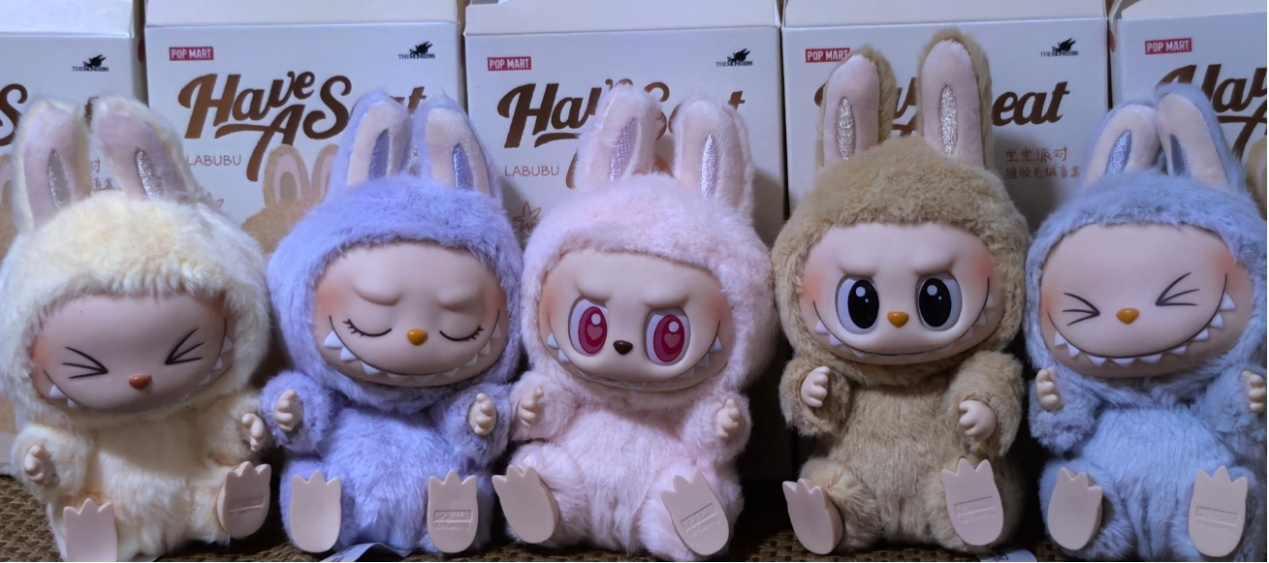
Image source: the Internet.
Since its establishment in 2010, Pop Mart has become a leading force in China’s trend toy industry, thanks to its successful blind-box economy and IP operation model. As one of its core IPs, LABUBU has not only driven the brand’s commercialization but also expanded its influence through collaborations (such as with Disney and Nike). However, as the brand’s visibility has grown, LABUBU now faces serious challenges from counterfeit products and trademark infringements, placing even greater demands on its intellectual property protection.
LABUBU Trademark Registration Status in Various Countries

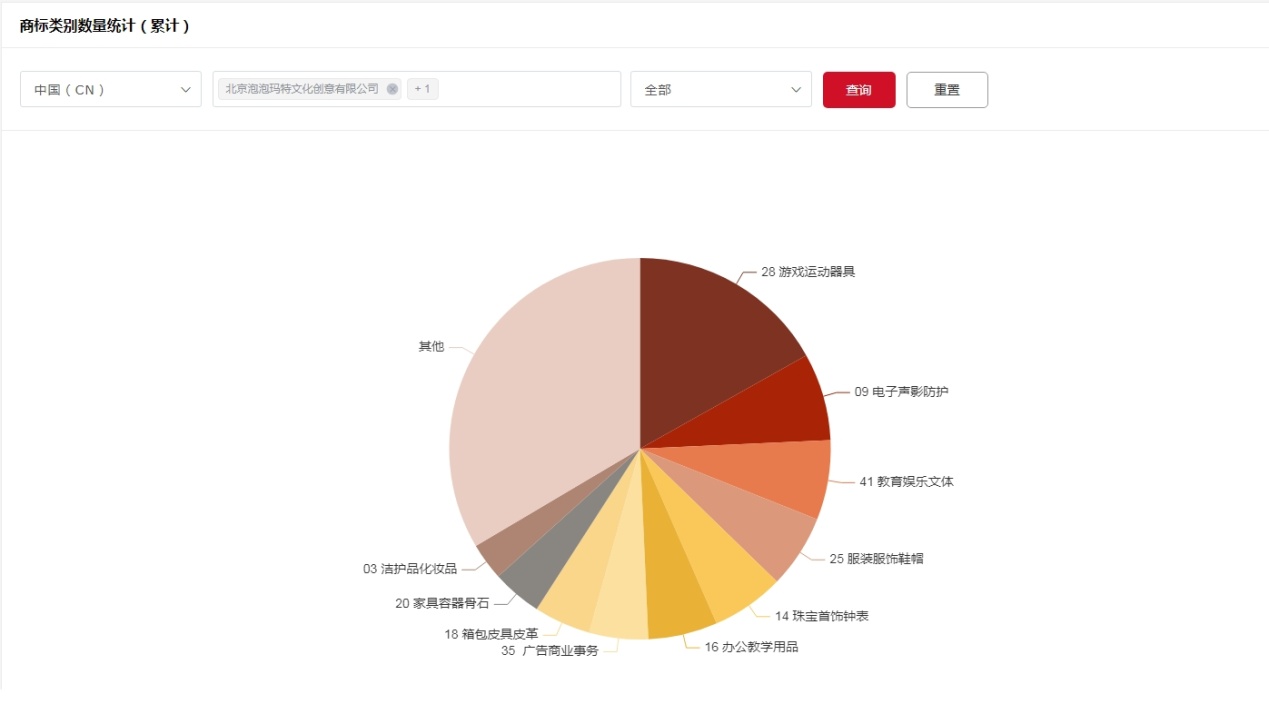
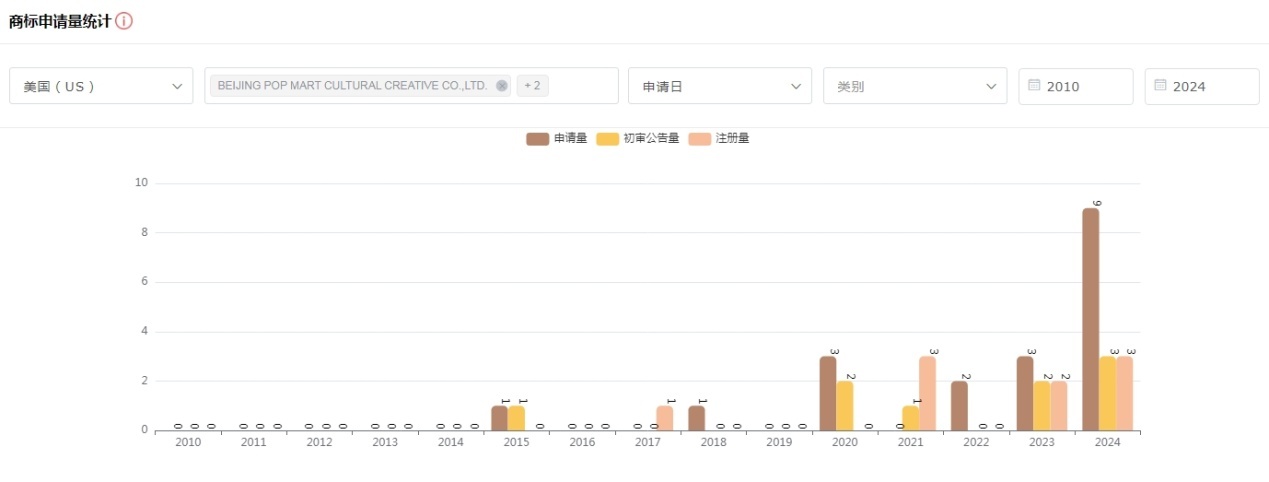
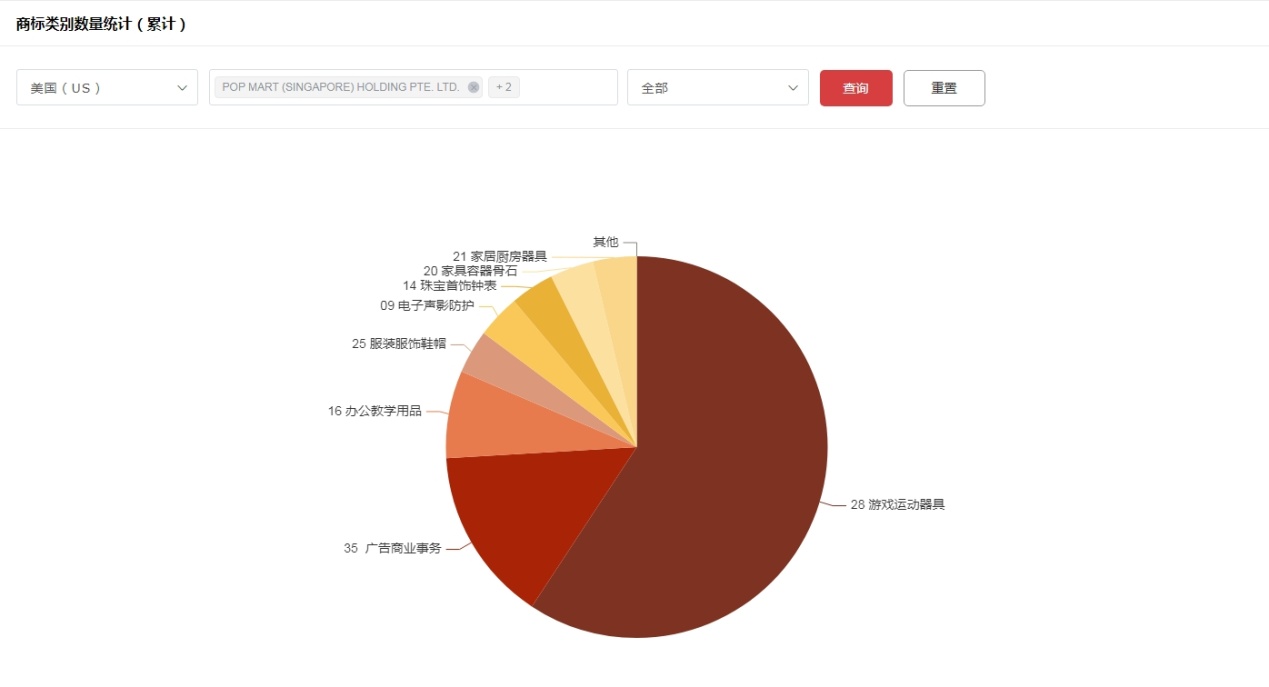
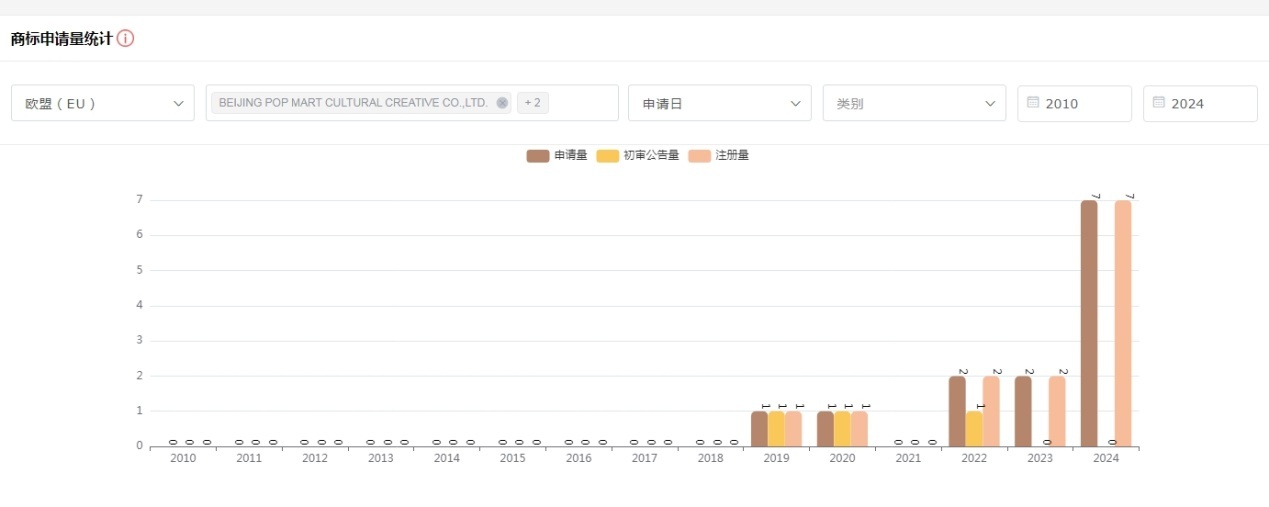
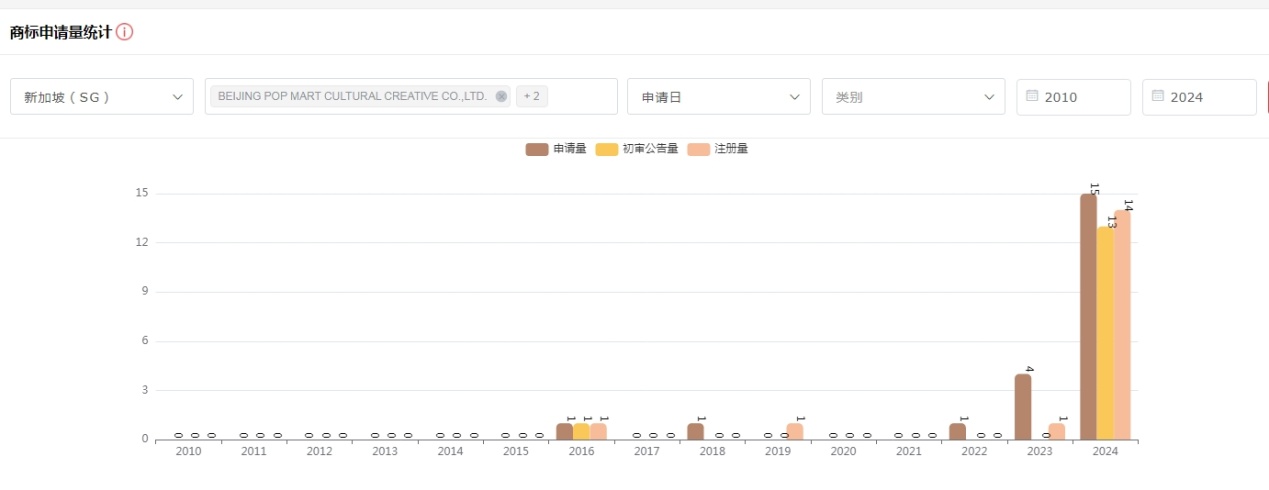
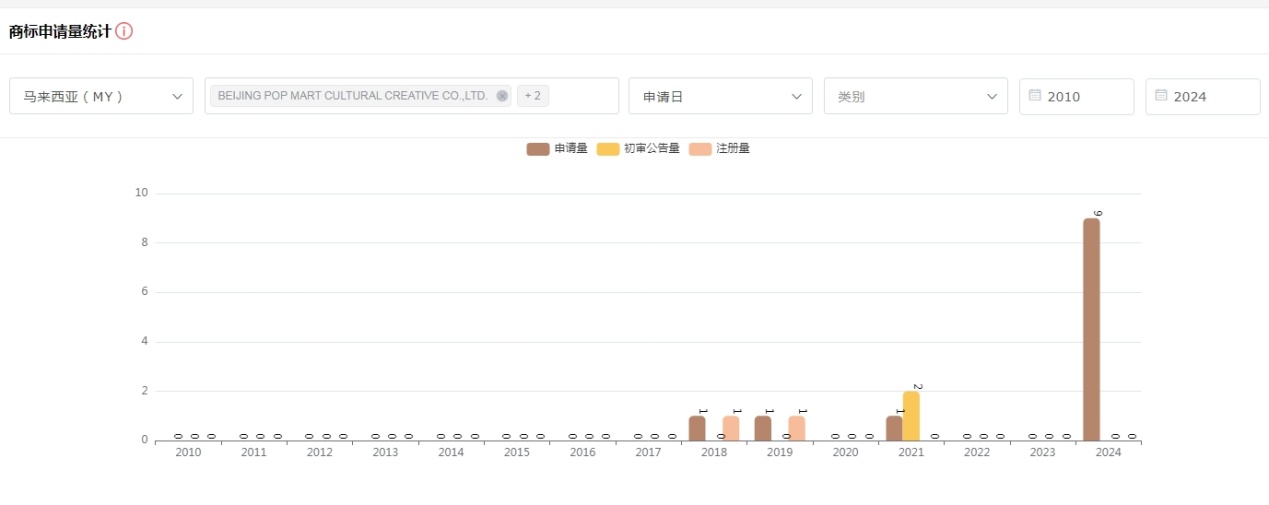
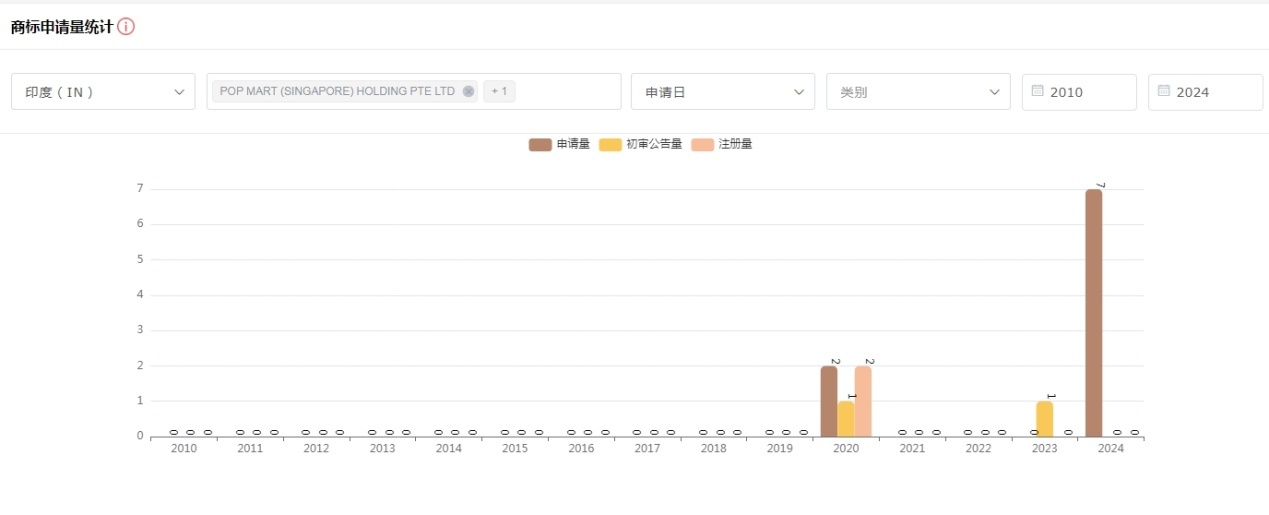
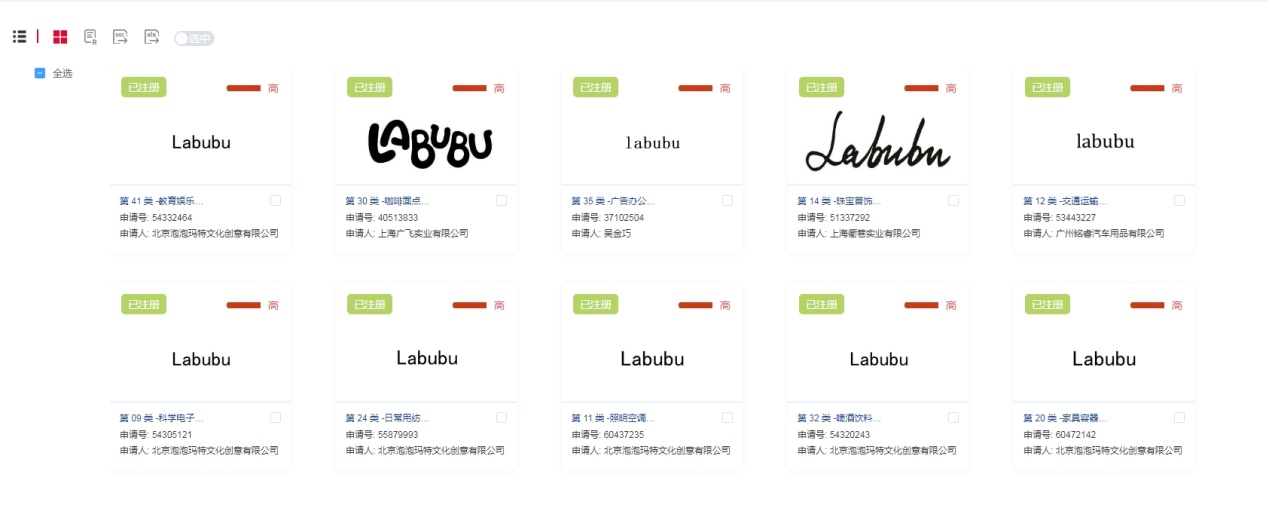
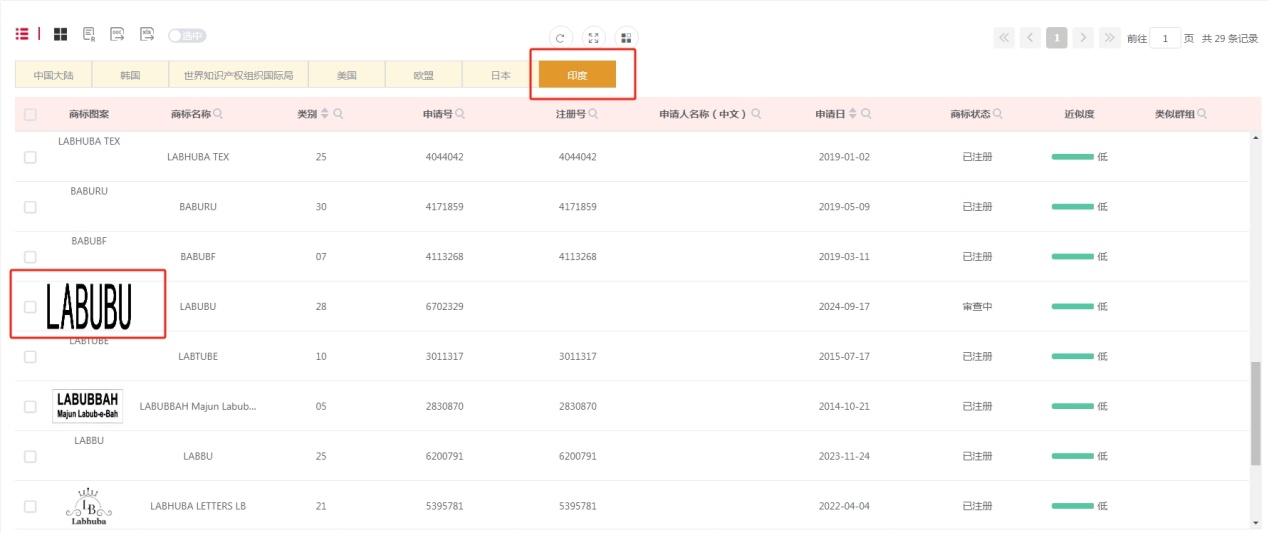
LABUBU’s Trademark Layout Across Various Countries Pop Mart’s global trademark strategy for LABUBU is extensive, covering multiple key markets. According to public records, Pop Mart filed a “LABUBU” trademark application with the United States Patent and Trademark Office (USPTO) on September 17, 2024, covering Class 28 (toys and games) and related categories; the application is currently under examination. Additionally, in China the LABUBU mark has already been registered in several classes—such as Class 9, Class 25, and Class 28—securing protection in its core market. Trademark Application Volume in Mainland China (Image source: Kangxin IP Platform) Trademark Application Volume Statistics by Category in Mainland China (Image source: Kangxin IP Platform) Trademark Application Volume in the United States (Image source: Kangxin IP Platform) Trademark Application Volume Statistics by Category in the United States (Image source: Kangxin IP Platform) In other countries, Pop Mart has also filed trademark registration applications in the EU, Japan, South Korea, Singapore, and other regions, covering relevant product categories such as toys, apparel, and accessories. Trademark Application Volume in the EU (Image source: Kangxin IP Platform) Trademark Application Volume in Singapore (Image source: Kangxin IP Platform) 。 Specifically, in Southeast Asian markets such as Thailand and Malaysia, Pop Mart has accelerated the trademark registration process through priority applications to meet rapidly growing market demand. Notably, in some emerging markets (such as India and Brazil), trademark registrations are still in the planning stage, likely due to considerations of market size or resource-allocation priorities. Trademark Application Volume in Malaysia (Image source: Kangxin IP Platform) Trademark Application Volume in India (Image source: Kangxin IP Platform) LABUBU Similar Trademarks to the LABUBU Mark “Lebubu”“Lvbubu”“Lababa”“LafufuLagogo When searching for similar marks on the Kangxin IP Platform, we found several trademarks highly similar to “LABUBU,” such as “Lebubu,” “Lvbubu,” “Lababa,” and “Lafufu.” These confusingly similar marks are mainly registered in the toys, apparel, and entertainment-product categories, and some are already being sold on e-commerce platforms with substantial volume. For example, “Lagogo” has sold over 9,000 units on one platform, severely threatening LABUBU’s brand distinctiveness. The registration landscape for these similar marks is complex. Some have been preemptively registered in Southeast Asian countries—likely because Pop Mart didn’t secure its rights early in its international rollout. For example, in Indonesia and Vietnam there are marks whose pronunciation or spelling closely mimics “LABUBU,” registered mainly by local small businesses or individuals. Additionally, in the Chinese market, certain similar marks have been maliciously squatted on to piggyback on the famous name—using low-priced knockoffs to lure consumers and damage the brand’s reputation. Potential Infringement of LABUBU on E-commerce Platforms and Social Media ShopeeLafufu 、InstagramInstagramTikTok On e-commerce platforms such as Taobao, Amazon, and Shopee, counterfeit LABUBU products are rampant. Some sellers use phrases like “same design” or “high-quality domestic edition” to market pirated items at prices far below the genuine article, drawing in large numbers of buyers. For example, on Amazon, several knock-off listings resembling LABUBU once occupied top search positions—though recent enforcement actions by the brand have led to nearly half of those listings being taken down. These counterfeits are often sold under obscured trademarks (e.g., “Lafufu”) or by evading keyword filters, making rights enforcement more difficult. On social media platforms like Douyin and Instagram, infringement is equally serious. Many Douyin livestreams promote pirated LABUBU through “blind-box unboxing” videos, attracting viewers and selling fakes directly. On Instagram and TikTok, some overseas influencers showcase low-cost look-alikes, indirectly driving traffic to counterfeit products. These infringements not only damage the brand’s interests but also risk misleading consumers about LABUBU’s true quality. Recommendations for Trademark Protection Strategy To effectively address the current trademark-infringement challenges, the owner of the LABUBU brand should adopt the following protection strategies: 1. Accelerate global trademark registration:** For emerging markets where the mark is not yet registered (e.g., India, Brazil), prioritize filing applications to prevent squatters. At the same time, leverage the Madrid Protocol to obtain multi-country protection more cost-effectively and efficiently. 2. Strengthen monitoring of similar marks:** Use professional tools (such as the Kangxin IP Platform) to conduct regular, worldwide searches for confusingly similar mark applications. Promptly file oppositions or requests for invalidation. For any similar marks already registered, pursue cancellation actions through the courts to enforce your rights. 3. Enhance enforcement on e-commerce platforms:** Establish cooperation mechanisms with major e-commerce sites (e.g., Amazon, Taobao) to ensure rapid takedown of infringing listings. For “borderline” knock-offs that exploit near-identical trademarks, combine technical measures (such as image-recognition algorithms) with manual review to target and remove them precisely. 4. Govern social-media infringement:** On platforms like Douyin and TikTok, strengthen partnerships with platform operators and develop a dedicated governance plan to clamp down on infringing livestreams and short videos. Additionally, run genuine-product promotions and engage with fans to improve consumer ability to distinguish genuine LABUBU items. 5. Educate consumers and promote the brand:** Publish anti-counterfeiting guides via official channels to teach consumers how to spot fakes. Leverage LABUBU’s status as “social currency” in trend culture to launch creative marketing campaigns that build brand loyalty and shrink the market for counterfeits. 6. Combine legal and administrative measures:** In key jurisdictions (such as China and the United States), pursue both administrative complaints (e.g., reports to market-regulation authorities) and civil litigation against infringers. This dual approach holds violators accountable and creates a strong deterrent effect. Conclusion As a flagship of global trend culture, LABUBU’s trademark protection is not only the cornerstone of its brand development but also essential for maintaining consumer trust. Through comprehensive trademark planning, precise infringement monitoring, and multi-dimensional protection strategies, Pop Mart can reinforce LABUBU’s brand value amid fierce market competition and continue to drive innovation and growth in the trend-driven toy industry.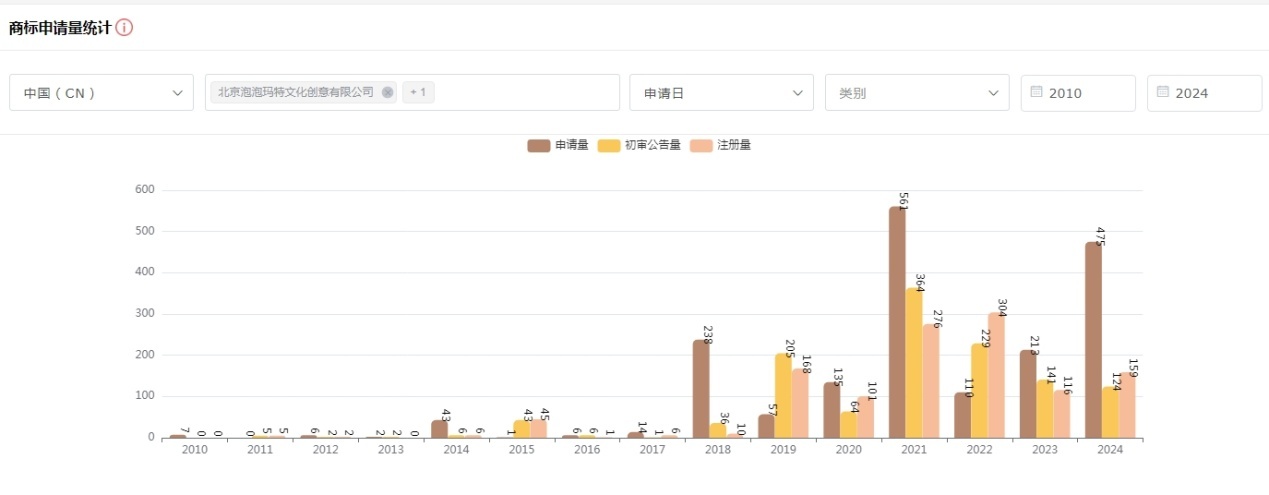


 {{item.truncatedText}}
{{item.basicDescription&&item.basicDescription.slice(0,150)}}{{item.basicDescription&&item.basicDescription.length>150?"...":""}}
{{item.truncatedText}}
{{item.basicDescription&&item.basicDescription.slice(0,150)}}{{item.basicDescription&&item.basicDescription.length>150?"...":""}}