
How to Conduct Trademark Searches Using the Kangxin IP Platform
Time:2025-06-18
Publication Date:2025-06-18
Conducting a thorough trademark search is an essential step before filing a new trademark application. The process involves assessing the availability and registrability of the proposed trademark, whether it is a wordmark, graphic mark, or a combination mark. This article provides a detailed guide on using the Kangxin IP Platform for trademark searches and highlights important techniques to enhance the accuracy of your results.
Importance of Pre-Registration Trademark Searches
A trademark search helps identify potential conflicts with existing trademarks. It ensures that your proposed trademark does not infringe on existing rights, thereby avoiding legal disputes and ensuring smooth registration. A comprehensive search also provides insights into the competitive landscape and the registrability of your mark.
Step-by-Step Guide to Conducting Trademark Searches
1. Accessing the Kangxin IP Platform
Log in to your Kangxin IP account ( eservice.kangxin.com ) .
Navigate to the "Trademark Search" module on the dashboard.
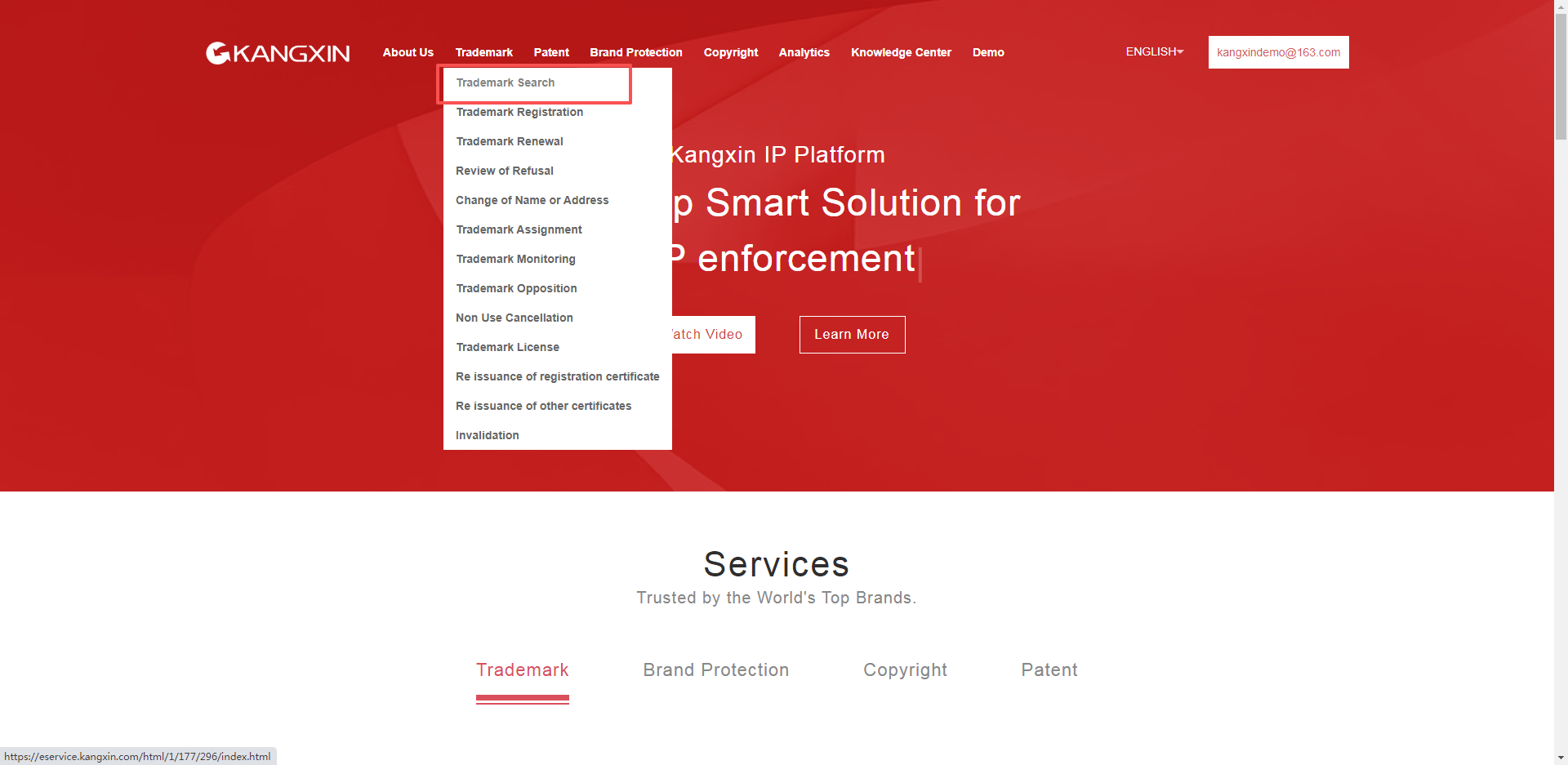
Choose the search type:
Wordmark、Graphic mark、Combination mark
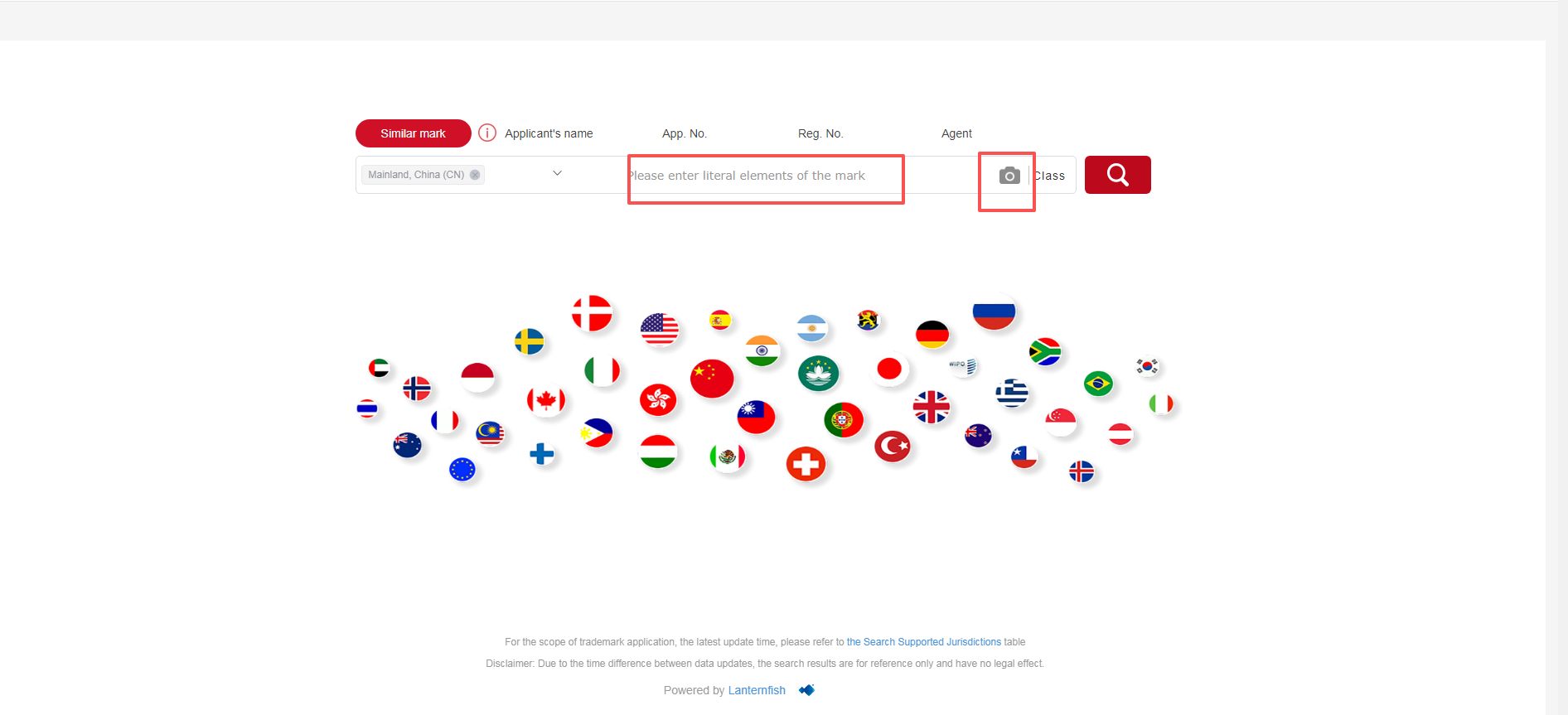
2. Inputting Search Criteria
For Wordmarks:
Enter the exact name or keywords of your proposed trademark.
Use Boolean operators (AND, OR, NOT) to refine your search.
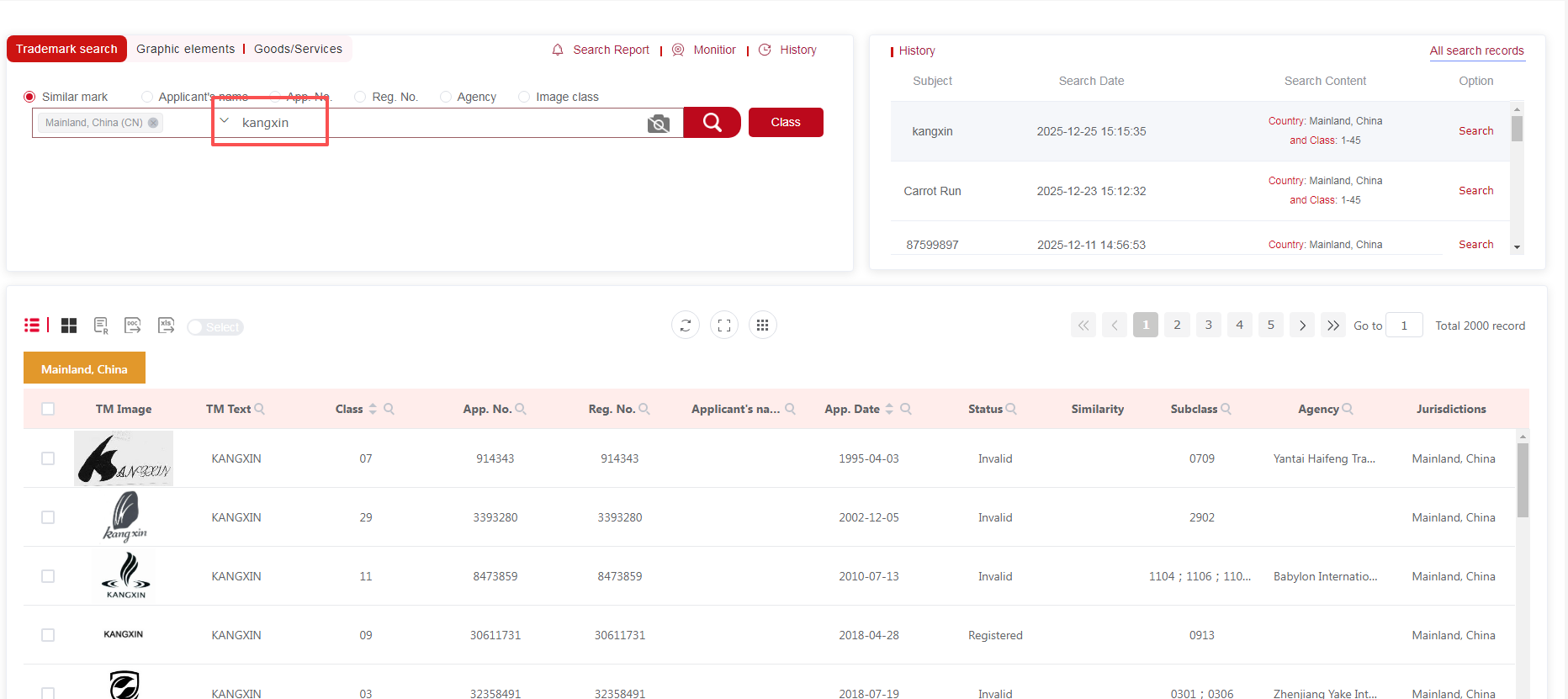
For Graphic Marks:
Upload the design file (JPEG, PNG) of your proposed logo.
Use the "Image Recognition" tool to find visually similar marks.
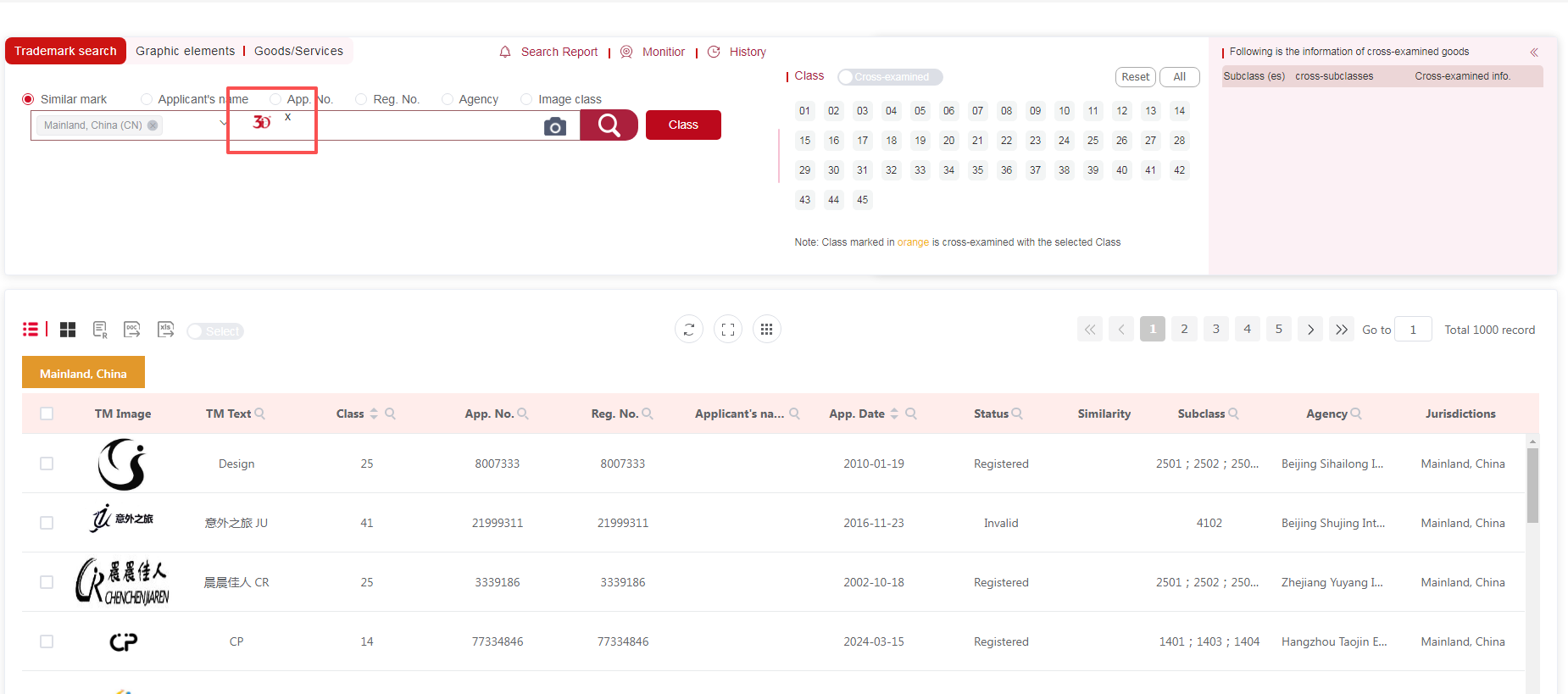
For Combination Marks:
Input both the text and upload the graphic component for an integrated search.
3. Setting Filters
Select the jurisdiction(s):
China\United States\WIPO (Madrid System)
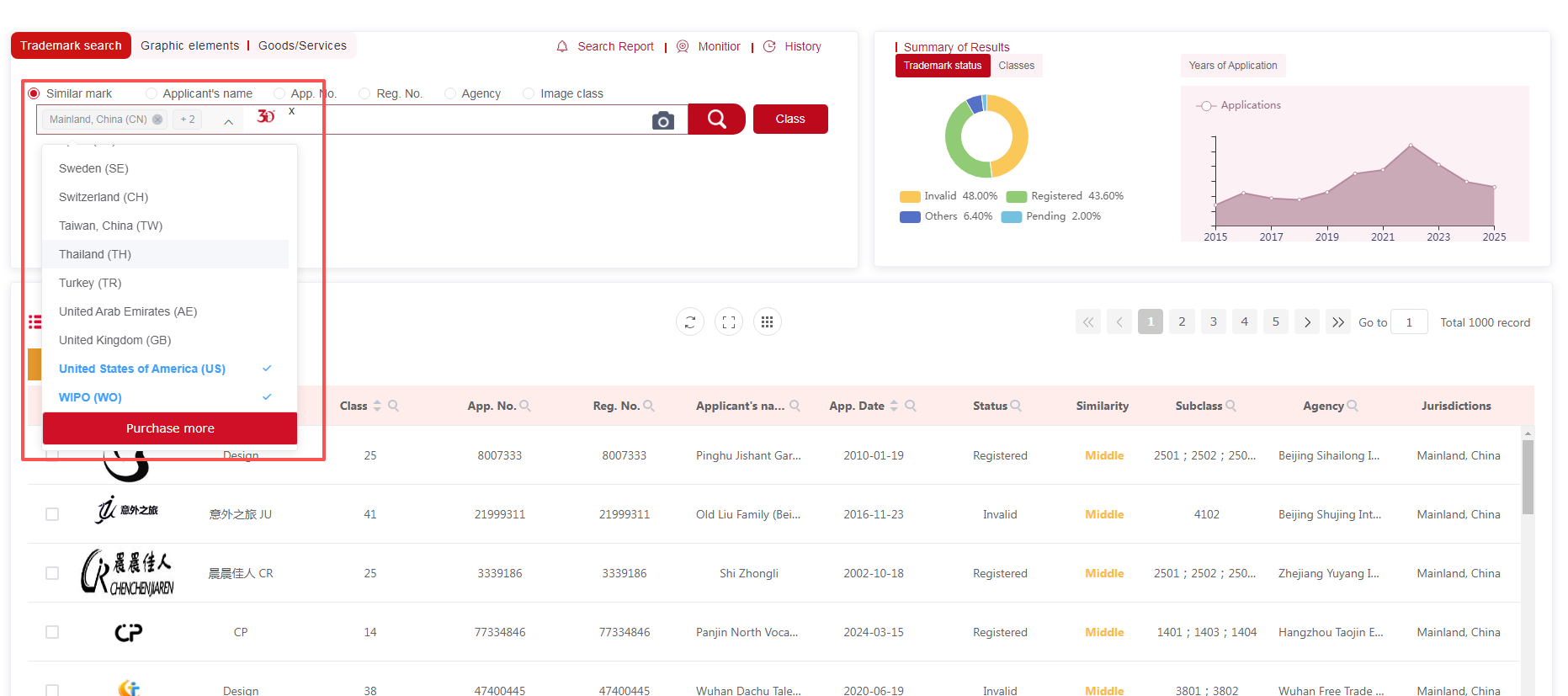
Specify the Nice Classification (NCL) category.
Adjust the search date range if needed.
4. Reviewing Results
Analyze the results for identical or similar marks.
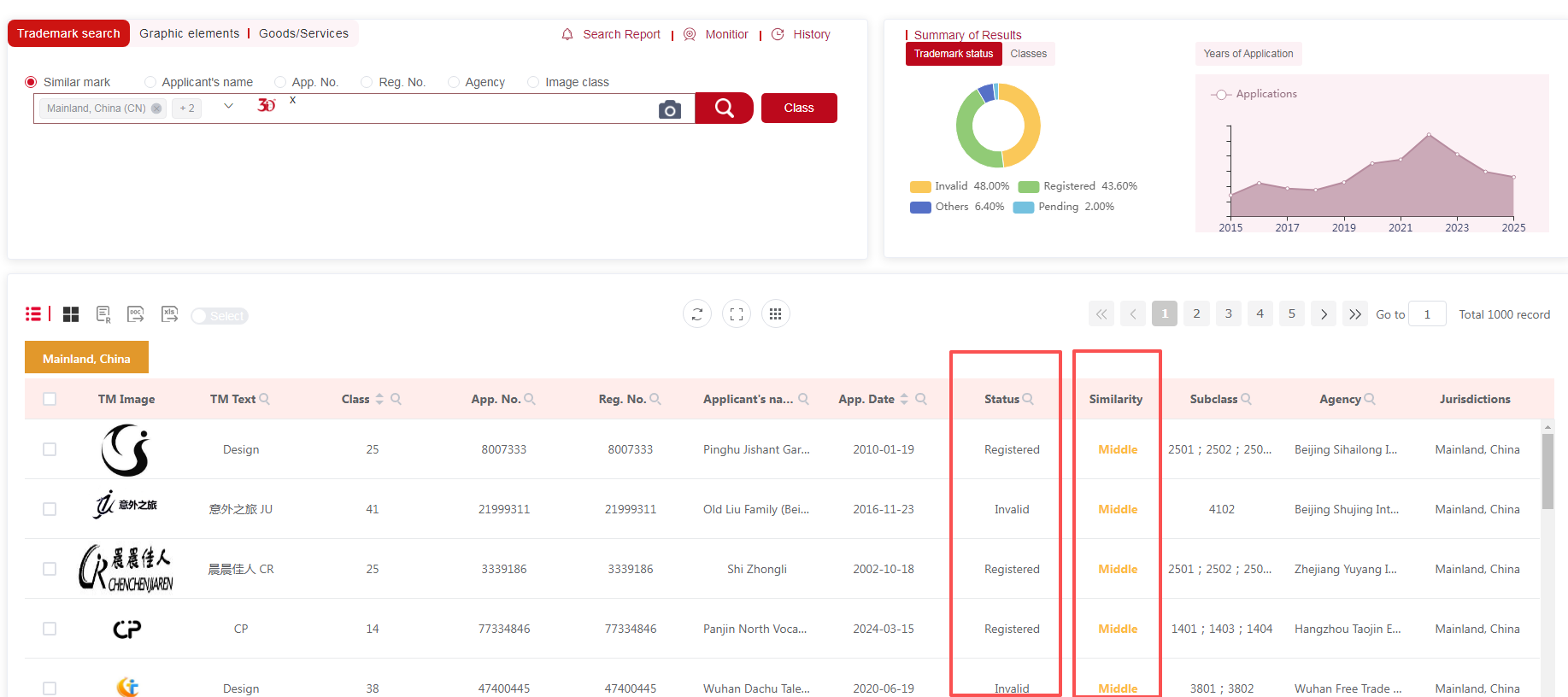
Focus on:
Trademark Similarity: Check for phonetic, visual, or conceptual similarities.
Goods and Services Similarity: Assess whether the existing marks are registered in similar categories.
Trademark Status: Verify whether the marks are active, expired, or pending.
Key Techniques for Accurate Searches
1. Utilize Advanced Search Filters
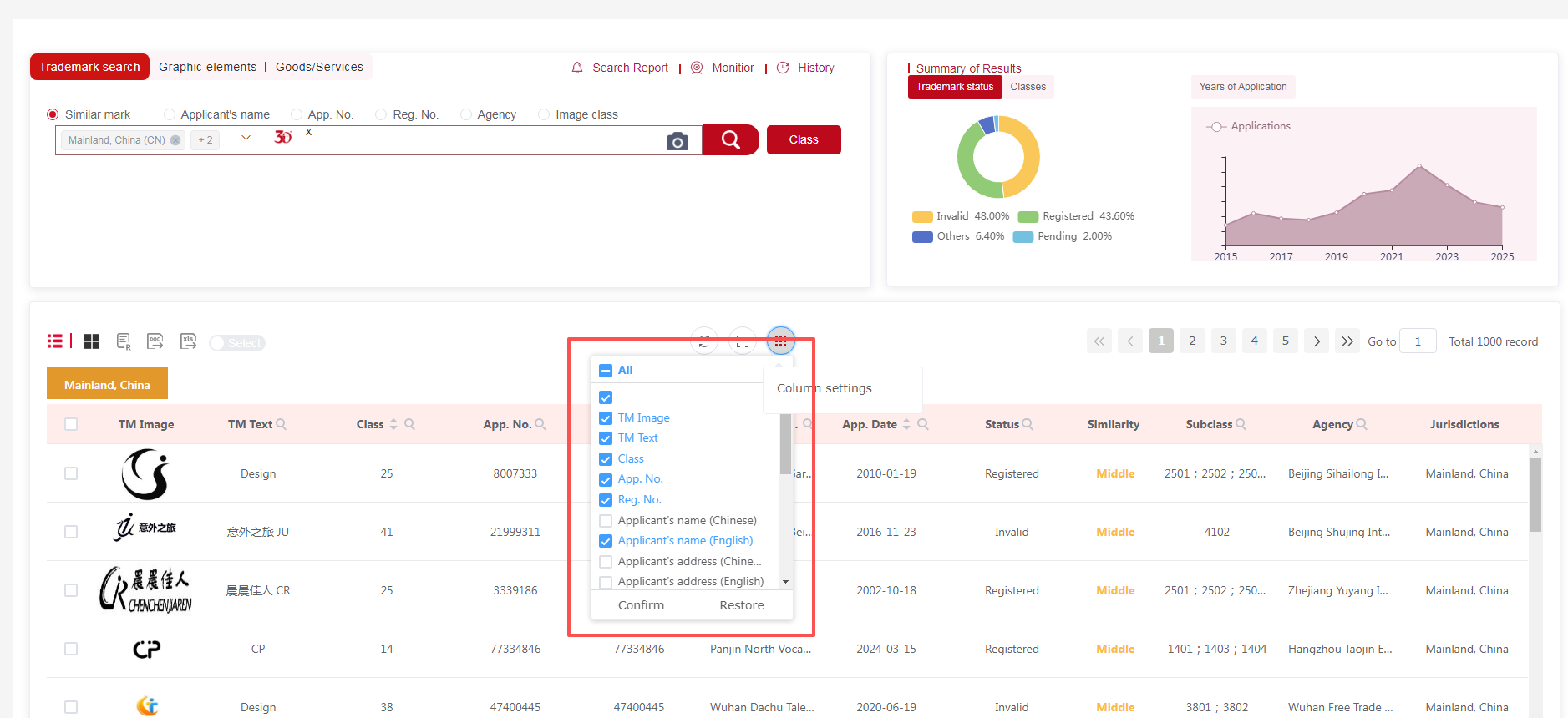
Narrow down results by including additional criteria such as owner names, application numbers, or filing dates.
Use the "Wildcard" function to account for variations in spelling or format.
2. Check International Databases
Use the Kangxin platform’s integration with international trademark databases for cross-border searches.
3. Conduct Phonetic Searches
For wordmarks, use the phonetic search option to identify trademarks with similar pronunciation but different spellings.
4. Employ Visual Similarity Tools
For graphic marks, take advantage of AI-powered image recognition to detect designs with similar visual elements.
5. Analyze Historical Data
Review previously rejected or canceled trademarks to identify common pitfalls and improve your application’s success rate.
Evaluating Trademark Similarity and Goods/Services Conflict
Trademark Similarity:
Evaluate marks for identical or confusingly similar elements.
Consider factors like:
Phonetics: Do they sound alike?
Visuals: Are the designs or fonts similar?
Meaning: Do they convey similar ideas?
Goods/Services Conflict:
Use the Nice Classification system to identify overlaps in goods or services.
Marks registered in the same or related classes pose a higher risk of conflict.
Trademark Status Analysis:
Ensure that existing marks are active and relevant to avoid unnecessary concerns about expired or abandoned registrations.
Common Pitfalls to Avoid
Overlooking Similar Classes: Goods or services that are complementary may be deemed similar even if they fall into different Nice Classes.
Ignoring Pending Applications: Pending trademarks can still pose risks if they are approved later.
Underestimating Regional Variations: Consider linguistic and cultural differences that might affect trademark similarity assessments.
Conclusion
Performing a meticulous trademark search is critical for a successful trademark registration process. By leveraging the Kangxin IP Platform’s advanced search tools and applying the techniques outlined above, you can identify potential conflicts, enhance application accuracy, and safeguard your brand’s identity.
For expert assistance, Kangxin Partners offers professional trademark search and filing services to streamline the process and ensure compliance with local and international regulations.
 {{item.truncatedText}}
{{item.basicDescription&&item.basicDescription.slice(0,150)}}{{item.basicDescription&&item.basicDescription.length>150?"...":""}}
{{item.truncatedText}}
{{item.basicDescription&&item.basicDescription.slice(0,150)}}{{item.basicDescription&&item.basicDescription.length>150?"...":""}}