
In-Depth Analysis of LinkedIn’s Global Trademark Strategy and Intellectual Property Approach
Time:2025-07-23
Publication Date:2025-07-23
In the digital era, professional networking platforms have become vital bridges connecting global talent with businesses. Among them, LinkedIn, the world’s famous professional networking platform, has not only redefined workplace relationships but also demonstrated profound strategic foresight in the realm of intellectual property.
This article offers a comprehensive analysis of LinkedIn’s trademark strategy, exploring trends in application volume across China, the U.S., Japan, Europe, South Korea, and the World Intellectual Property Organization (WIPO), as well as the distribution of goods and services categories and similar group classifications. It also sheds light on the challenges LinkedIn has faced during trademark registration and the strategies employed to address them. (All data screenshots in this article are sourced from the Kangxin IP Platform.)
Overview of LinkedIn
LinkedIn was first launched in December 2002, with its headquarters in California, USA. Since its inception, LinkedIn has rapidly grown into the world’s famous professional networking platform. As of 2023, it boasts over 900 million users across more than 200 countries and regions. The platform encompasses personal career profiles, networking opportunities, content sharing and learning, recruitment, and job searching, providing comprehensive career development support for professionals. LinkedIn’s user base is diverse, including entry-level professionals, freelancers, corporate executives, entrepreneurs, and academic researchers, forming a multifaceted and high-value user demographic.
Trademark Strategy Analysis
Application Volume Trends
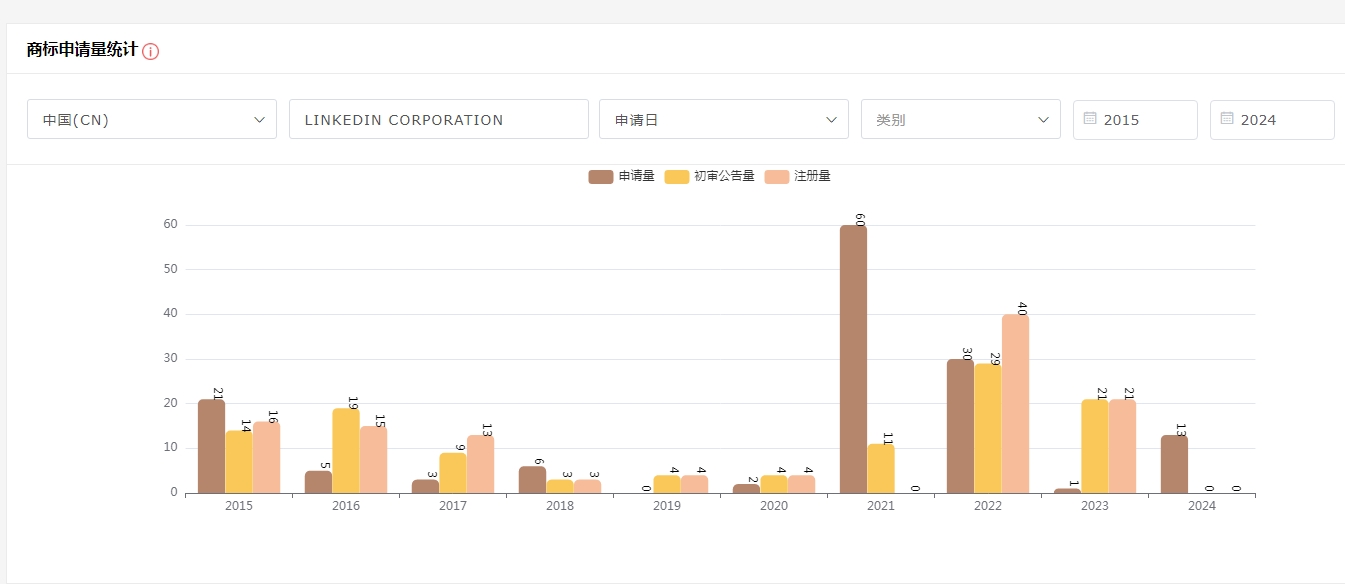
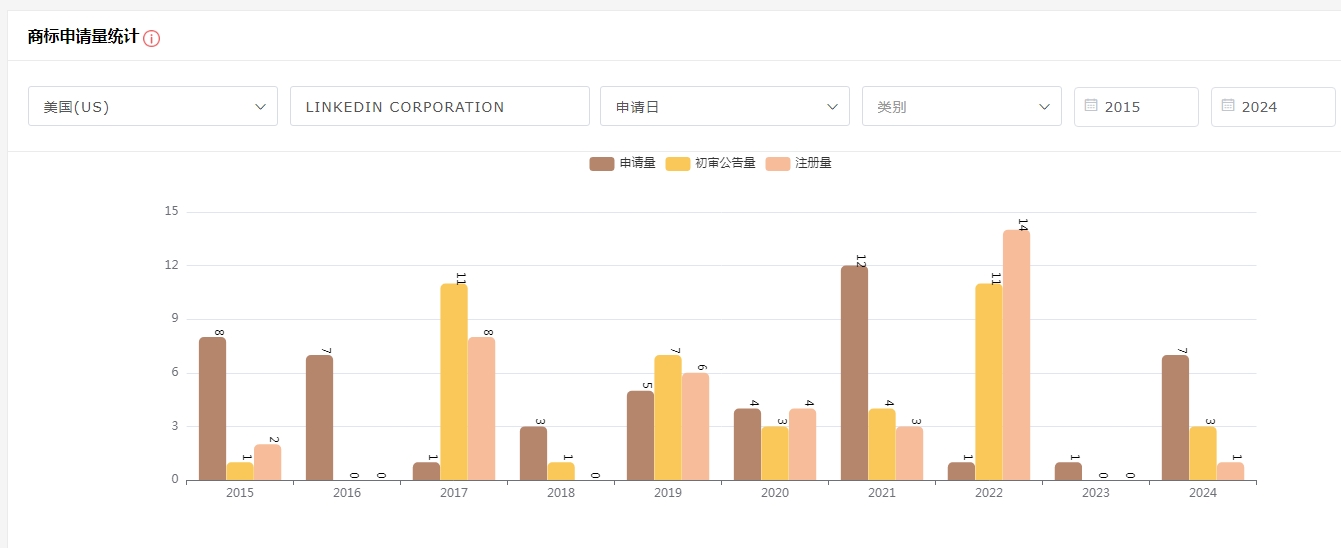
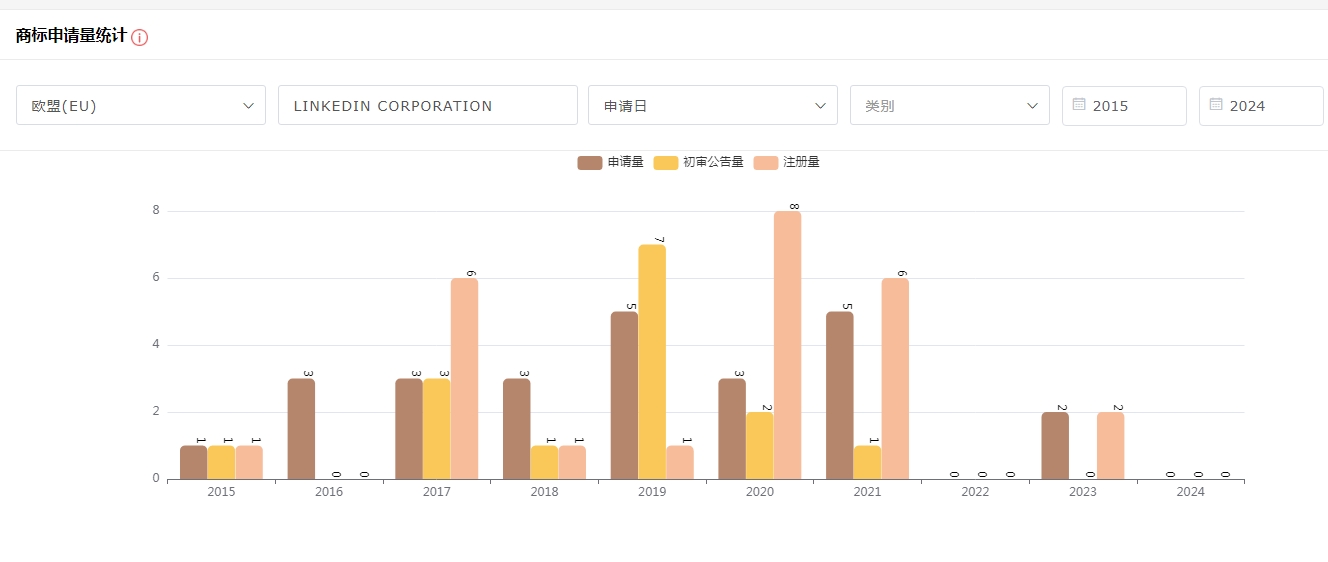
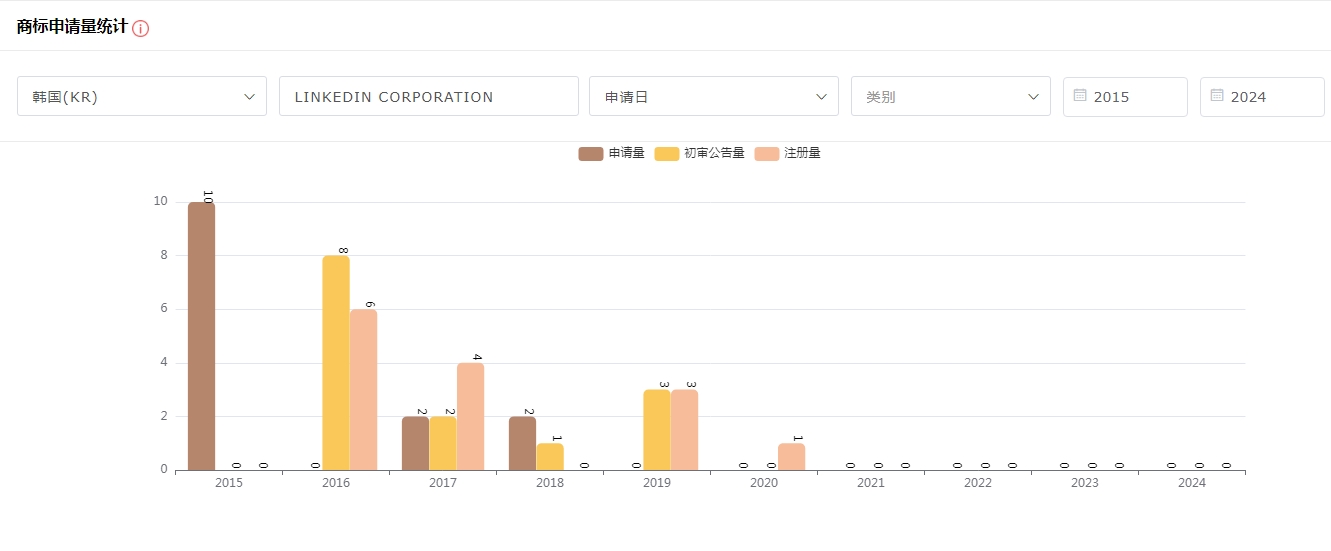
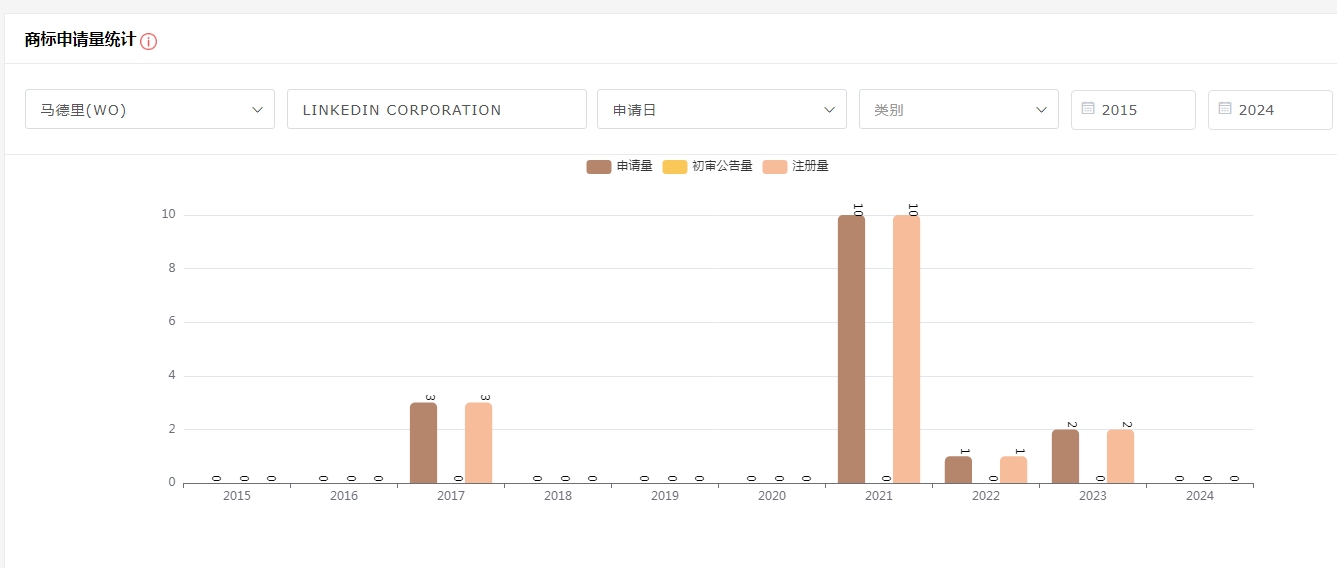
Through platform-based statistical analysis, LinkedIn’s global trademark application trends become evident. In recent years, LinkedIn’s trademark filings in China, the U.S., Japan, Europe, South Korea, and WIPO have shown steady growth. Notably, in China, as LinkedIn deepens its market presence, its trademark application volume has surged significantly, reflecting the company’s emphasis on and confidence in the Chinese market.
1). Mainland China
2). United States
3). European Union
4). South Korea
5). WIPO
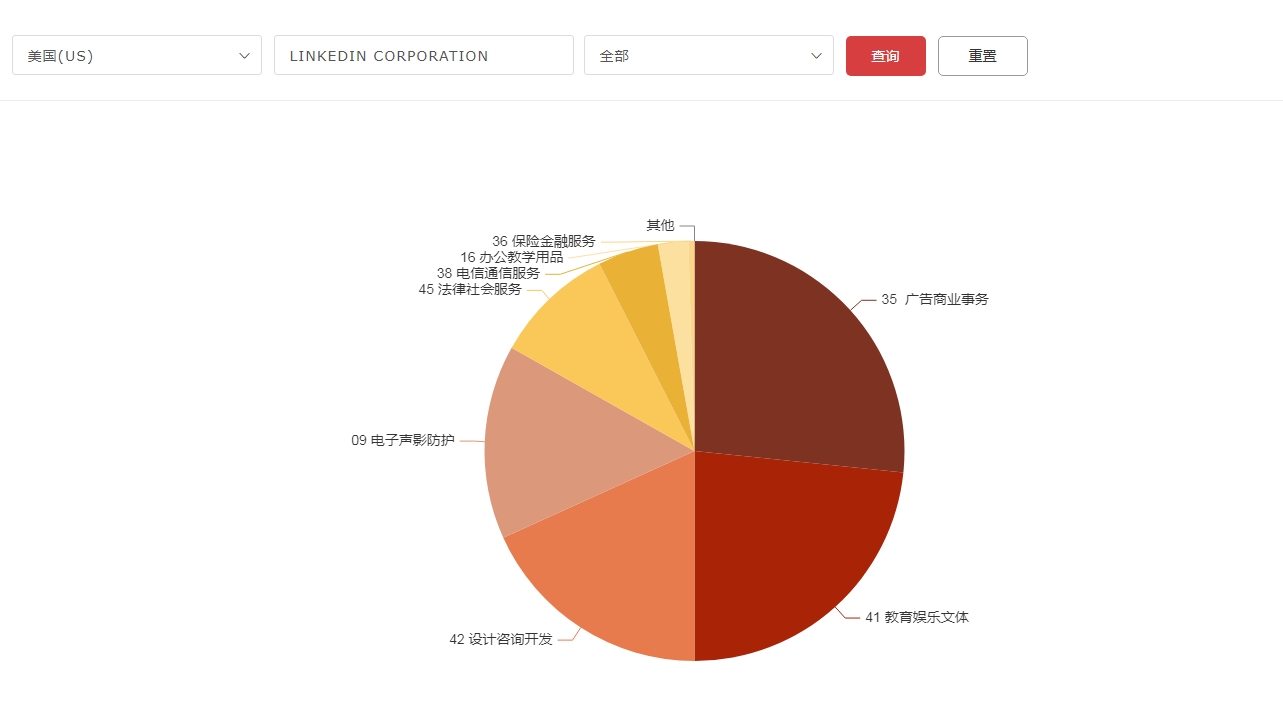
Distribution of Goods and Services Categories
LinkedIn’s trademark applications span a wide range of goods and services categories, primarily including advertising and sales, educational services, social networking services, and career placement services. These categories align closely with LinkedIn’s core business while also reflecting its diversified strategy across professional development, online education, and social media. Through a well-planned distribution of goods and services categories, LinkedIn effectively safeguards its brand rights across various domains.
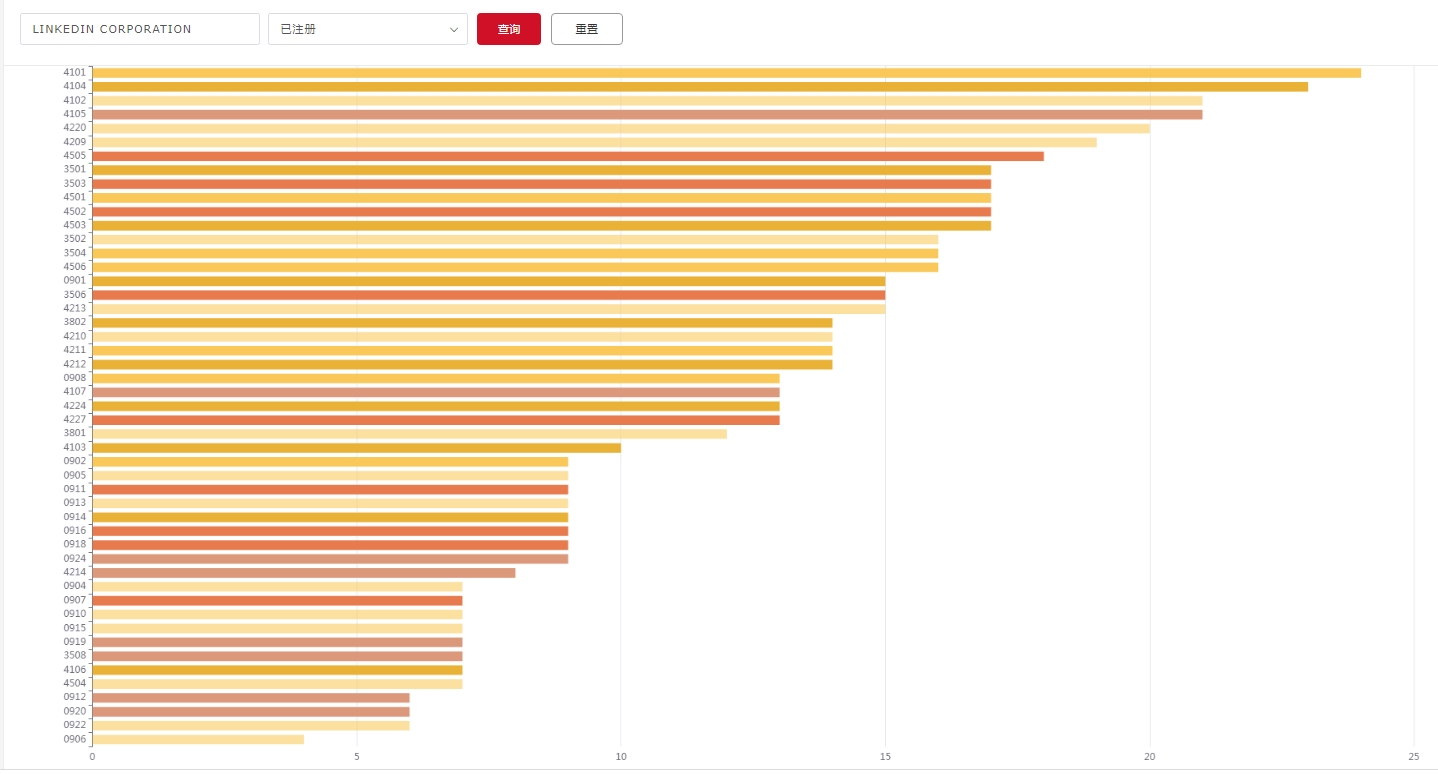
Similar Group Distribution
In its trademark filings, LinkedIn places significant emphasis on the distribution of similar groups. By securing trademarks related to keywords such as “professional networking” and “talent recruitment,” LinkedIn has effectively built a defensive trademark system to prevent unfair competition from similar marks. This approach not only helps maintain LinkedIn’s brand image but also lays a solid foundation for its future competitiveness in the market.
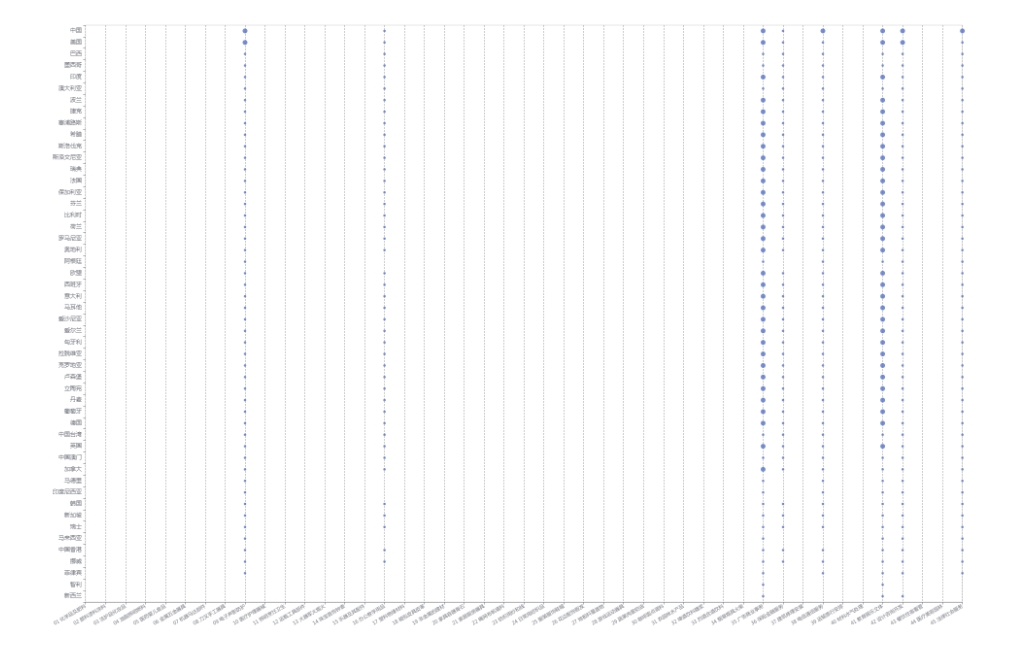
Trademark Map and Bubble Chart
To provide a clearer visualization of LinkedIn’s trademark strategy, a trademark map offers an insightful perspective. This map highlights the global distribution of LinkedIn’s trademark applications, while a bubble chart uses bubble size and color to represent application volumes and growth rates across different regions. These visual tools offer an intuitive understanding of LinkedIn’s trademark strategy and market expansion priorities.

Trademark Registration Obstacles and Dispute Cases
Despite LinkedIn’s notable success in trademark strategy, it has encountered obstacles and disputes in its global efforts. For instance, in certain countries and regions, differences in trademark examination standards or the existence of similar prior marks have led to the risk of application rejections. Additionally, as LinkedIn expands globally, some unscrupulous entities have attempted to engage in unfair competition by counterfeiting its trademarks, negatively impacting its brand image and market growth.
To address these challenges, LinkedIn has adopted proactive strategies. On one hand, by partnering with local trademark agencies, LinkedIn has enhanced the professionalism and specificity of its applications, boosting approval rates. On the other hand, through intensified brand promotion and market oversight, LinkedIn has effectively combated counterfeit trademarks and unfair competition, safeguarding its brand image and market interests.
Conclusion and Future Outlook
As the world’s largest professional networking platform, LinkedIn has demonstrated profound strategic vision and professional expertise in its trademark strategy and intellectual property protection. Through well-managed application volume trends, distributions of goods and services categories and similar groups, and visualized analyses via trademark maps and bubble charts, LinkedIn has successfully constructed a robust trademark defense system and clear market expansion direction. Moreover, in response to trademark registration obstacles and disputes, LinkedIn has implemented effective strategies to protect its brand image and market rights.
Looking ahead, as global markets continue to expand and competition intensifies, LinkedIn will need to further strengthen its intellectual property protection and market oversight efforts. This will ensure it continues to provide professionals worldwide with a high-quality, secure service experience.
 {{item.truncatedText}}
{{item.basicDescription&&item.basicDescription.slice(0,150)}}{{item.basicDescription&&item.basicDescription.length>150?"...":""}}
{{item.truncatedText}}
{{item.basicDescription&&item.basicDescription.slice(0,150)}}{{item.basicDescription&&item.basicDescription.length>150?"...":""}}