
Instagram’s Trademark Strategy from a Global Perspective: Strategic Analysis and Challenges
Time:2025-10-09
Publication Date:2025-10-09
I. Introduction and Overview of Instagram
Since its launch on October 6, 2010, Instagram has grown into one of the world’s most influential social media platforms. Developed by Kevin Systrom and Mike Krieger, this application gained rapid popularity with its unique photo-sharing feature and was acquired by Meta for $1 billion in 2012. As of March 2025, Instagram’s total registered users have surpassed 2 billion, with monthly active users stabilizing at around 1.5 billion (projected based on trends from Meta’s latest financial reports). Daily, the platform generates over 500 million pieces of content—including photos, videos, and Stories—spanning a wide range from personal life updates to brand marketing.
Instagram’s user base is predominantly young, with about 60% aged 18–34, and gender distribution is balanced, with a slight female majority (52%). Its core user profile consists of fashion-conscious, visually-oriented urban dwellers, concentrated in North America (30% in the U.S.), Europe (25%), and the Asia-Pacific region (20%). This global reach and high engagement lay the foundation for its brand value and drive its international trademark protection strategy.
II. Applicant Analysis of Instagram’s Trademark Strategy
Instagram’s trademark protection is managed by its parent company, Meta, with a strategy spanning major global markets. Data from the Kangxin IP Platform (eservice.kangxin.com) provides access to statistics from WIPO, USPTO (U.S.), CNIPA (China), JPO (Japan), EUIPO (EU), and KIPO (South Korea), offering multidimensional insights into its trademark strategy.
(Data screenshots sourced from Kangxin IP Platform.)
1. Trademark Application Trends
United States: As Meta’s home market, Instagram has filed hundreds of trademark applications in the U.S. since 2010. Over the past decade, annual filings have stabilized at 20–30, with recent additions tied to features like Reels and Threads.
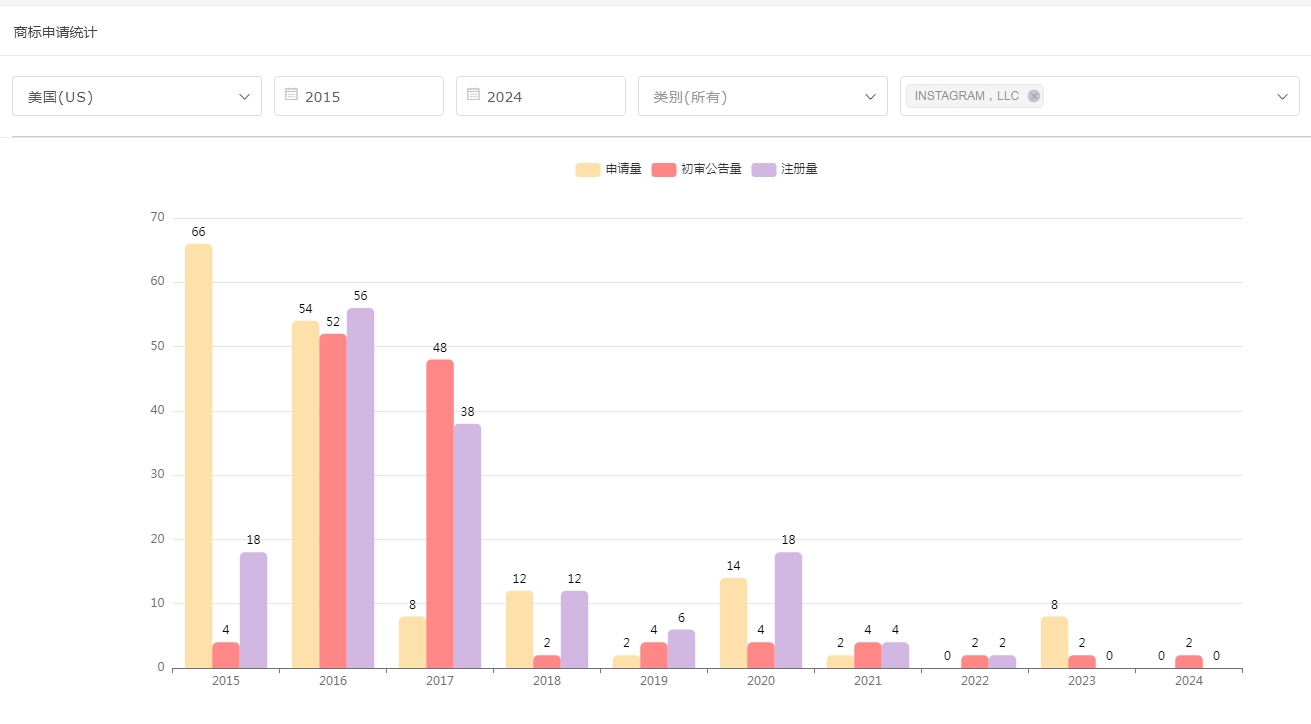
[Instagram’s trademark applications in the U.S. over the past decade]
China: Since 2015, trademark filings in China have surged, peaking at around 50 in 2023, reflecting Meta’s focus on China’s e-commerce and short-video markets.
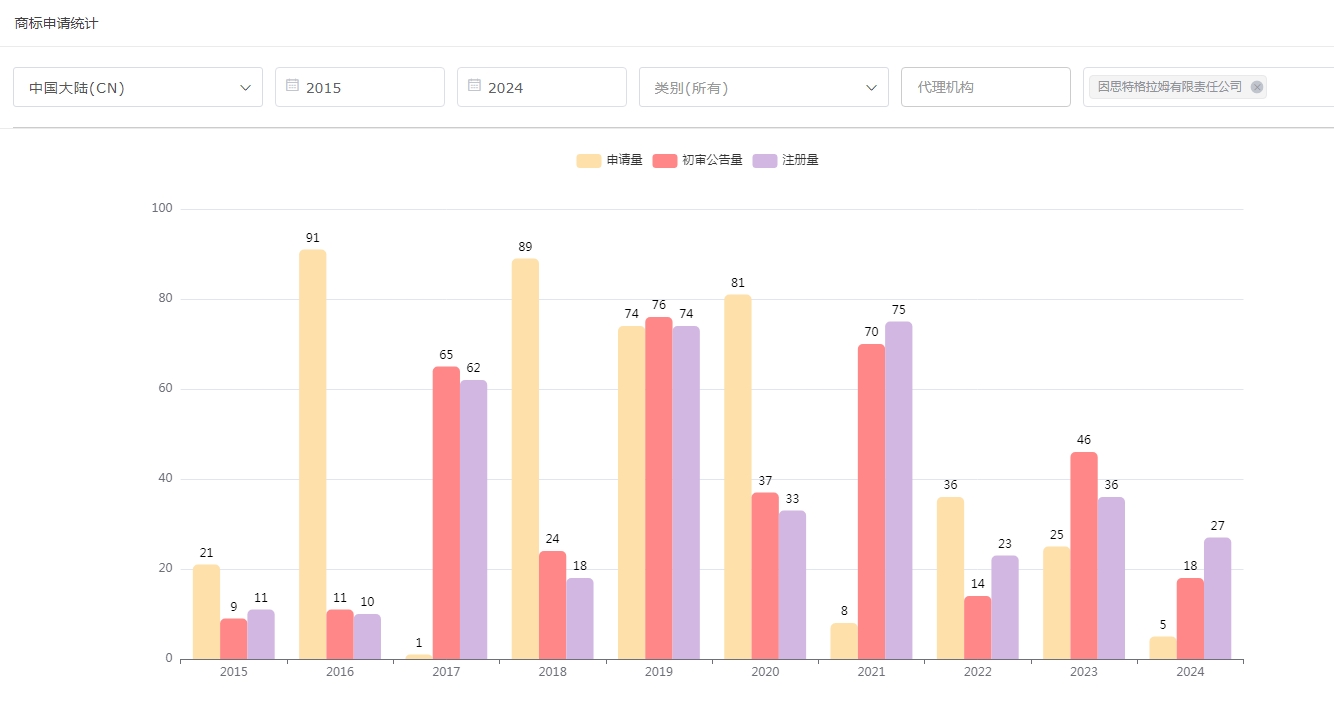
[Instagram’s trademark applications in mainland China over the past decade]
Japan: Filings remain steady at 10–15 per year, focusing on tech services and brand promotion, showcasing a tailored approach to Japan’s mature market.
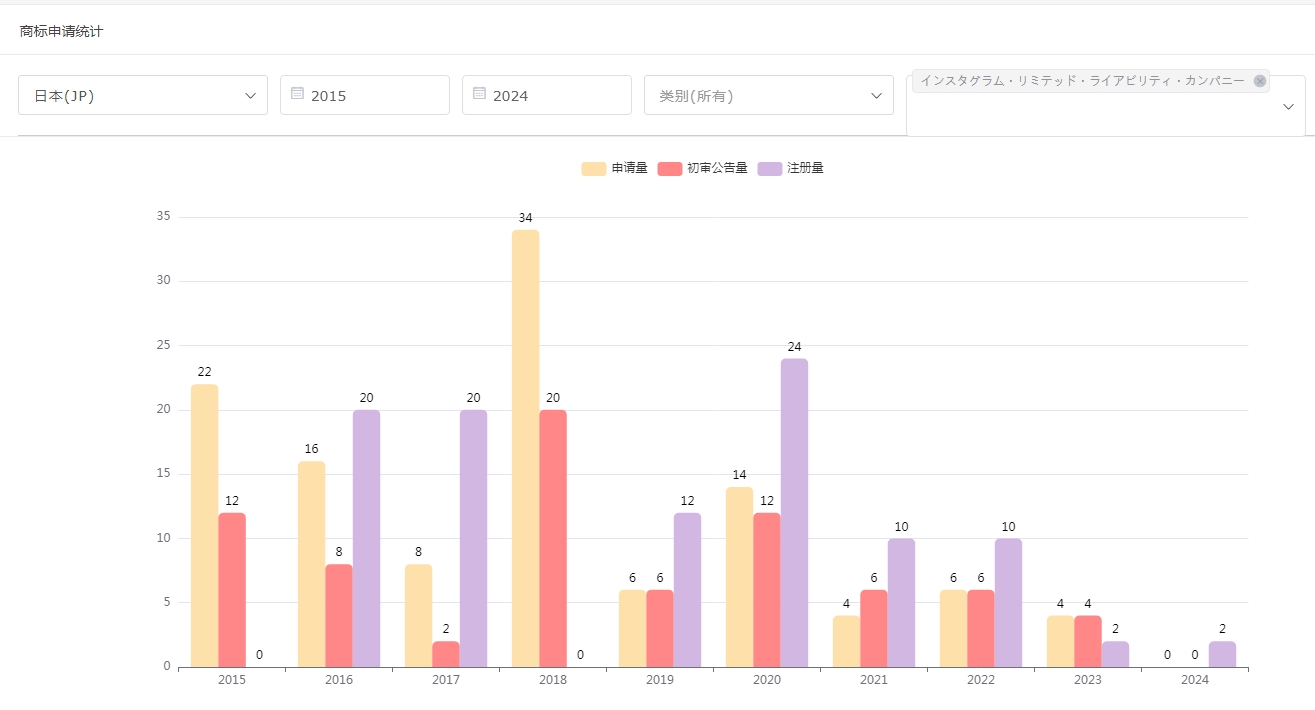
[Instagram’s trademark applications in Japan over the past decade]
Europe: Through EUIPO, Instagram has registered over 200 trademarks, covering all 45 Nice Classification categories, with an average of 30 new filings annually over the past three years, indicating comprehensive protection in Europe.
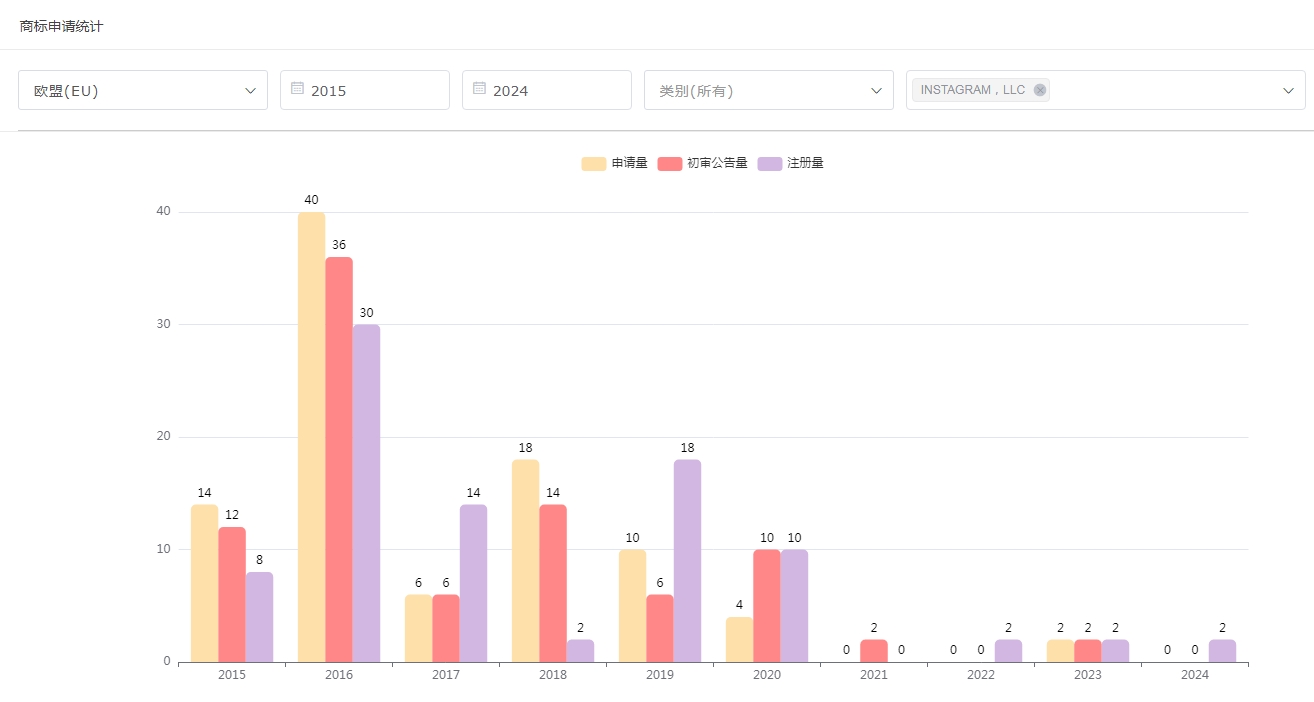
[Instagram’s trademark applications in the EU over the past decade]
South Korea: Since 2018, filings have climbed rapidly, averaging 20 per year, closely tied to K-pop culture and the engagement of South Korea’s youth.
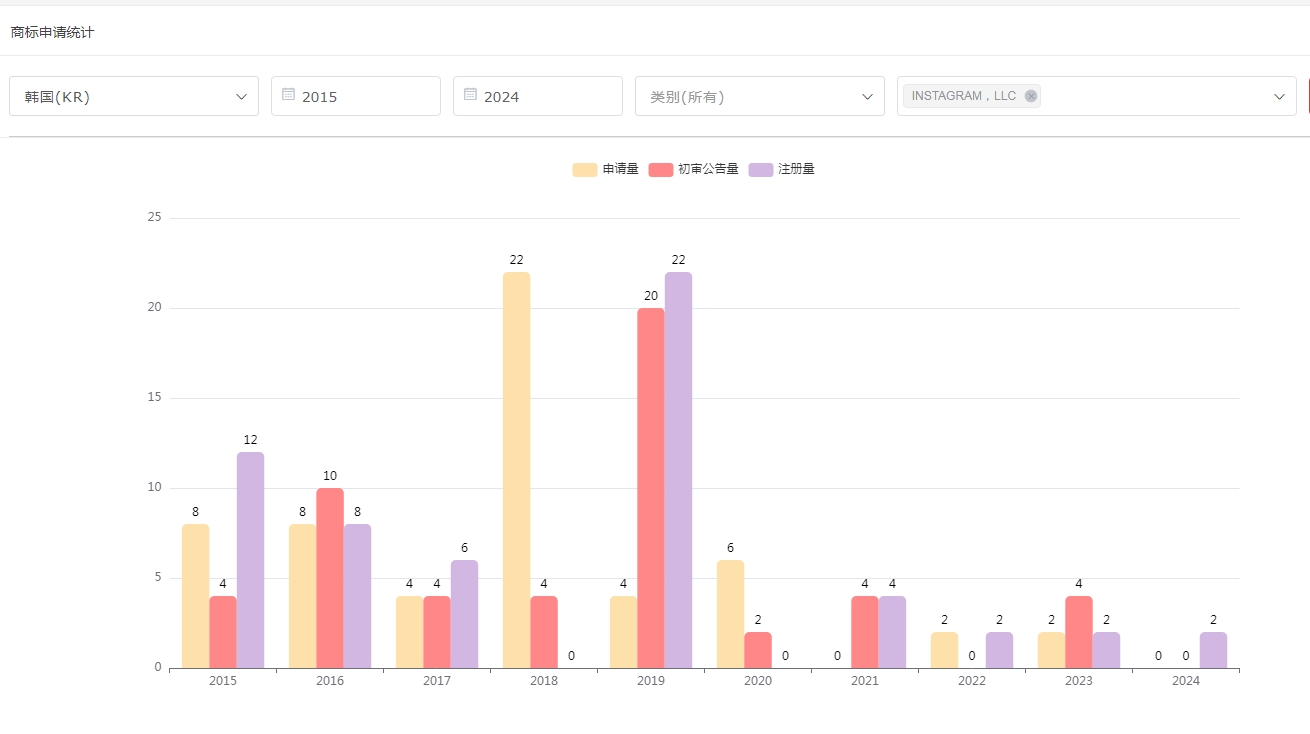
[Instagram’s trademark applications in South Korea over the past decade]
WIPO: Over 100 international trademark registrations have been filed via the Madrid System, covering more than 120 countries, highlighting its global expansion ambitions.
2. Distribution of Goods and Services Categories
Instagram’s trademarks are primarily concentrated in Class 9 (software and applications, 40%), Class 35 (advertising and business services, 25%), Class 38 (communication services, 15%), and Class 42 (technical services, 10%). In recent years, Class 41 (entertainment services) has risen to 8%, correlating with the expansion of short videos and live-streaming features. This category distribution reflects Instagram’s evolution from a simple photo-sharing tool to a multifaceted content platform.
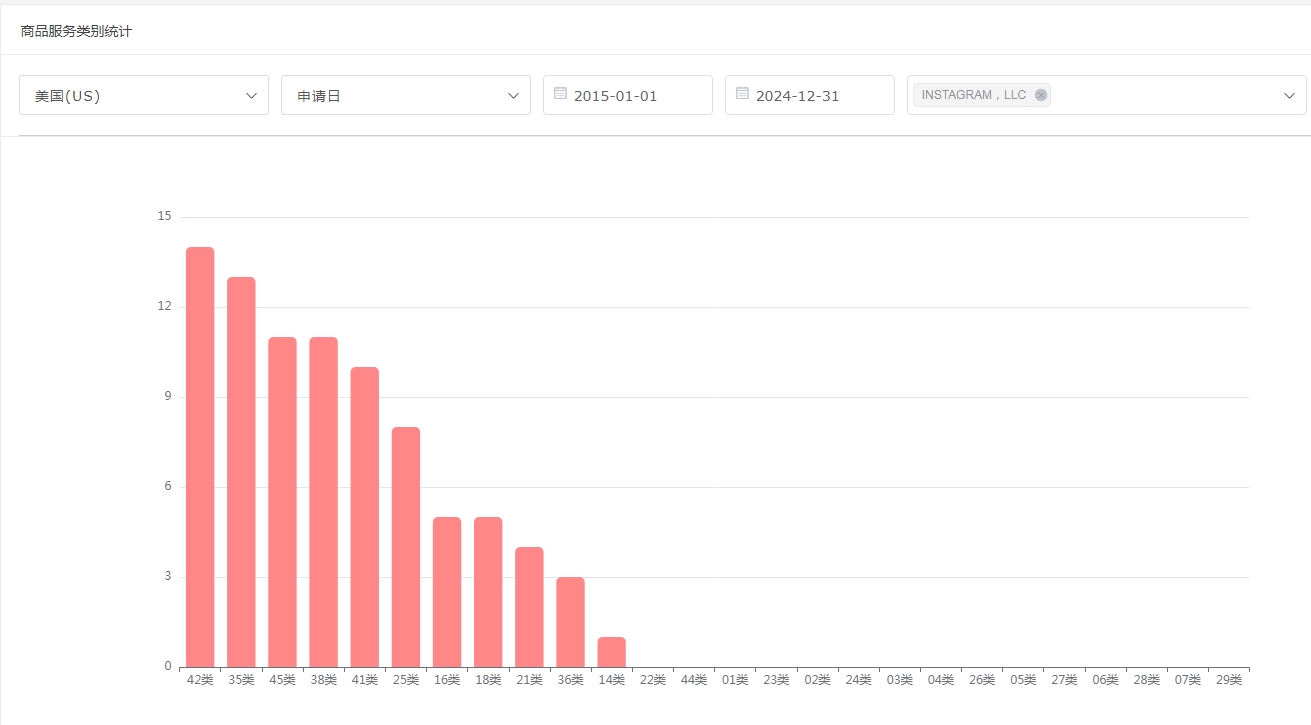
3. Similar Group Distribution
In Class 9, groups 0901 (computer programs) and 0907 (communication devices) dominate, safeguarding its core app and communication technology; in Class 35, group 3503 (advertising) leads, underscoring its commercialization strategy; in Class 41, group 4105 (entertainment services) has grown rapidly, linked to Reels and IGTV. This group selection demonstrates Instagram’s precise control over its technical core and brand extensions.
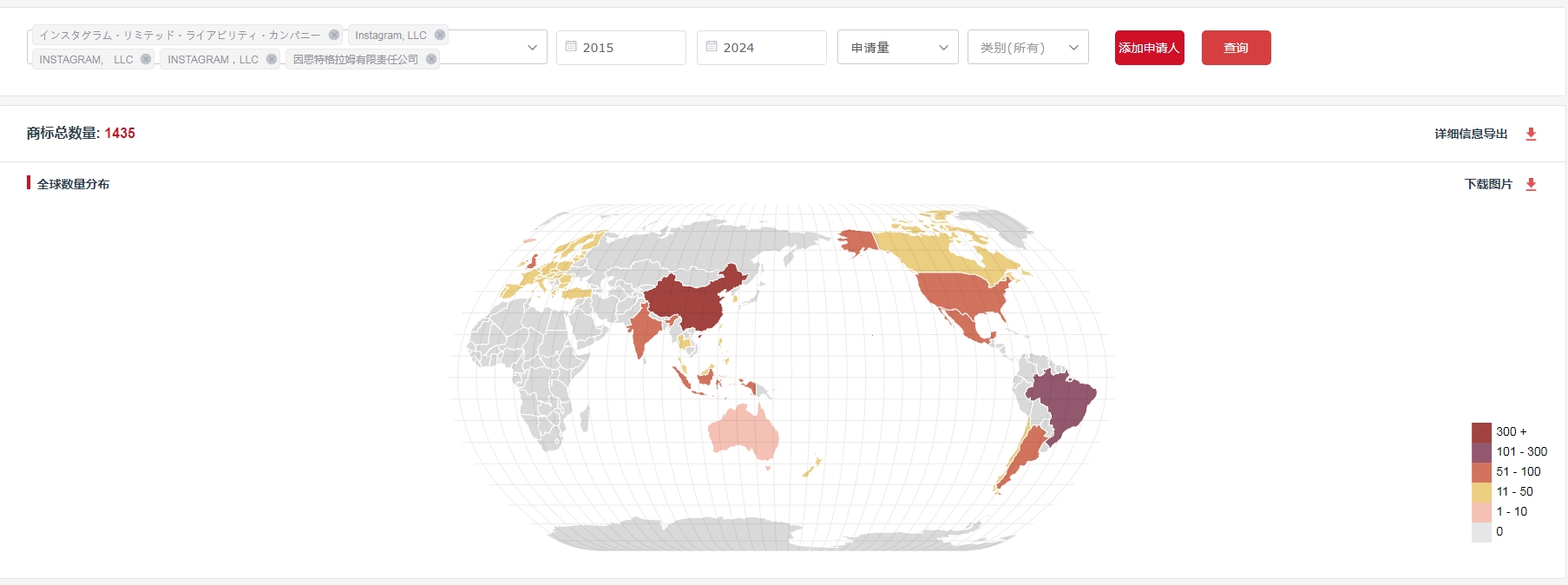
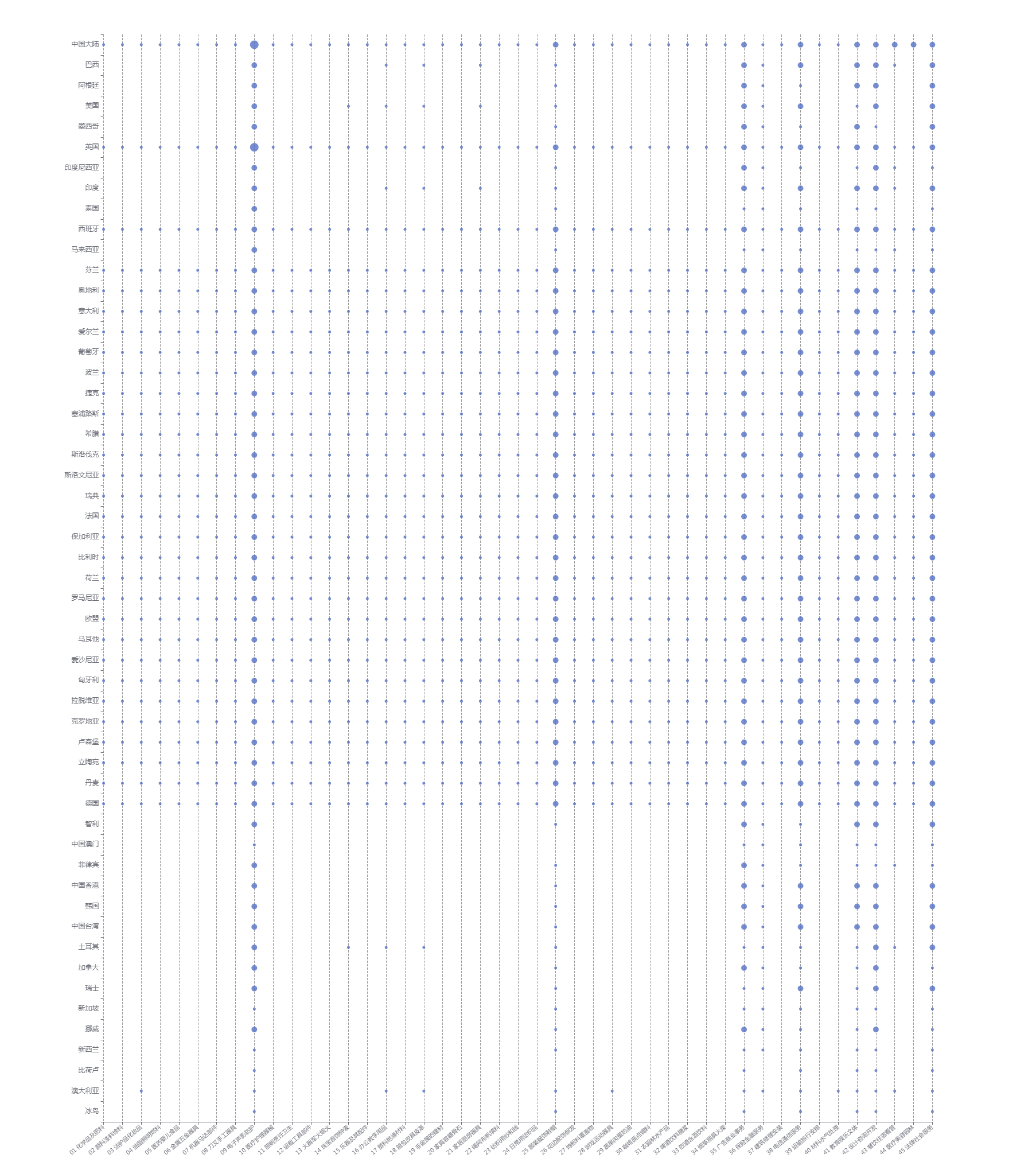
4. Trademark Map and Bubble Chart
When mapped, the U.S., EU, and China emerge as the three core regions, accounting for 30%, 25%, and 15% of global filings, respectively. In a bubble chart, bubble size represents filing volume, with the U.S. bubble being the largest, followed by China, while South Korea and India stand out as emerging markets. This visual distribution aligns closely with market activity and user base size. (Data source: Kangxin IP Platform)
III. Recent Trademark Registration Obstacles and Dispute Cases
Despite Instagram’s efficient and global trademark strategy, its brand protection and expansion efforts face numerous challenges, particularly across diverse legal environments and IP practices. Below are detailed analyses of notable case, highlighting obstacles and strategies in its trademark protection.
Trademark Squatting Dispute and analysis in China An individual in Hunan filed trademark applications for "Instagram" in Class 25 (clothing, shoes and hats) in 2015 and 2017, attempting to use Instagram's brand influence to promote clothing products. The preemptive trademarks were rejected through trademark oppositions. The natural person then applied for the "Instagram" trademark again in 2018, but the application was rejected by the CNIPA. This case highlights the chaos of trademark squatting in China, where international brands often face threats from lengthy review cycles and local firms’ speculative tactics.
Analysis
From the above case, in emerging markets like China, squatting is primary threats, driven by local firms’ covetousness of international brand fame and immature IP protection systems. Instagram must mitigate risks through early brand planning, preemptive defensive filings, enhanced localized research, and partnerships with professional entities. Actively combating squatting trademark in the market, supported by detailed evidence can demonstrate Meta’s formidable legal resources and brand protection awareness. However, the time- and cost-intensive nature of these efforts suggests a need for optimized preemptive planning and dynamic monitoring to address global trademark challenges more efficiently.
IV. Conclusion and Insights
Instagram’s trademark strategy reflects a blend of global vision and localized execution. Its filing trends across the U.S., China, Japan, Europe, South Korea, and WIPO demonstrate precise alignment with technological innovation and market expansion, while multi-category, multi-group protection strengthens its brand value. Yet, obstacles like squatting, similar trademarks, and descriptiveness disputes underscore the need for enhanced dynamic monitoring and legal preparedness. For other tech companies, Instagram’s experience serves not only as a textbook for trademark protection but also as a valuable lesson for international brand expansion.
 {{item.truncatedText}}
{{item.basicDescription&&item.basicDescription.slice(0,150)}}{{item.basicDescription&&item.basicDescription.length>150?"...":""}}
{{item.truncatedText}}
{{item.basicDescription&&item.basicDescription.slice(0,150)}}{{item.basicDescription&&item.basicDescription.length>150?"...":""}}