
WeChat’s Trademark Portfolio Analysis
Time:2025-08-21
Publication Date:2025-08-21
1. Trademark Application Trends
Using statistical data from Kangxin IP Platform (eservice.kangxin.com), we analyze WeChat’s trademark application trends in China, the US, Japan, South Korea, and the EU.
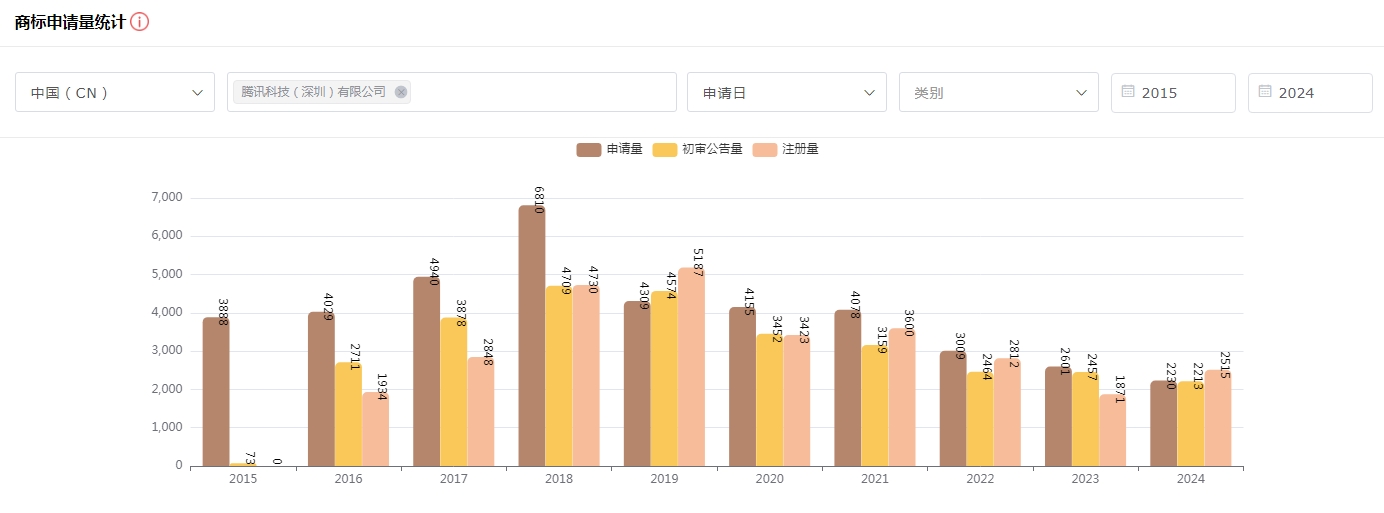
Statistics on trademark applications in China over the past decade (Source: Kangxin IP Platform)
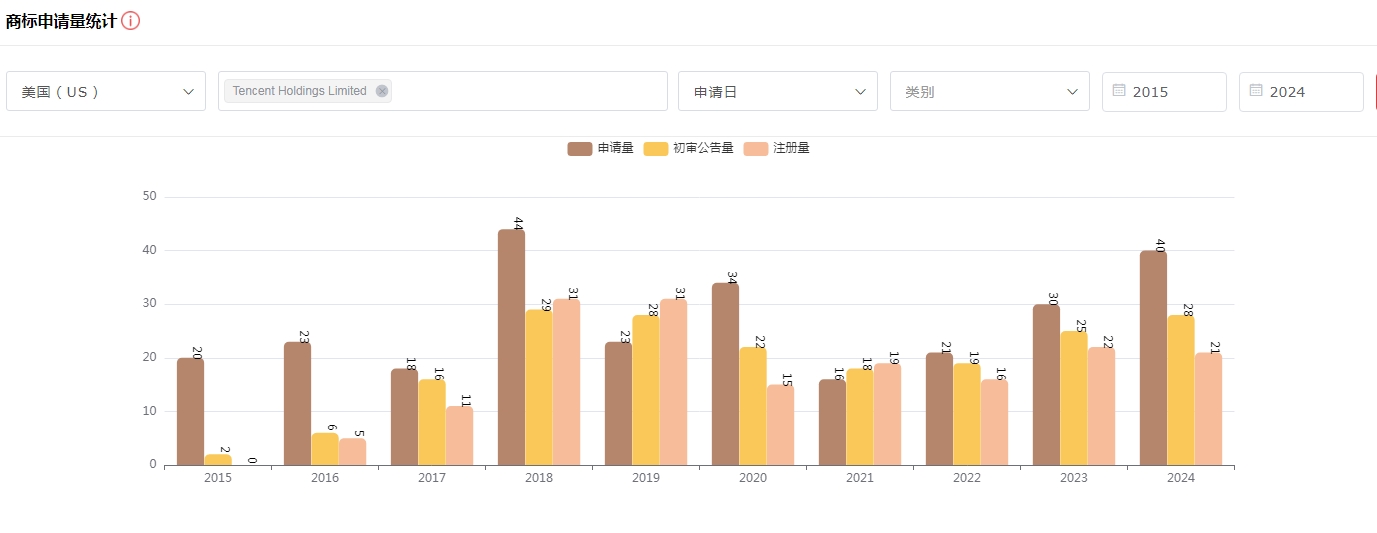
Statistics on trademark applications in the US over the past decade (Source: Kangxin IP Platform)
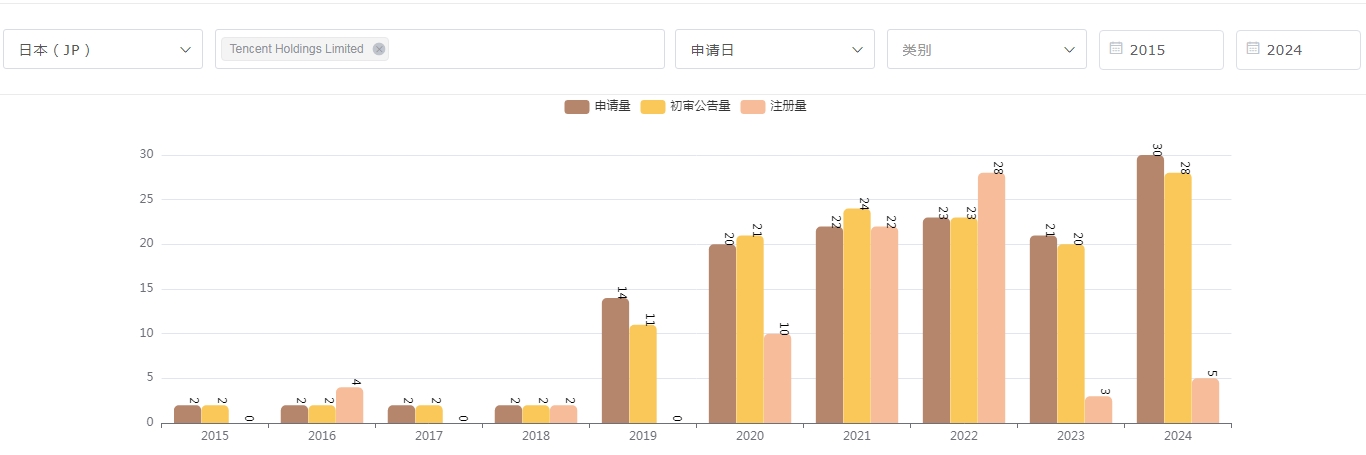
Statistics on trademark applications in Japan over the past decade (Source: Kangxin IP Platform)
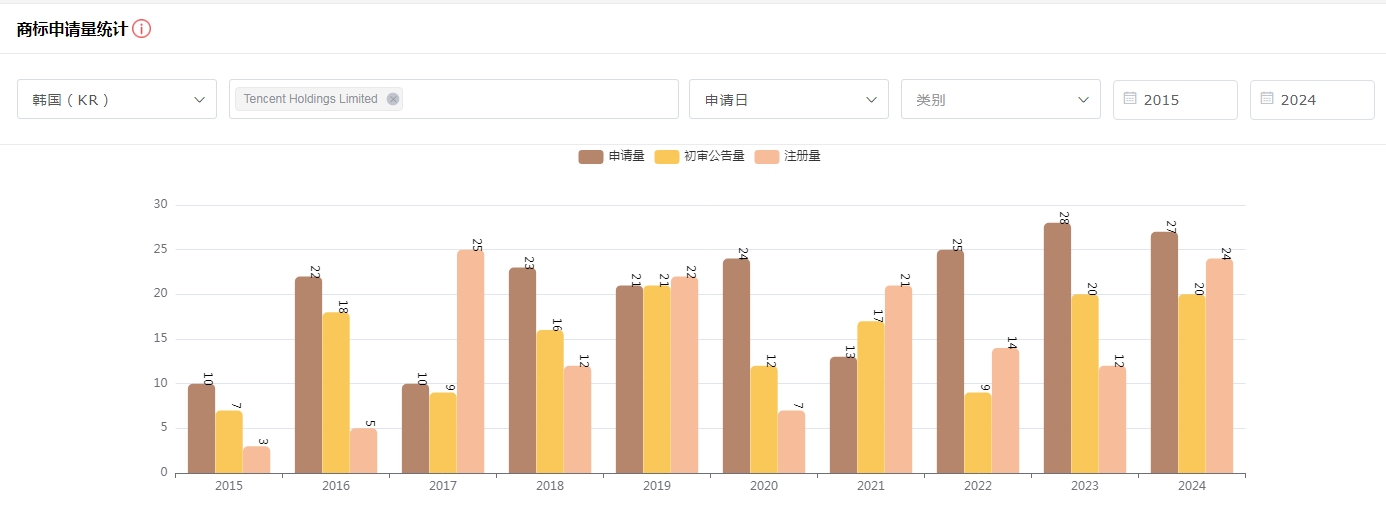
Statistics on trademark applications in South Korea over the past decade (Source: Kangxin IP Platform)
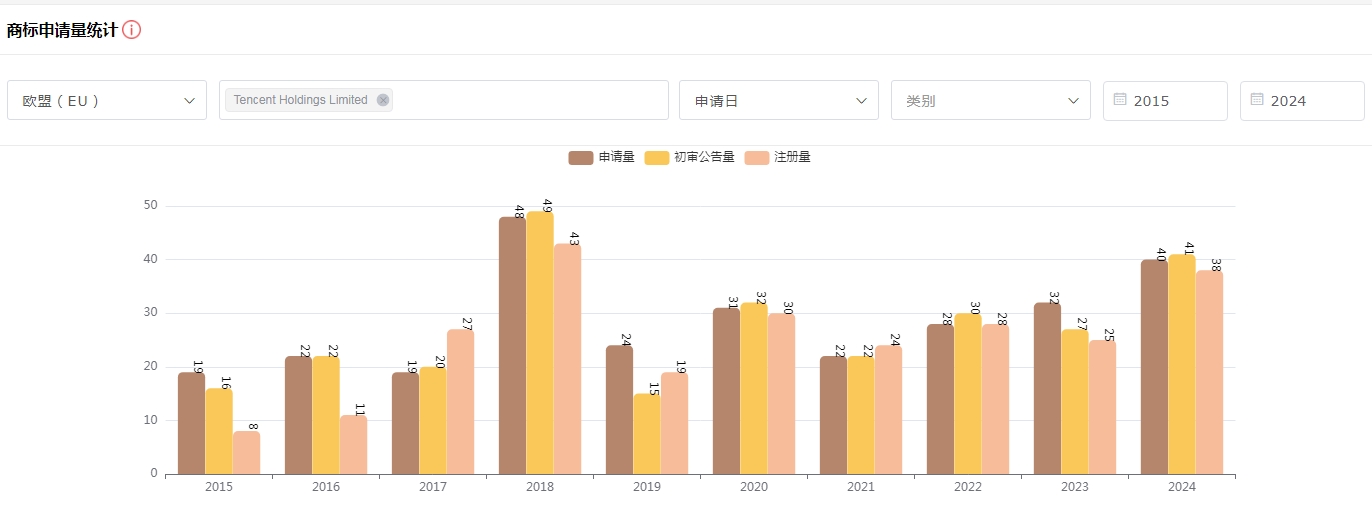
Statistics on trademark applications in the EU over the past decade (Source: Kangxin IP Platform)
Since the launch of WeChat in 2011, Tencent has rapidly established a global trademark portfolio. In China, the number of trademark applications surged between 2012 and 2018 before stabilizing. In the US, Europe, and Japan, WeChat’s trademark applications have steadily increased year by year, reflecting Tencent’s strategic focus on global markets.
2. Distribution by Goods and Services Classification
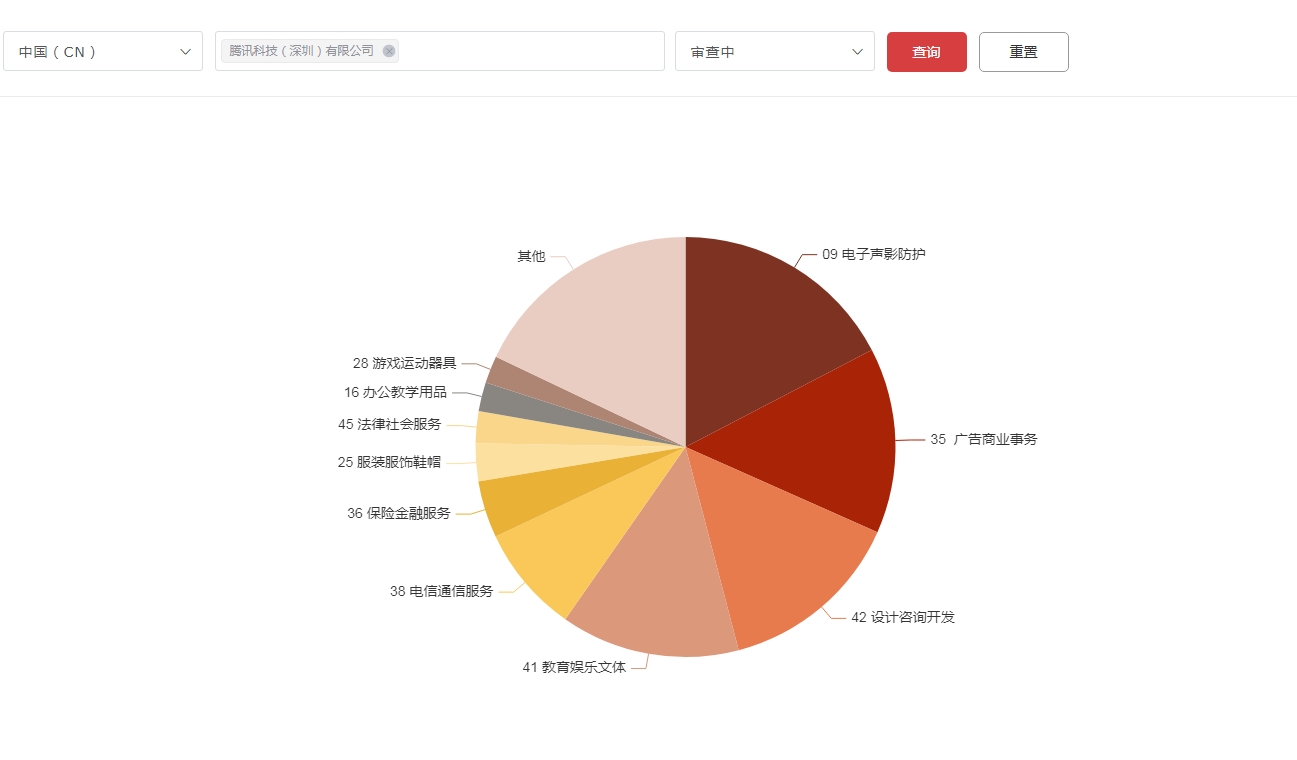
Statistics on trademark classification in China (Source: Kangxin IP Platform)
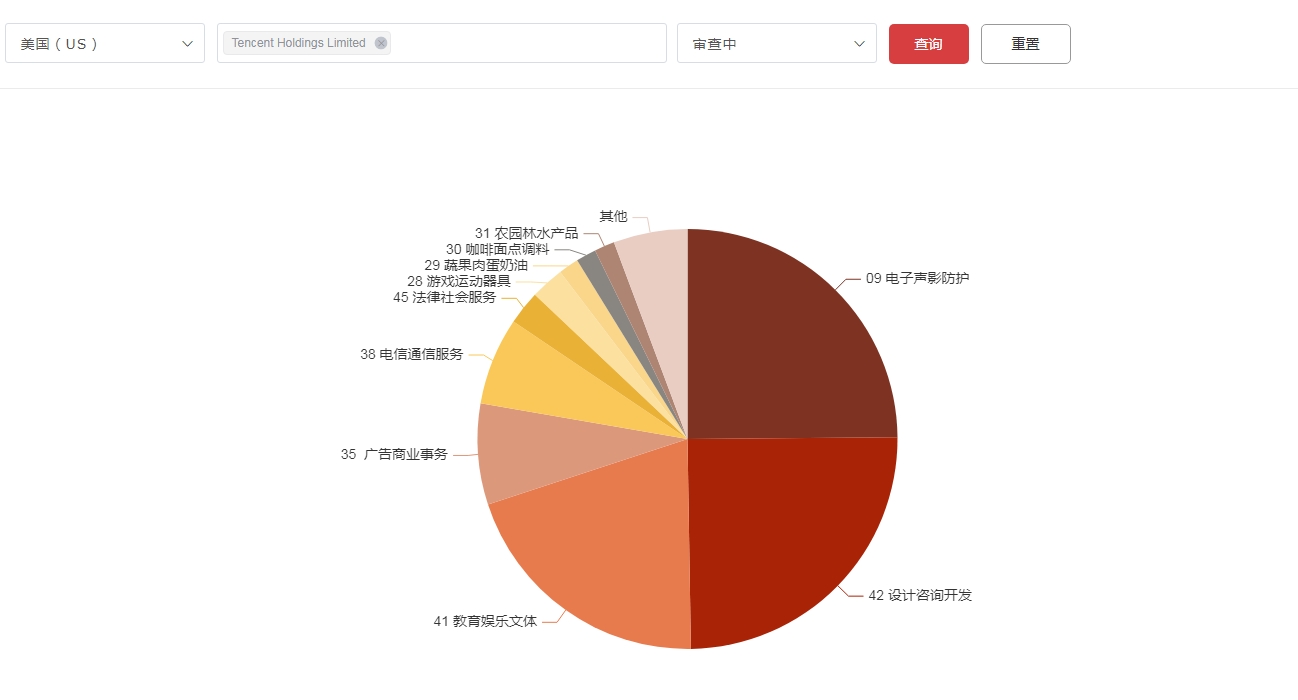
Statistics on trademark classification in the US (Source: Kangxin IP Platform)
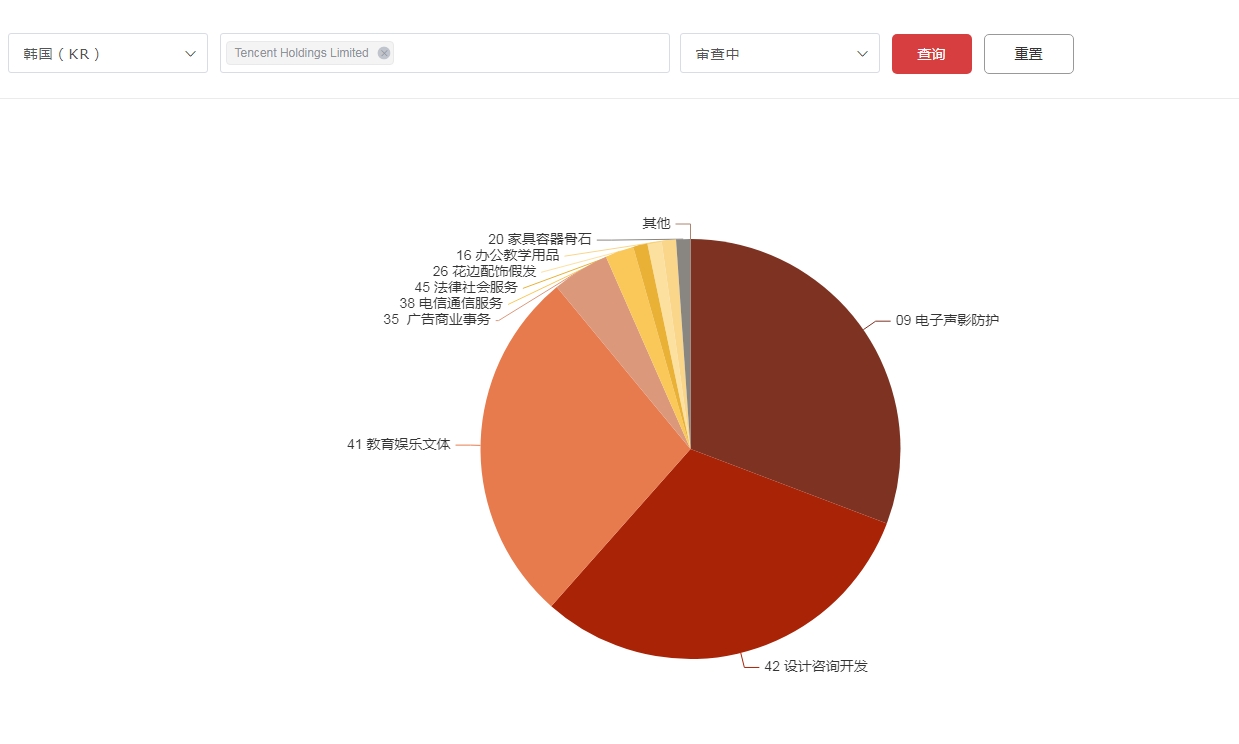
Statistics on trademark classification in South Korea (Source: Kangxin IP Platform)
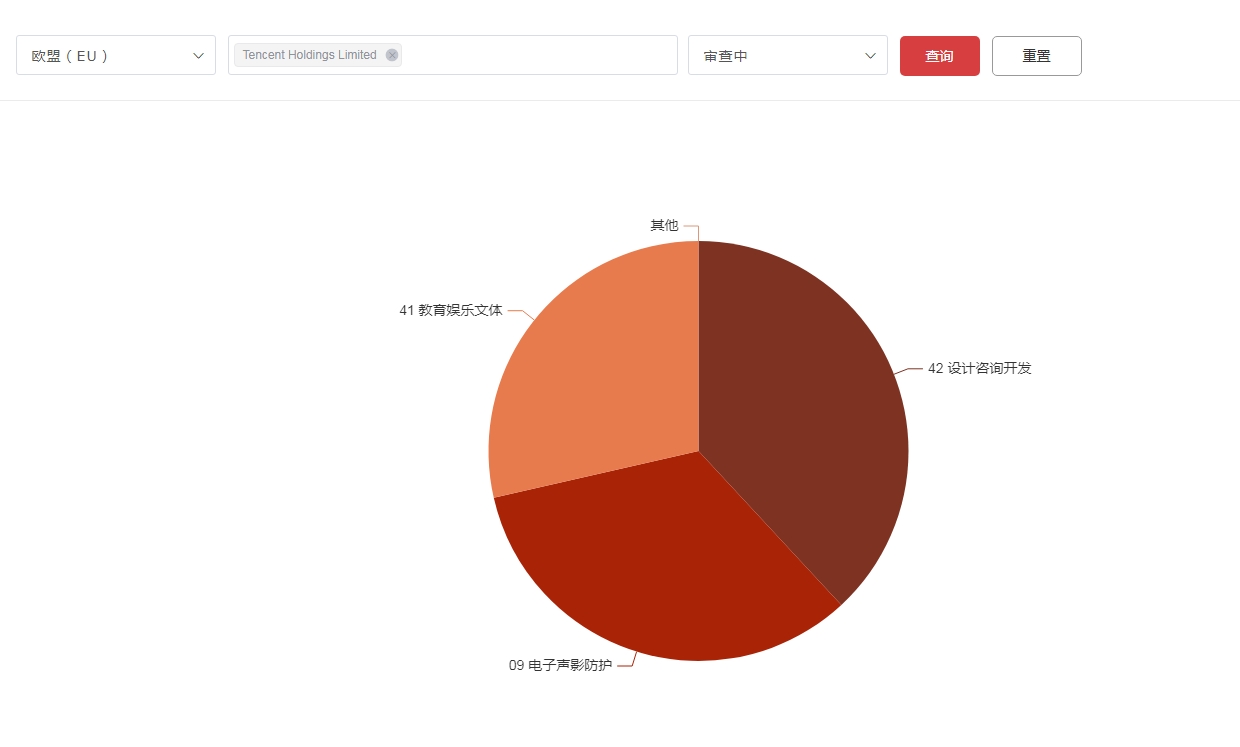
Statistics on trademark classification in the EU (Source: Kangxin IP Platform)
WeChat’s trademark applications span multiple goods and services categories. According to Kangxin IP Platform, its trademarks are mainly concentrated in:
Class 9: Computer software
Class 38: Communication services
Class 42: Computer programming and related services
Class 41: Education, entertainment, and sports activities
Class 35: Advertising and business management
These classifications align closely with WeChat’s core business operations, demonstrating Tencent’s comprehensive intellectual property protection strategy.
3. Distribution Across Similar Groups
In terms of similar group distribution, WeChat’s trademark applications primarily focus on communication, social networking, payments, and content sharing. For example, in Class 38, WeChat’s trademarks are mainly applied under groups related to “providing online social networking services” and “providing instant messaging services.” This distribution reflects WeChat’s primary business areas.
4. Global Trademark Footprint and Distribution by Country
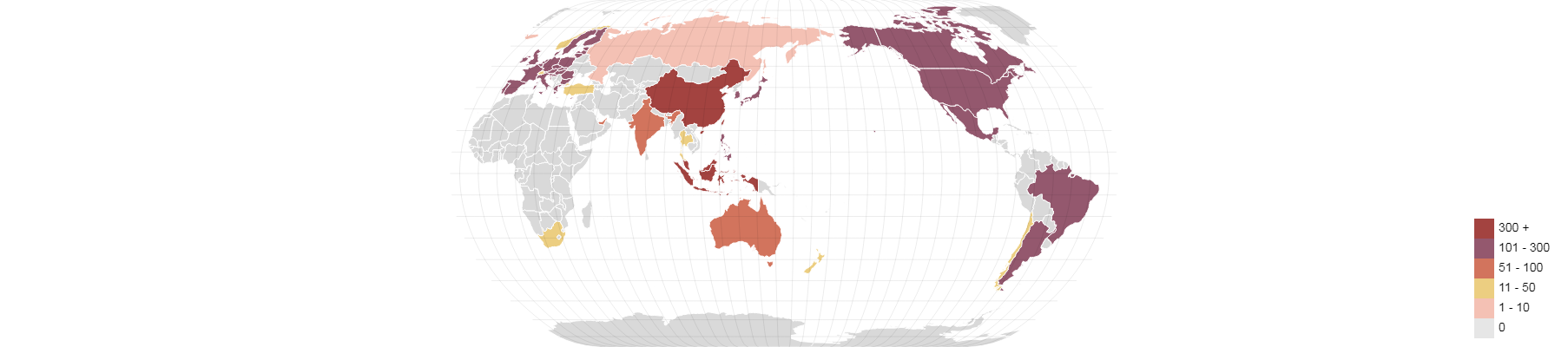
Global trademark distribution (Source: Kangxin IP Platform)
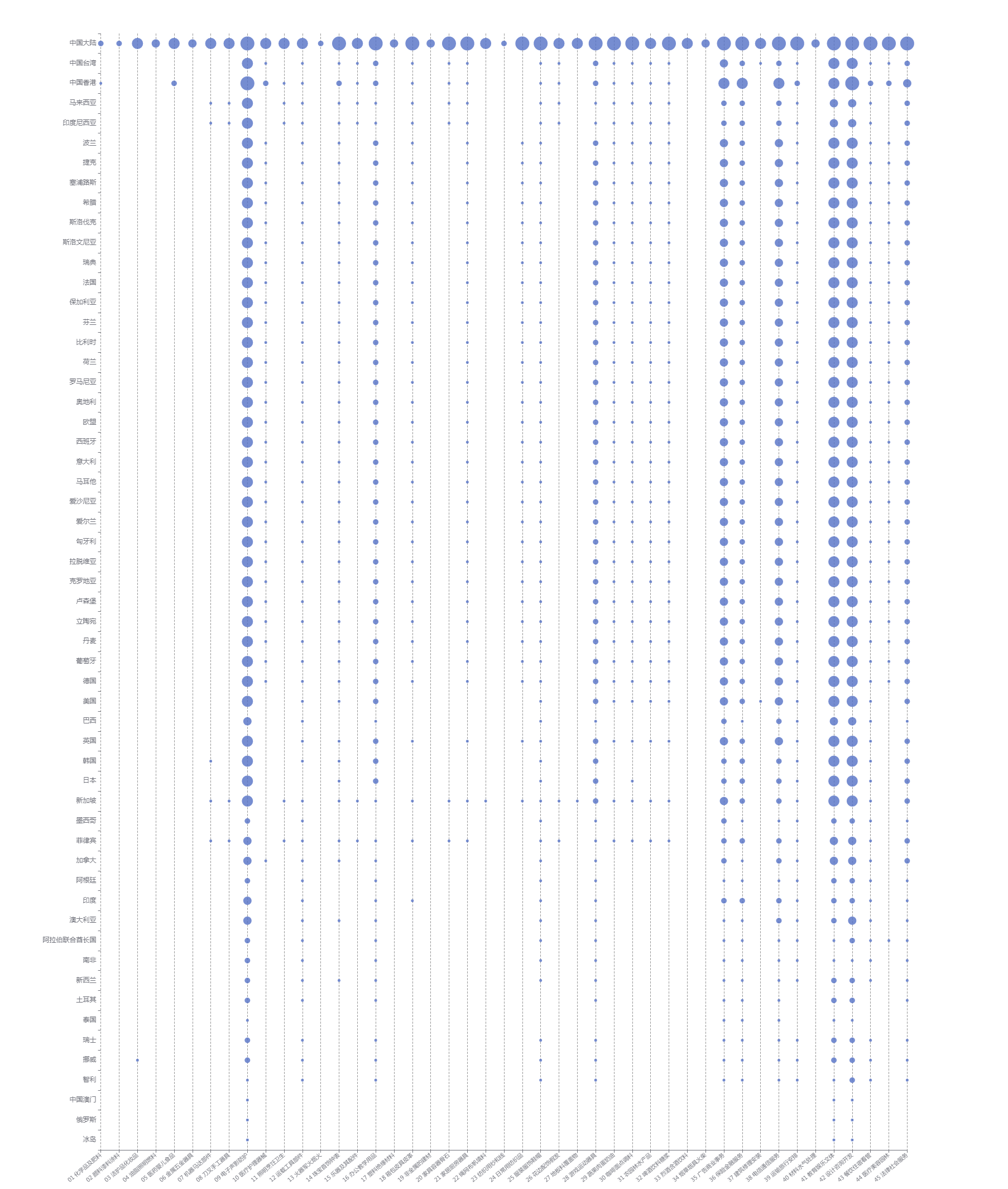
Classification distribution by country (Source: Kangxin IP Platform)
By analyzing the trademark maps and bubble charts, WeChat’s extensive global trademark portfolio becomes evident. In China, WeChat has the highest number of trademark applications. In the North America, South America, and Europe, its trademark applications are concentrated in major countries and economic centers. The bubble chart further illustrates that the volume of trademark applications correlates with WeChat’s market penetration in these regions.
Trademark Registration Barriers and Dispute Cases
WeChat’s global trademark registration journey has not been without obstacles. In key regions such as the US, Europe, Japan, and South Korea, Tencent has faced trademark disputes and legal challenges.
1. United States
WeChat’s trademark registration in the US encountered significant resistance. In 2015, a US-based company filed a trademark infringement lawsuit against Tencent, claiming it had already registered the “WeChat” trademark in 2012. This prolonged legal battle lasted several years and was ultimately resolved through a settlement, allowing Tencent to secure the rights to the “WeChat” trademark in the US.
2. Europe
WeChat also faced trademark registration challenges in Europe. In 2016, a German company asserted priority rights over the “WeChat” trademark and sued Tencent for trademark infringement. After a series of legal proceedings, Tencent successfully defended its position with strong legal arguments and supporting evidence, ultimately winning the case and securing the “WeChat” trademark in Europe.
3. Japan
Compared to the US and Europe, WeChat’s trademark registration process in Japan was relatively smooth, though minor disputes arose. In 2017, a Japanese company claimed priority rights over the “WeChat” trademark and filed a lawsuit against Tencent. However, Tencent successfully defended its rights in court, securing its trademark registration in Japan.
4. South Korea
WeChat’s trademark registration in South Korea also faced legal hurdles. In 2018, a South Korean company asserted priority rights over the “WeChat” trademark and initiated an infringement lawsuit against Tencent. Tencent, demonstrating strong legal capabilities, ultimately won the case and successfully registered the “WeChat” trademark in South Korea.
Key Takeaways and Strategic Insights
Despite facing global trademark registration challenges, Tencent has successfully overcome these obstacles through a determined approach and robust legal backing, solidifying WeChat’s presence in international markets.
For businesses seeking global expansion, WeChat’s trademark strategy provides the following key lessons:
1. Early Trademark Planning
Proactively filing trademark applications in core business areas and key markets ensures a competitive edge and prevents trademark squatting.
2. Strategic Positioning
Clearly defining business priorities and selecting relevant trademark classifications and similar groups ensures comprehensive and effective brand protection.
3. Legal Preparedness
Vigilantly monitoring potential trademark disputes and swiftly deploying legal measures to defend brand rights is essential.
4. Continuous Monitoring
Implementing a trademark surveillance system and regularly evaluating the effectiveness of global trademark protection helps businesses adjust their strategies as needed.
By implementing these strategies, companies can build a strong intellectual property framework in global markets and achieve sustainable growth.
 {{item.truncatedText}}
{{item.basicDescription&&item.basicDescription.slice(0,150)}}{{item.basicDescription&&item.basicDescription.length>150?"...":""}}
{{item.truncatedText}}
{{item.basicDescription&&item.basicDescription.slice(0,150)}}{{item.basicDescription&&item.basicDescription.length>150?"...":""}}