
Guardians of Musical Instrument Brands: An Analysis of Brand Protection and Trademark Use Strategies in the Musical Instrument Sector
Time:2025-03-28
Publication Date:2025-03-28
In the vast universe of music, every instrument serves as a bridge connecting the hearts of creators and listeners. These instruments not only carry the legacy of craftsmanship but also embody the crystallization of culture and art. With the vigorous development of the global music industry, the value of musical instrument brands has become increasingly prominent, making brand protection an essential issue that manufacturers cannot overlook.
Brand Protection in the Musical Instrument Field: The Cornerstone of Safeguarding Creativity and Heritage
Musical instrument brands, as a vital component of musical culture, encapsulate the unique ingenuity of designers, the exquisite craftsmanship of manufacturers, and a profound historical legacy. However, in a globalized market environment, brand infringement phenomena are rampant—from the proliferation of counterfeit and inferior products to frequent trademark squatting—which seriously threaten the reputation and market interests of musical instrument brands. Strengthening brand protection is therefore not only a respect for intellectual property rights but also key to maintaining a healthy industry ecosystem and promoting cultural innovation and dissemination.
Characteristics of Trademark Use in Musical Instrument Products
Compared to other goods, the use of trademarks in musical instrument products has unique features:
1. Strong Cultural Symbolism: Many musical instrument brand trademarks have become symbols of specific cultures or musical styles. For example, Steinway pianos and Stradivarius violins represent not just the products themselves but also carry deep historical and cultural value.
2. Integration of Design and Musical Elements: Musical instrument brand trademarks often cleverly incorporate musical elements such as notes, instrument shapes, or abstract musical symbols, reflecting brand characteristics and enhancing visual recognition.
3. High Demand for International Registration: Given the borderless nature of music, musical instrument brands often need to cross national boundaries and conduct international trademark registrations to protect their legal rights in the global market.
4. Emphasis on Innovation Protection: With the emergence of innovative technologies like smart instruments and eco-friendly materials, musical instrument brands need to focus on patent protection for their innovations. This complements trademark protection to build a comprehensive intellectual property system.
Taking the case of the registration of the graphic trademark of Austria Wendl & Lung Klavierbau U. VERTRIEBS GMBH in China as an example, the author introduces the process of establishing the rights of a musical instrument trademark incorporating musical elements in China.
【Basic Facts】
On August 18, 2010, Wendl & Lung Klavierbau U. VERTRIEBS GMBH (hereinafter referred to as Wendl & Lung) filed an application for the trademark "  " in China, with coverage of the goods "pianos, grand pianos" in Class 15 On February 14, 2011. The Trademark Office issued a refusal notification on the grounds that it was similar to the cited mark "
  " with registration number 4127985 (hereinafter referred to as the cited mark) used on similar or identical goods. Wendl & Lung filed a request for review of refusal within the prescribed time frame, requesting the Trademark Review and Adjudication Board to preliminarily approve the applied mark.
The main reasons for Wendl & Lung's request for review of the refusal were as follows: the applied mark has a long history and is famous among the relevant public; there are significant differences between the applied mark and the cited mark in terms of distinctive elements, textual composition, pronunciation, graphical design, and presentation, and they do not constitute "similar marks used on the same or similar goods;" both the applied mark and the cited mark draw inspiration from the "lira lyre" element, which is a common pattern in the musical instrument industry and should not be an exclusive element for the owner of the cited mark. Wendl & Lung submitted materials about reputation of their mark as main evidence.
The Trademark Review and Adjudication Board considered that the graphical elements in both the applied mark and the cited mark played a significant role, creating a strong visual impact, and the two marks were visually similar in overall appearance and effect, making them difficult for consumers to distinguish. Both marks are used on similar goods such as pianos and horns (musical instruments), which may cause confusion and misidentification among consumers. Thus, the marks constituted similar marks used on similar goods as stipulated in Article 28 of the Trademark Law of 2001. Moreover, the evidence submitted by the applicant was insufficient to prove that the applied mark had acquired a certain level of reputation through use and could be distinguished from the cited mark, leading to the decision to reject the applied mark.
Wendl & Lung disagreed with the decision of the Trademark Review and Adjudication Board to reject the request for review and filed an administrative lawsuit with the Beijing First Intermediate People's Court. The main reasons for the lawsuit filed by Wendl & Lung in the first instance were that the applicant's mark and the cited mark differed significantly in terms of elements, pronunciation, meaning, and overall appearance, and did not constitute similar marks; the applicant also registered the " " mark with No. 9130064 after the filing date of the applied mark, and the graphical part of this mark is identical to the applied mark. The fact of registration of this mark could prove that the applied mark and the cited mark are not similar marks.
【Judgment and Reasons】
The first instance court held that the graphical parts of the applied mark symbol and the cited mark symbol have dissimilarities in terms of overall visual effect. Based on the evidence submitted, it can be proven that the applied mark has a long history and high recognition among the relevant public in China. The registration of the applied mark did not violate the provisions of Article 28 of the Trademark Law of 2001. Therefore, the court revoked the decision of the Trademark Review and Adjudication Board and requested them to make a new decision on rejecting the request for reexamination.
The Trademark Review and Adjudication Board appealed against the first instance judgment, arguing that the original judgment had unclear facts and legal errors.
The second instance court held that since both the cited mark and the applied mark are used on musical instrument products, it is common practice to use musical instrument graphics as composed elements in such marks. Based on this, the graphical parts of the applied mark and the cited mark have differences in overall shape and design of various details, creating a significant difference in overall visual effect. It can be proven by the evidence submitted that the applied mark has a long history and high recognition in the music industry in China, and the relevant public has a high level of awareness of it. In the presence of the aforementioned differences between the two marks there will be no confusion or misidentification. Therefore, the first instance court correctly determined that the two marks are not similar, and the registration of the applied mark did not violate Article 28 of the Trademark Law of 2001. The original judgment had clear facts and correct application of the law, and the arguments of the Trademark Review and Adjudication Board's appeal were not valid. The appeal was dismissed, and the original judgment was upheld.
【Case Summary】
The author believes that the key factors for the approval of Wendl & Lung's trademark registration in China are as follows:
1) Both the applied mark and the cited mark are used on musical instruments, and using a musical instrument design is a common practice for such trademarks;
2) There are differences in the graphic part of the applied mark and the cited mark, and the presence of text in the cited mark creates a significant visual difference between the two marks;
3) The evidence submitted can prove that the applied mark has a long history of heritage, is highly recognized in the music industry in China, and has a high level of awareness among the relevant public. In the presence of the above differences between the two marks, there will be no confusion or misidentification.
Although the above case benefited from industry practices and high recognition factors, the road to obtaining trademark rights also required passing through administrative litigation for a second review. Current administrative and judicial authorities are stricter in examining the similarity of trademarks compared to before. In general, if two marks have a certain degree of similarity, even if the case enters the litigation stage, the chances of overcoming the prior mark solely based on the argument of non-similarity are very low. Therefore, applicants are required to ensure that their marks have strong distinctiveness and design sense from the moment they are initially selected, so as to stand out and differentiate from other prior trademarks.
Insights from the Kangxin IP Platform(Data visualization images sourced from the Kangxin IP Platform.)
The Kangxin IP Platform (https://eservice.kangxin.com), as an authoritative tool in the intellectual property field, provides relevant data on musical instrument brands:
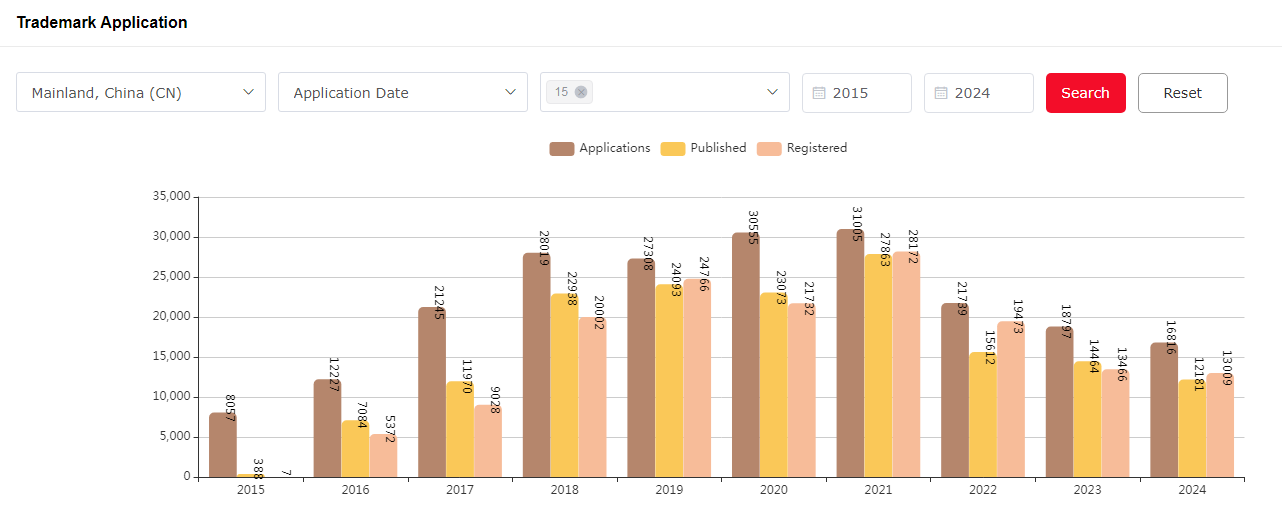
Volume of Class 15 Trademark Applications in Mainland China over the Past Decade
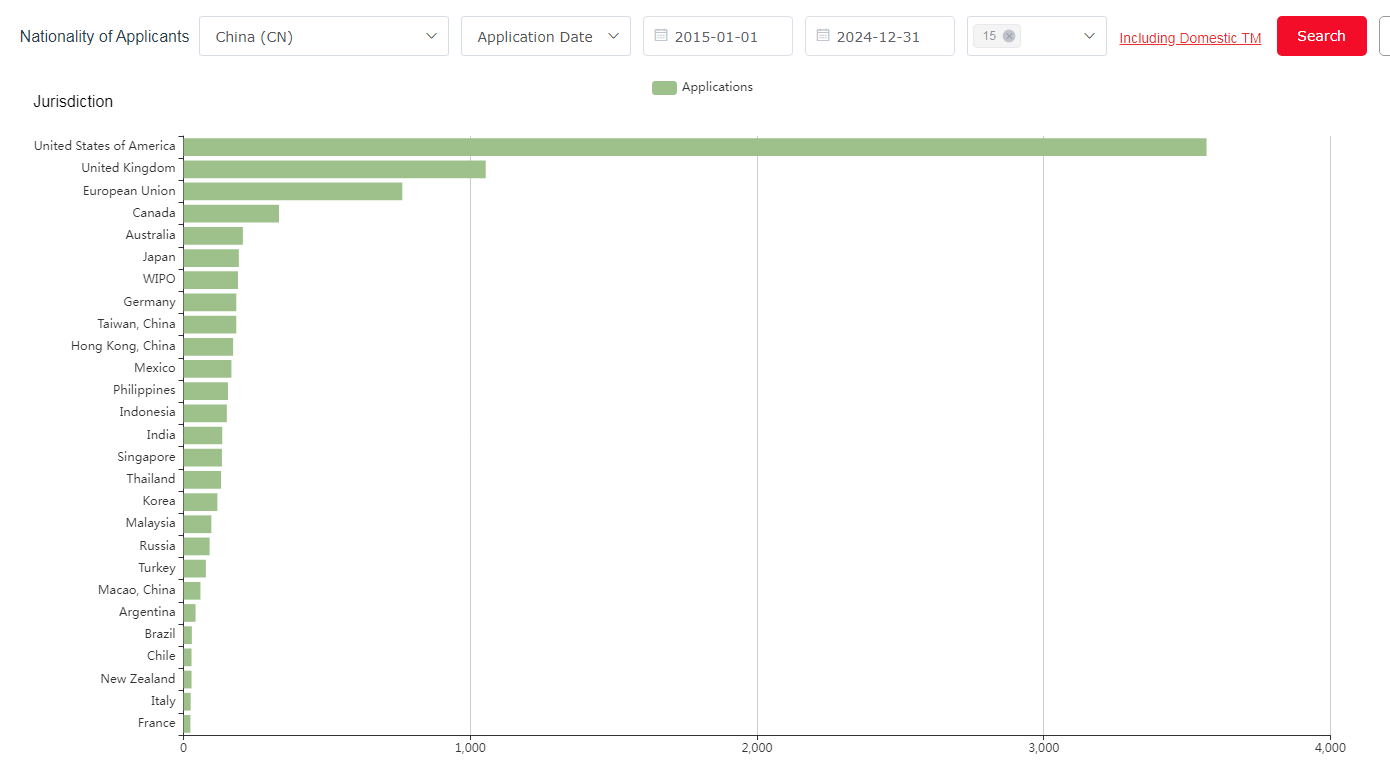
Nationality Distribution of Class 15 Trademark Applicants in Mainland China over the Past Decade
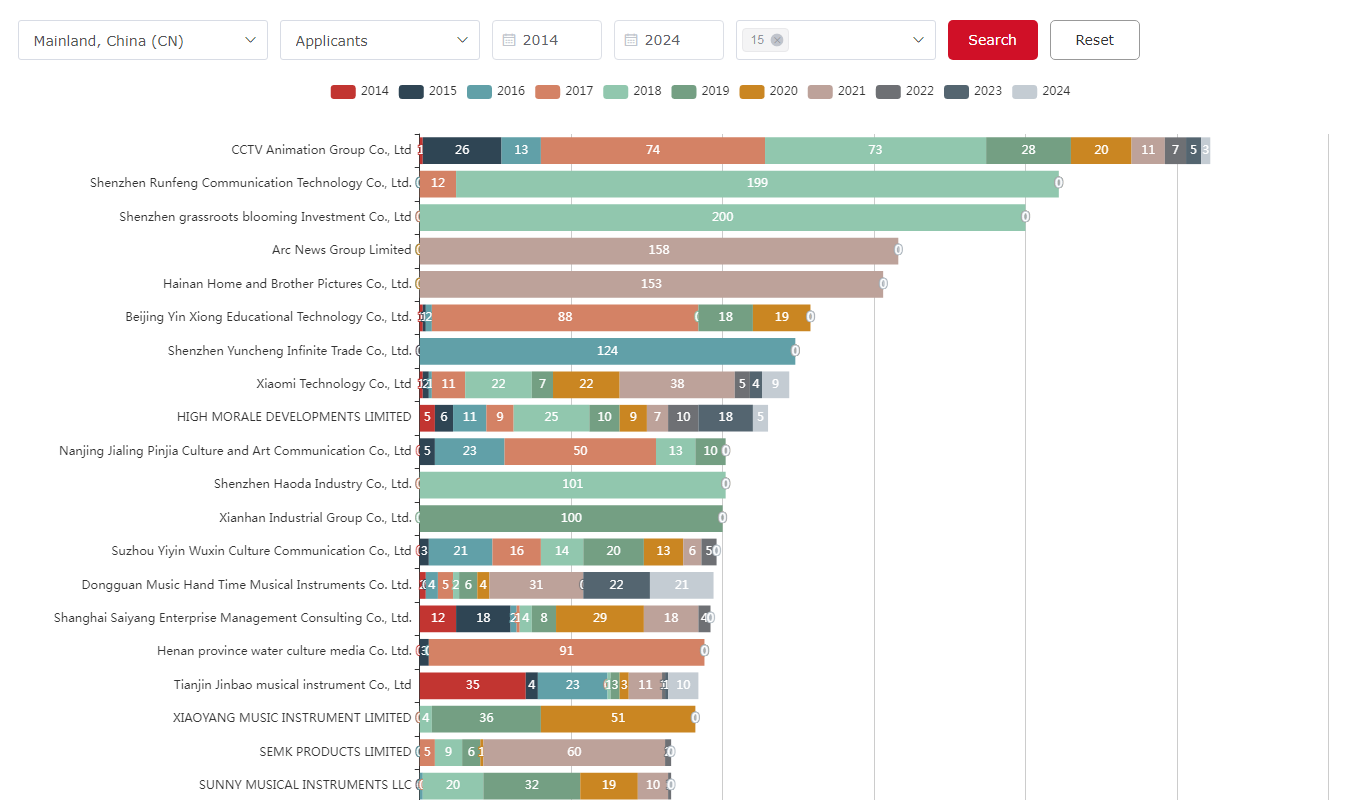
Ranking of the Top 20 Applicants for 15 Categories of Trademarks in Mainland China Over the Past Decade
- Data Analysis: The data shows a continuous growth in the number of trademark registration applications for musical instruments over the past decade, reflecting the industry's emphasis on brand building. Concurrently, the official rejection rate has increased, mainly due to issues like lack of distinctiveness and similarity to existing trademarks. This underscores the need for applicants to conduct thorough trademark searches and evaluations before submission.
- Both longstanding renowned brands are strengthening their trademark portfolios, while emerging brands are capturing market share through innovative designs and rapid registration strategies. Notably, some applicants are increasingly focusing on international trademark registrations, especially in major music markets in Europe, the Americas, and Asia, highlighting an acceleration in the globalization strategies of musical instrument brands.
Recommendations for Protecting Musical Instrument Brands
1. Strengthen Trademark Searches and Monitoring: Prior to application, utilize platforms like the Kangxin IP Platform to conduct comprehensive trademark searches to avoid conflicts with existing trademarks. Establish a trademark monitoring mechanism to promptly detect and address potential infringement.
2. Diversified Intellectual Property Protection: Beyond trademarks, consider multi-dimensional protection based on product characteristics, such as patents (design patents, utility models) and copyrights, to form a comprehensive protective network.
3. International Strategic Deployment: Develop international trademark registration strategies in line with the globalization of musical instrument brands. Prioritize key music markets and leverage international registration systems like the Madrid Protocol to simplify processes and reduce costs.
4. Brand Culture Building: Enhance brand storytelling and elevate brand influence through concerts, art exhibitions, and other forms. Strengthen consumer loyalty to the brand, thereby fundamentally enhancing brand defensiveness.
5. Legal Rights Protection and Collaboration: Actively employ legal measures to safeguard rights in the face of infringement. Explore collaborations with industry organizations and copyright protection agencies to jointly combat infringement and foster a healthy market environment.
Conclusion
Protecting musical instrument brands is a long-term endeavor requiring brand owners to approach the issue strategically, employing legal, market, and cultural tools to build a comprehensive, multi-layered intellectual property protection system. In this process, professional support from platforms like the Kangxin IP Platform is indispensable. These platforms provide precise data analysis and strategic recommendations, helping brands stand firm amid fierce market competition and continue to play the melodies of innovation and heritage.
 {{item.truncatedText}}
{{item.basicDescription&&item.basicDescription.slice(0,150)}}{{item.basicDescription&&item.basicDescription.length>150?"...":""}}
{{item.truncatedText}}
{{item.basicDescription&&item.basicDescription.slice(0,150)}}{{item.basicDescription&&item.basicDescription.length>150?"...":""}}